
Brazed Plate Heat Exchangers for HVAC, Heating & Cooling
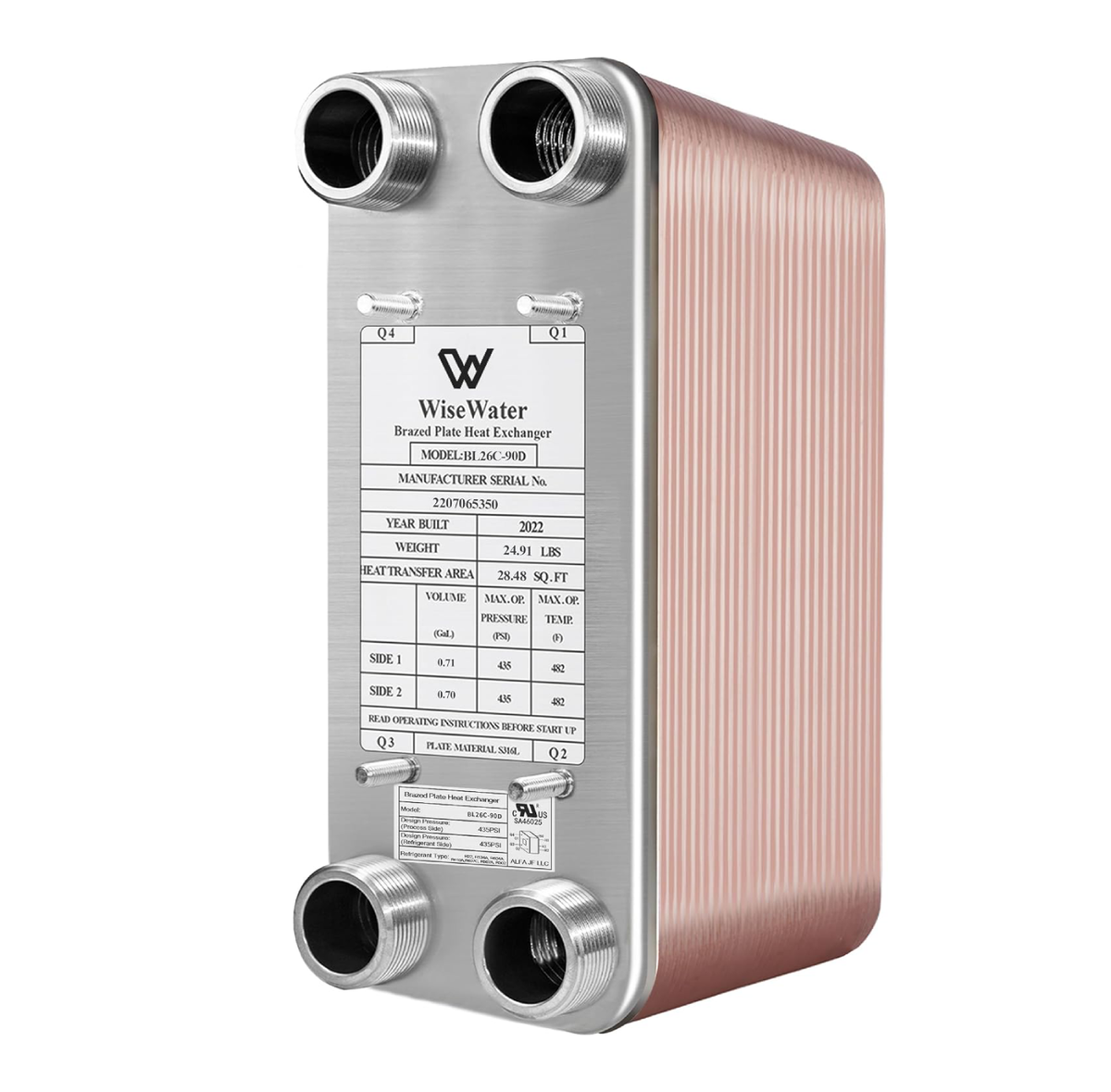
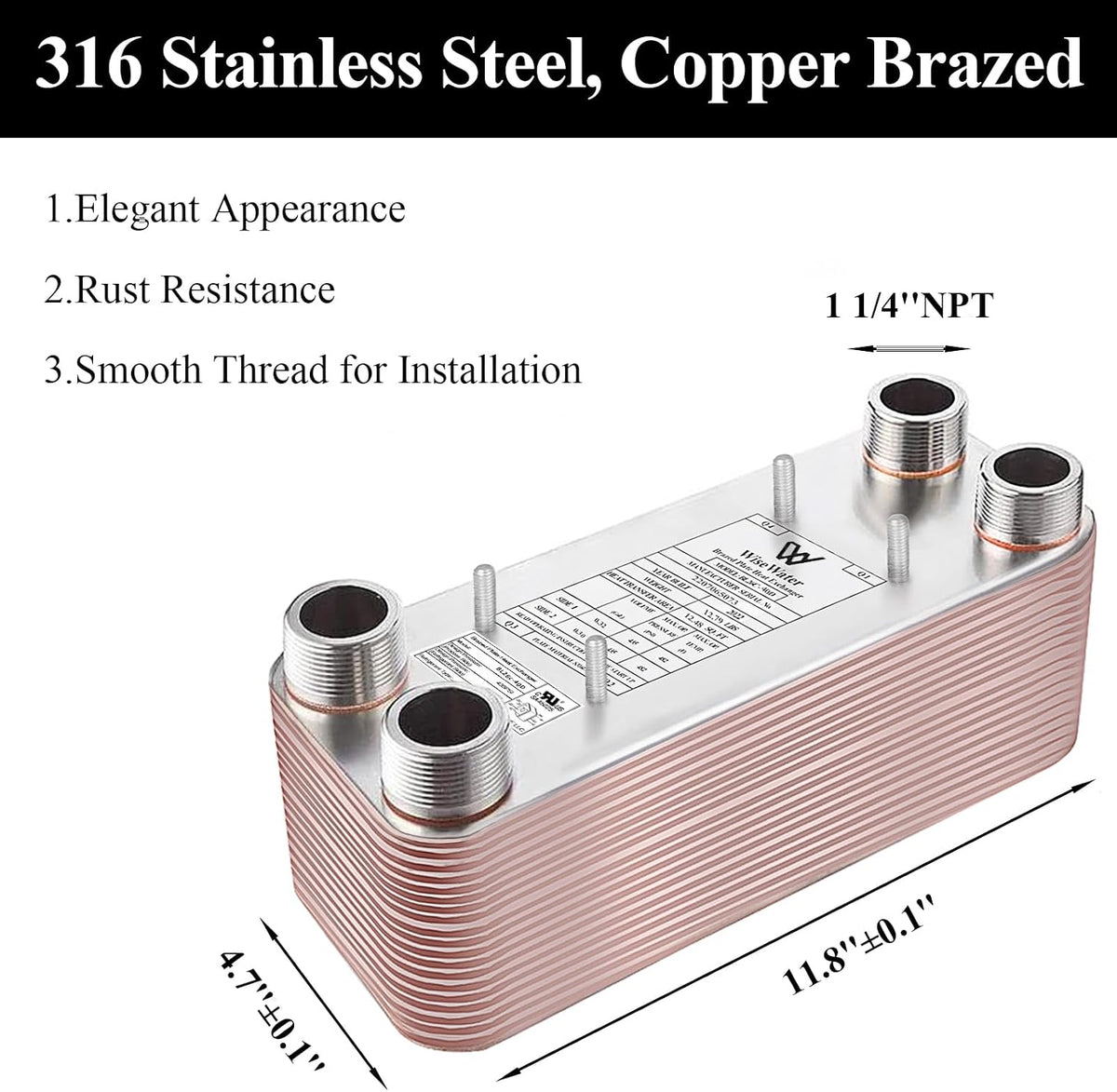
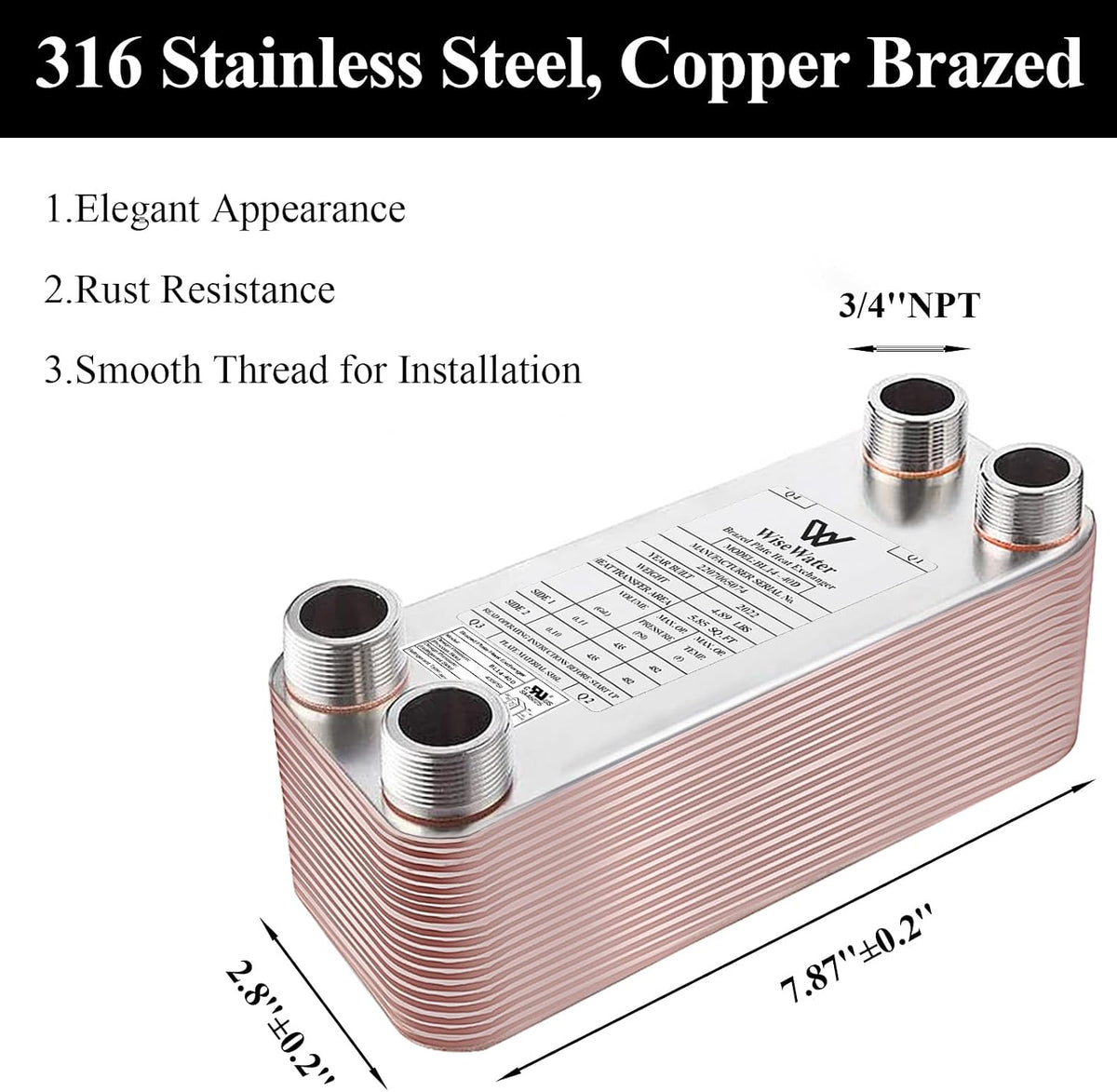
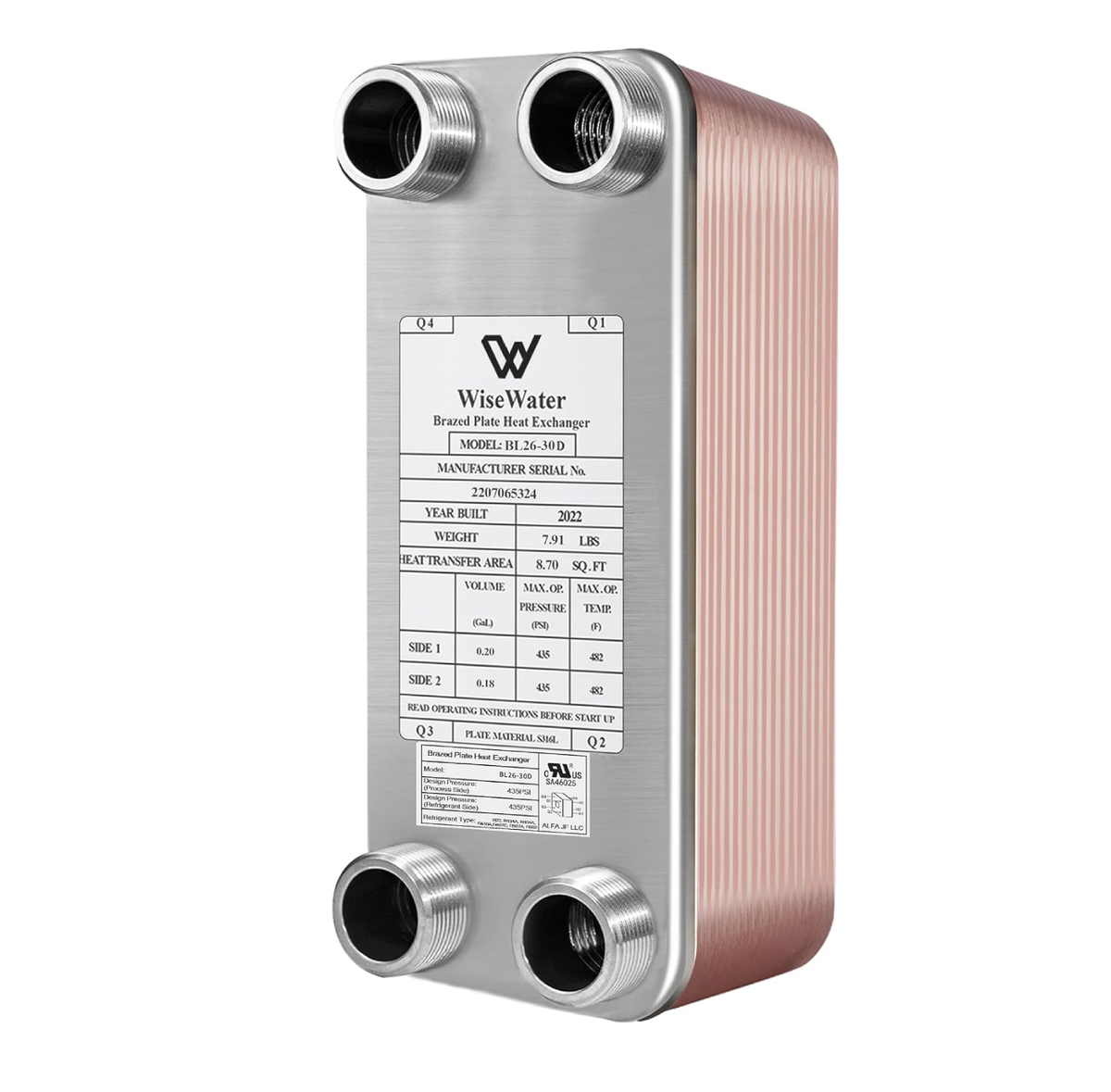
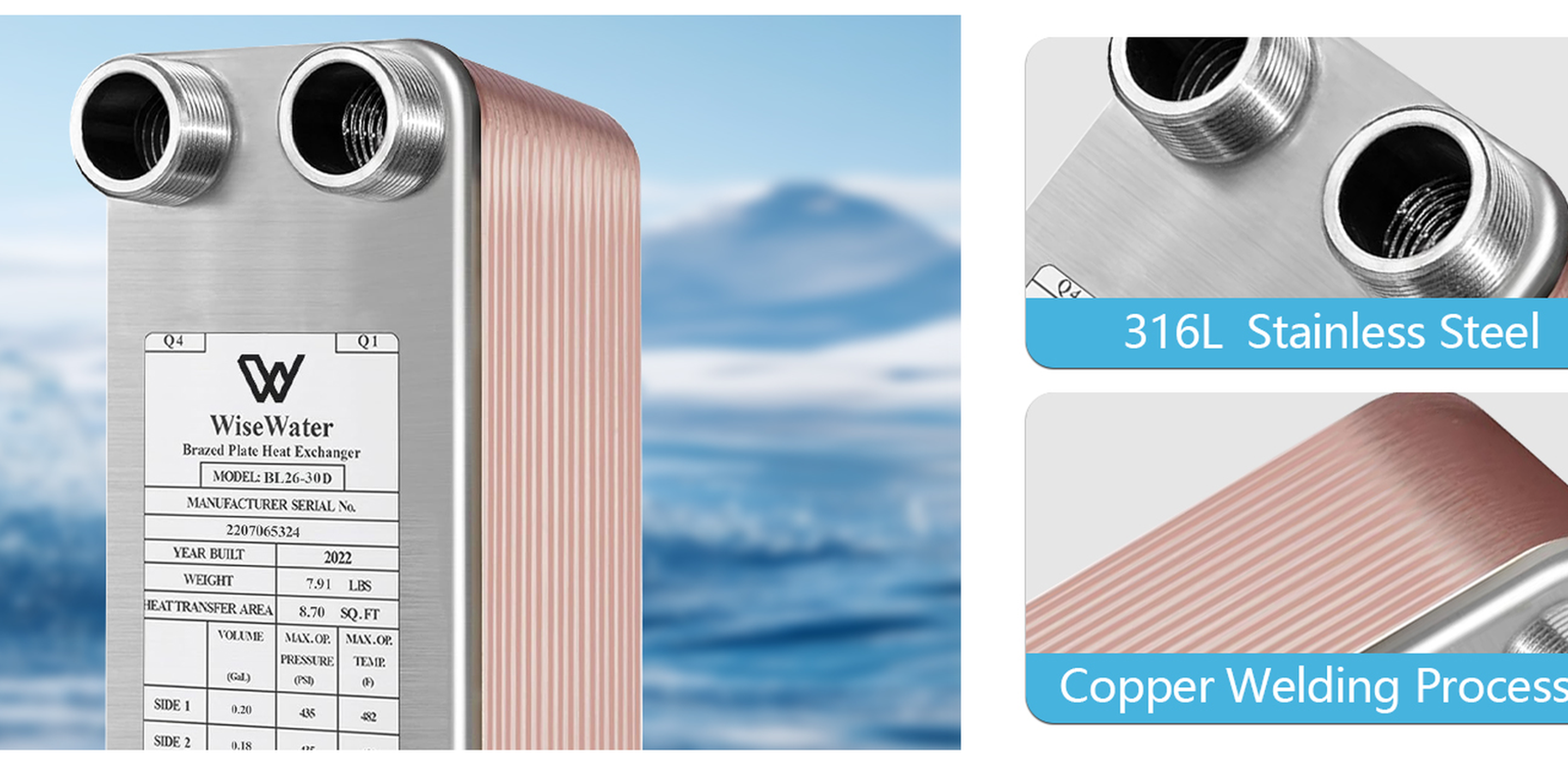
Alfa Heating supplies brazed plate heat exchangers for water-to-water, water-to-glycol, and other compatible liquid heat transfer applications. These compact plate heat exchangers use 316L stainless steel plates with copper-brazed construction for sealed, liquid-to-liquid heat transfer.
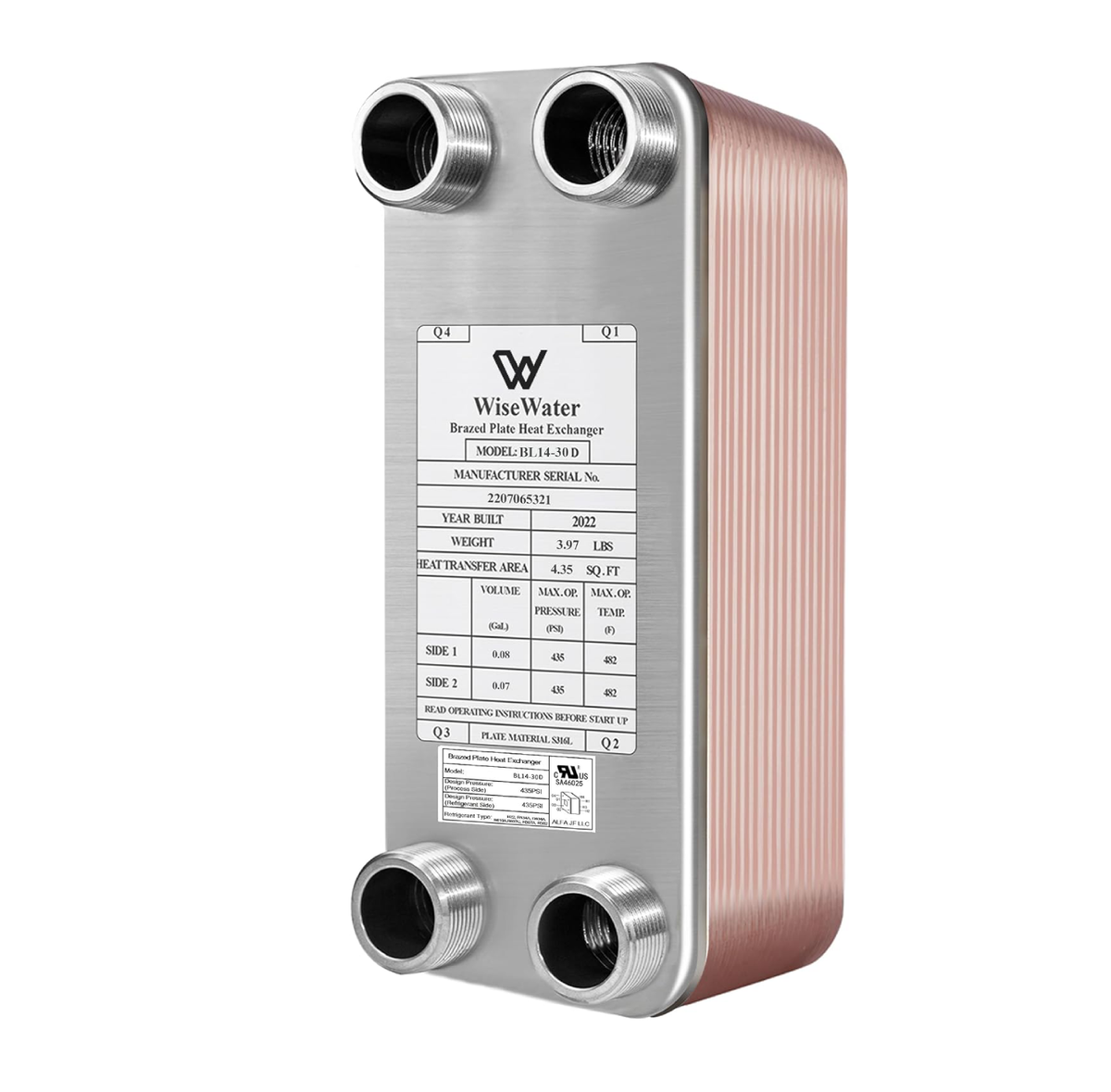
Available in multiple plate sizes and connection configurations, our brazed plate heat exchangers are used in HVAC, hydronic heating and cooling, heat pump, refrigeration, and other residential, commercial, and industrial systems. Model selection depends on heat load, flow rate, operating temperatures, fluid type, pressure, and connection requirements.
Brazed Plate Heat Exchangers for HVAC and Hydronic Systems
Brazed plate heat exchangers are a compact type of plate heat exchanger used to transfer heat between two separate fluid circuits. They are commonly applied in HVAC and hydronic systems where water or compatible heat transfer fluids need to be heated or cooled without mixing the two circuits.
Their compact construction, corrugated plate design, and gasket-free brazed assembly make them suitable for applications where installation space, heat transfer requirements, and connection configuration need to be considered together.
Why Choose Brazed Plate Heat Exchangers
Brazed plate heat exchangers are a compact type of plate heat exchanger designed for efficient heat transfer in heating, cooling, HVAC, refrigeration, and hydronic systems. Their sealed construction provides high heat transfer performance while requiring less installation space than many traditional heat exchanger designs.
Compact Design: High heat transfer performance in a space-saving footprint, making brazed plate heat exchangers suitable for compact mechanical rooms and equipment.
Efficient Heat Transfer: Corrugated stainless steel plates promote turbulent flow and effective heat transfer between fluid circuits.
Sealed Brazed Construction: Vacuum-brazed copper construction eliminates traditional gaskets and helps minimize potential leakage points.
Low Maintenance: The gasket-free construction reduces the need for routine gasket replacement and simplifies maintenance.
Multiple Applications: Suitable for compatible water, glycol solutions, refrigerants, and other heat transfer fluids depending on the model and application.
Multiple Connection Options: Available configurations include common threaded connection sizes to accommodate different piping and installation requirements.
UL-Certified Options: Selected models are UL certified for applicable North American applications.
Typical Applications
Brazed plate heat exchangers are widely used in residential, commercial, and industrial thermal systems due to their high efficiency, compact design, and excellent heat transfer performance.
Brazed plate heat exchangers can be used in a variety of liquid-to-liquid heating and cooling systems. The appropriate model depends on the required heat load, flow rate, temperatures, fluid type, pressure, and connection configuration.


How a Brazed Plate Heat Exchanger Works
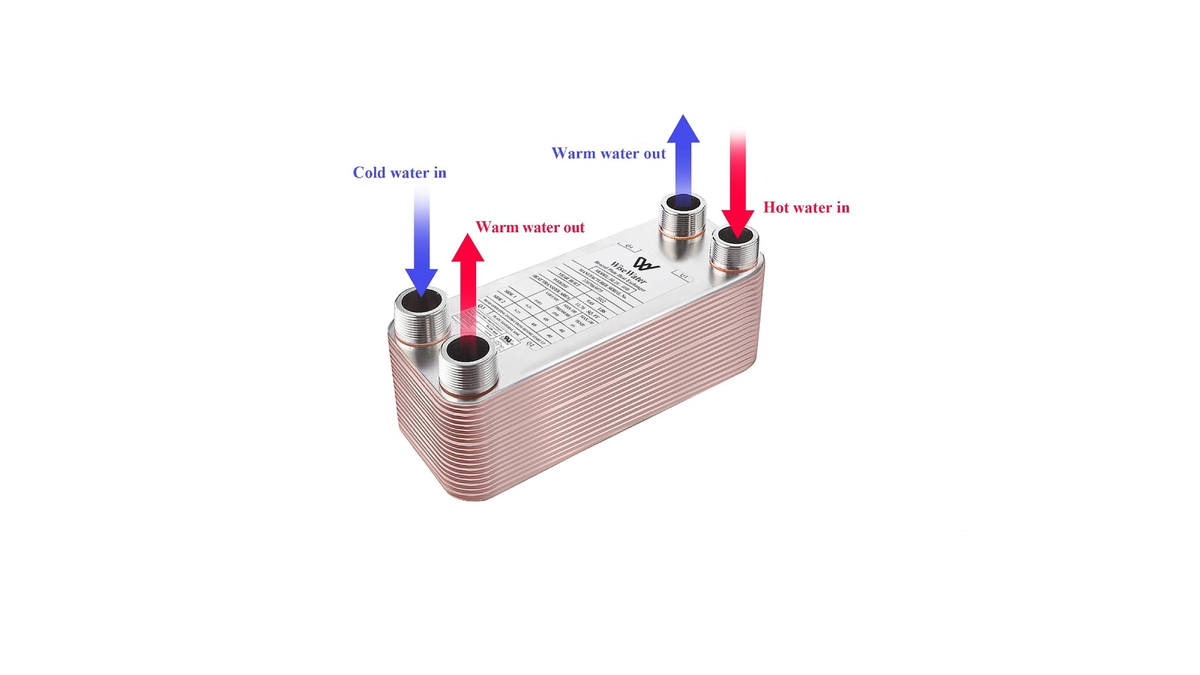
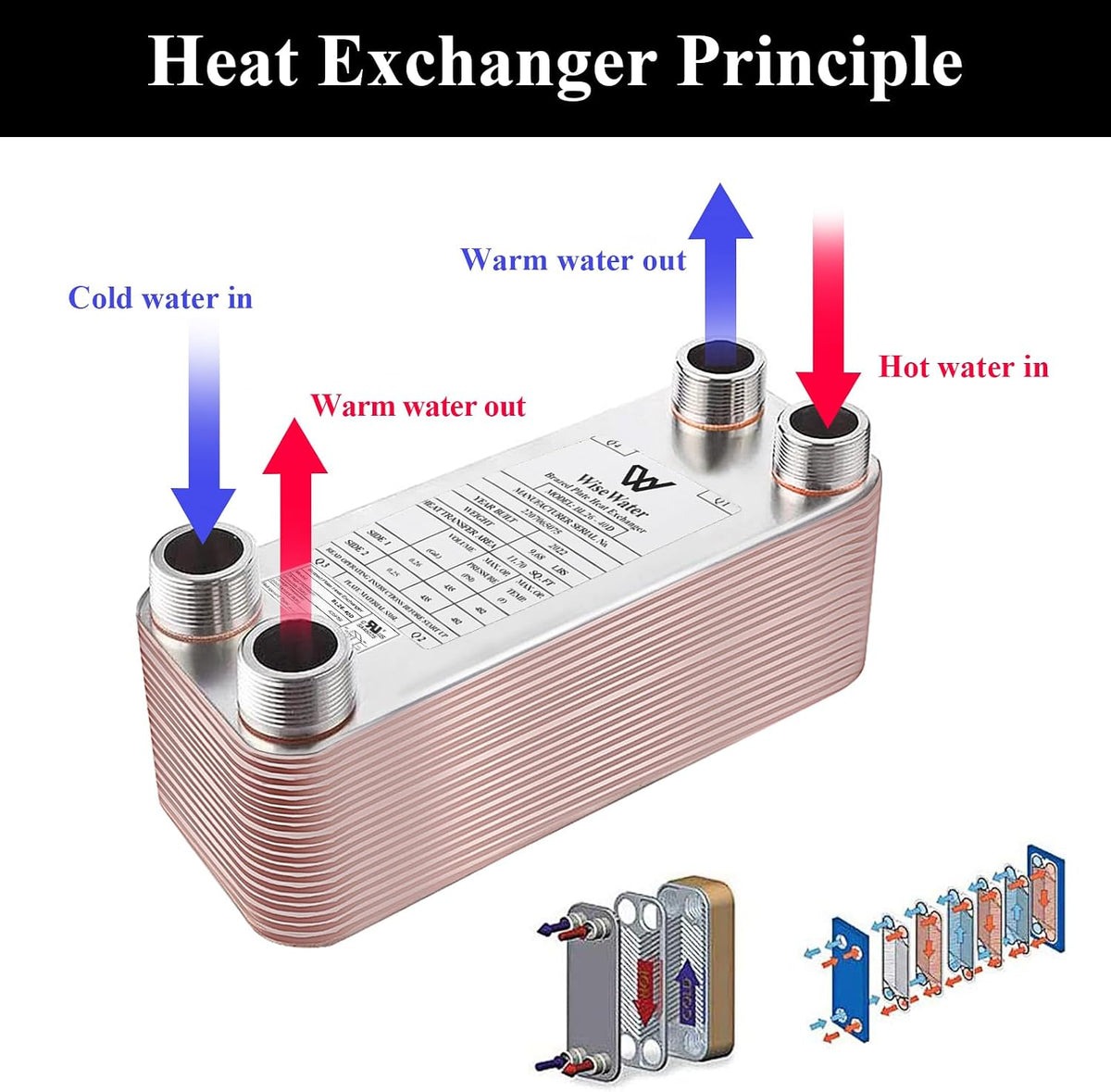
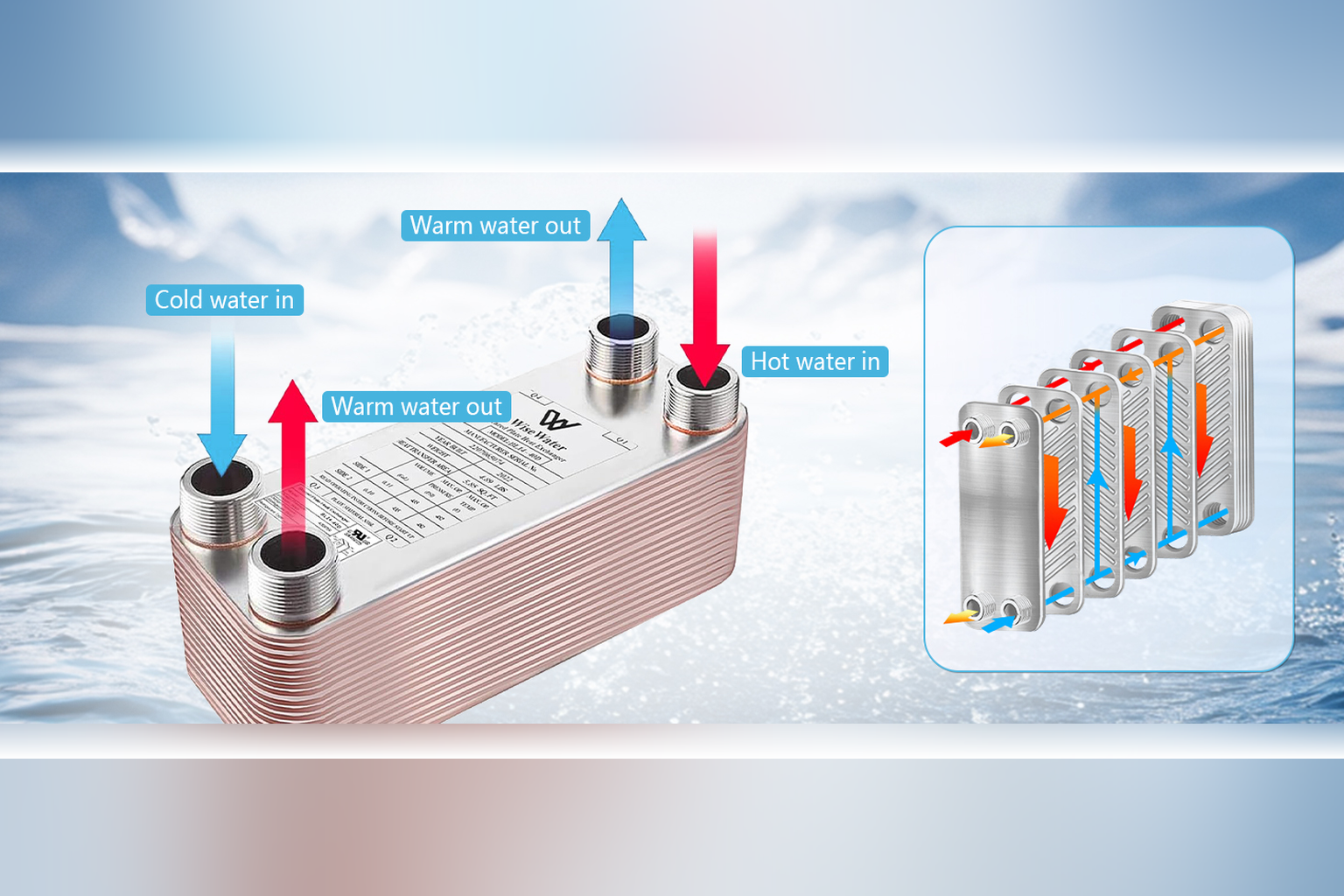
A brazed plate heat exchanger transfers heat between two fluid streams through a series of thin, corrugated stainless steel plates. The fluids flow through alternating channels, allowing heat to pass through the metal plates while keeping the two circuits separate.
During manufacturing, the plates are assembled and vacuum brazed with copper brazing material. This creates a sealed structure without traditional gaskets.
The corrugated plate pattern increases turbulence within the channels and provides a large heat transfer surface in a compact volume. Many brazed plate heat exchangers use a counterflow arrangement, where the two fluids travel in opposite directions to support effective temperature transfer.
The actual thermal performance of a plate heat exchanger depends on factors such as heat load, flow rate, inlet and outlet temperatures, fluid properties, pressure drop, and plate configuration.
How to Choose a Brazed Plate Heat Exchanger
Brazed plate heat exchangers are used in a wide range of residential, commercial, and industrial heating and cooling systems.
Choosing the right model depends on several key factors, including heat load, flow rate, system type, and operating temperature difference. For a detailed overview of selection methods, applications, sizing calculations, and common troubleshooting issues, refer to our plate heat exchanger selection guide.
To ensure optimal performance and energy efficiency, it is important to match the heat exchanger specifications with your actual application requirements rather than selecting based on size alone.
1. Heat Load
Determine the required heat transfer capacity of the system in BTU/h or kW. The required capacity depends on the application, fluid temperatures, flow rates, and desired temperature change.
2. Flow Rate
The flow rate on both sides of the heat exchanger affects heat transfer and pressure drop. Both primary and secondary circuit flow rates should be considered during selection.
3. Operating Temperatures
Provide the inlet and desired outlet temperatures for both circuits. The temperature difference between the two sides directly affects the required heat transfer surface.
4. Fluid Type
Identify the fluids flowing through both circuits, such as water, glycol solutions, or compatible refrigerants. Fluid properties and material compatibility should be checked against the specifications of the selected model.
5. Operating Pressure
Maximum operating pressure should be suitable for the system on both sides of the heat exchanger. The allowable pressure depends on the specific model and operating conditions.
6. Connection Size and Installation Space
Select connection sizes that are compatible with the system piping while considering available installation space. Common configurations include 3/4", 1", and 1 1/4" connections, depending on the model.
FAQ
A Brazed Plate Heat Exchanger (BPHE) is a compact and highly efficient heat transfer device made from multiple corrugated stainless steel plates that are permanently bonded together using a brazing material such as copper or nickel.
Unlike traditional gasketed heat exchangers, BPHEs do not use rubber seals. This gasket-free design provides enhanced durability, allowing the unit to operate reliably under high pressure and high temperature conditions.
The corrugated plate structure creates turbulent flow between channels, significantly improving heat transfer efficiency while maintaining a compact footprint.
Brazed plate heat exchangers are widely used in applications such as HVAC systems, refrigeration, hydronic heating, domestic hot water systems, and various industrial processes.
The four main types of heat exchangers, based on their construction, are shell and tube, plate, double pipe, and finned tube heat exchangers. These systems transfer heat between fluids (liquids or gases) through a solid surface, ensuring efficient thermal exchange without mixing the fluids.
- Shell and Tube Heat Exchanger
This type consists of a bundle of tubes enclosed within a cylindrical shell. One fluid flows through the tubes, while the other circulates around them inside the shell. It is highly durable and commonly used in large-scale industrial applications such as power generation and chemical processing. - Plate Heat Exchanger (PHE)
Plate heat exchangers use multiple thin, corrugated metal plates stacked together to transfer heat between two fluids. Their compact design and high efficiency make them ideal for HVAC systems, food processing, and general heat transfer applications. - Double Pipe Heat Exchanger
This is the simplest design, featuring one pipe placed inside another. One fluid flows through the inner pipe, while the second fluid flows through the outer annular space. It is typically used in small-scale or low-capacity applications. - Finned Tube Heat Exchanger (Air-Cooled)
This type uses tubes with extended fins to increase the heat transfer surface area. It is especially effective for heat exchange between liquids and gases, such as air, and is commonly used in air conditioning systems and air-cooled equipment.
The primary advantage of plate heat exchangers is their exceptionally high heat transfer efficiency relative to their size. By using multiple thin plates, they provide a much larger heat transfer surface area per unit volume compared to traditional designs such as shell and tube heat exchangers.
This compact and efficient structure allows for improved thermal performance, reduced energy consumption, and space-saving installation. As a result, plate heat exchangers are widely used in HVAC systems, water heating, heat pumps, refrigeration, and various industrial applications, particularly in small to medium-sized systems.