
Fan Coil Unit (FCU) Heating System
Fan coil unit (FCU) heating systems are widely used in hydronic heating applications where localized temperature control and efficient heat distribution are required. These systems utilize heated water circulated through fan coil units to provide consistent indoor heating across different zones.
In many buildings, heating demand varies by space usage, occupancy, and environmental conditions. Without an effective distribution system, uneven temperatures, slow heat response, and energy inefficiencies can occur.
A properly designed FCU heating system enables controlled heat delivery, improves indoor comfort, and supports stable system operation through continuous water circulation and air-side heat exchange.

Core Requirements and Challenges
FCU heating systems must maintain stable indoor temperatures while adapting to varying load conditions across different zones within a building.
Core System Requirements

Operational Challenges
Variable heating demand:Different rooms or zones may require different heating levels depending on occupancy and usage patterns.
- Heat loss in distribution:Thermal losses can occur during water circulation, especially in large or complex piping systems.
- Response time:Heating systems must respond quickly to temperature changes to maintain comfort without excessive energy use.
- System balancing:Maintaining proper flow distribution across multiple FCUs can be challenging, especially in multi-zone systems.
Common System Solutions
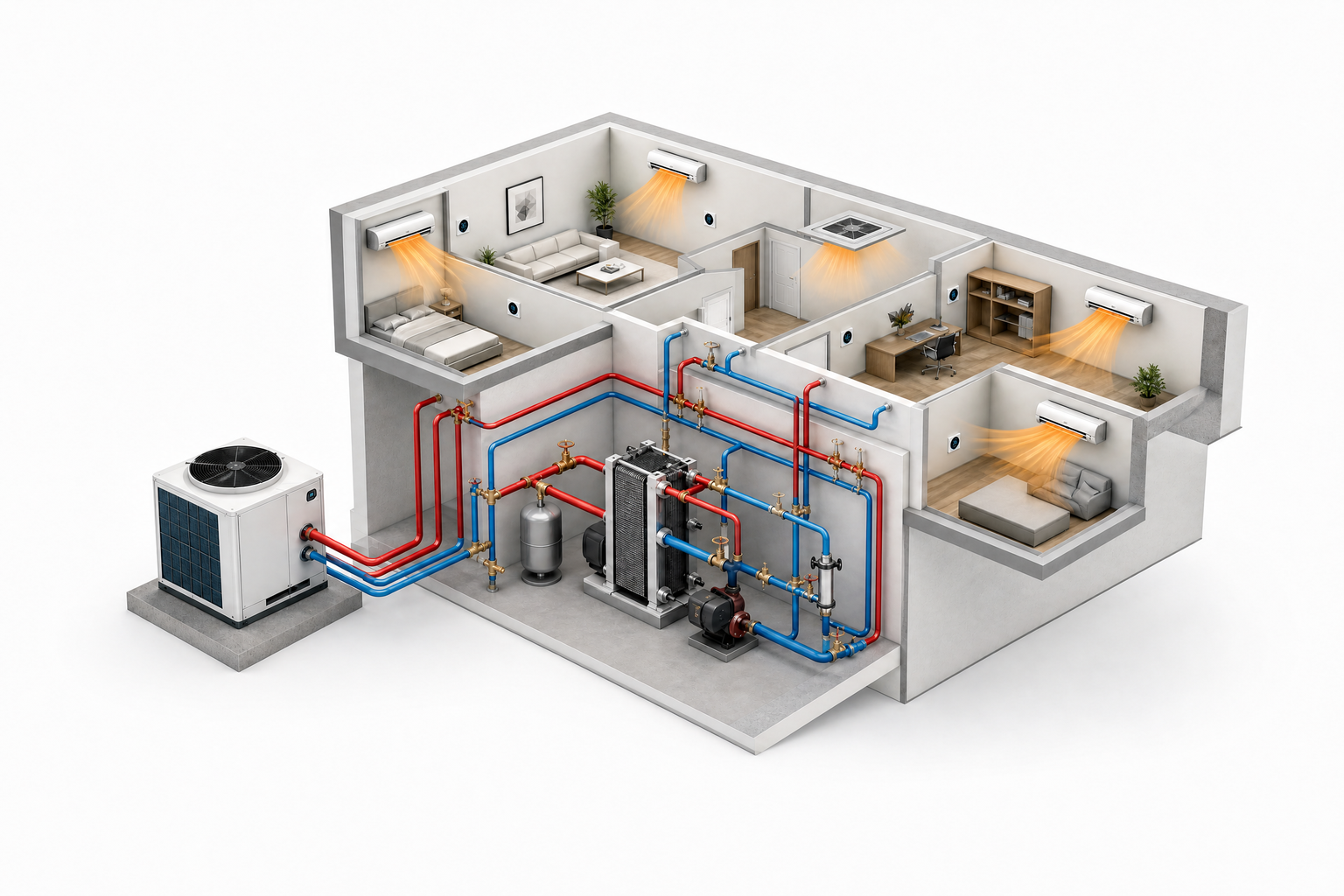
A typical fan coil unit heating system is designed to distribute thermal energy from a central heat source to multiple indoor spaces through a hydronic loop.
The system generally consists of the following functional components:
Heat source:A boiler, heat pump, or district heating system provides heated water.
Hydronic distribution system:Piping networks circulate heated water throughout the building.
Fan coil units (FCUs):
Terminal units transfer heat from water to indoor air using a heat exchanger and fan.
Heat exchanger:
In some systems, heat exchangers separate primary and secondary loops to improve system flexibility and safety.
Circulation system:Pumps maintain continuous water flow and ensure stable heat delivery.
Control system:
Thermostats and control valves regulate temperature and flow in each zone.
System Working Logic
The working logic of an FCU heating system is based on continuous heat transfer between water and air through a controlled hydronic circulation loop.
The system operates through the following continuous heating cycle:
Heat generation:A central heat source produces heated water for distribution.
Water circulation:Heated water is circulated through the piping network to fan coil units.
Heat transfer:Within each fan coil unit, heat is transferred from the water to the air through the coil heat exchanger.
Air distribution:A fan moves air across the heated coil to deliver warm air into the indoor space.
Water return:Cooled water returns to the heat source to be reheated and recirculated.
This continuous circulation process maintains stable indoor temperatures and supports reliable heating performance.
Suitable Product Types and System Configuration
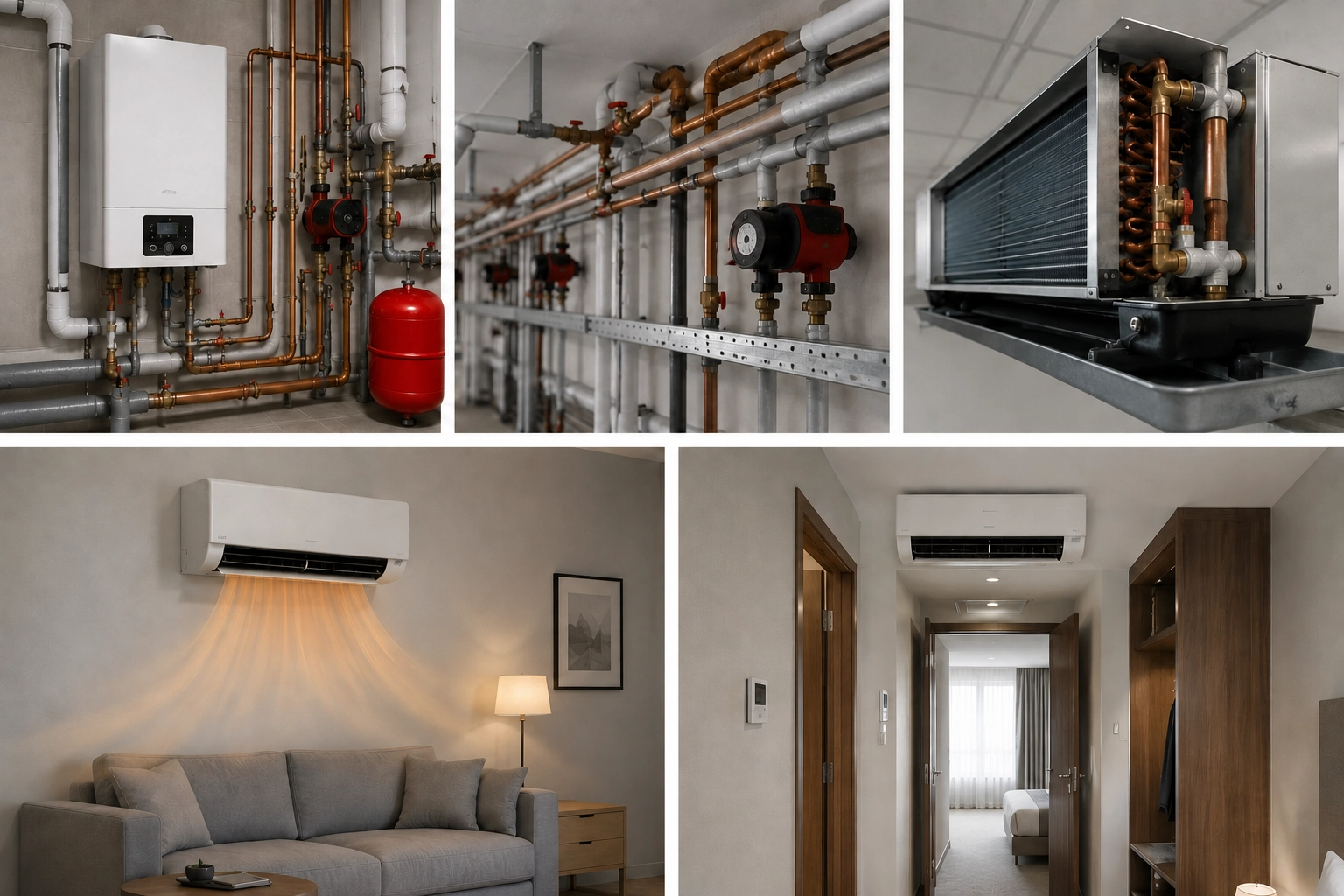
Several types of thermal and hydronic components are commonly used to support FCU heating systems. The configuration depends on building size, system design, and heating capacity requirements.
Common equipment used in this system includes:
Plate Heat Exchangers:Used to separate primary and secondary heating loops and improve system flexibility.
Shell and Tube Heat Exchangers:Applicable in larger systems requiring robust and stable heat transfer.
Fan Coil Units (FCU):Terminal units responsible for transferring heat from water to indoor air.
Circulation Pumps:Ensure continuous water flow and stable system operation.
Control Valves:Regulate water flow to individual FCUs for temperature control.
Expansion Tanks:Maintain system pressure and accommodate thermal expansion of water.
These components work together to enable efficient heat distribution and stable system performance.
Representative Application Environments
While system design principles remain consistent, operational requirements vary depending on building type and usage.
Office buildings:(link to Industries → Heating Solutions for Office Buildings)
Hotels and hospitality facilities:(link to Industries → Heating Solutions for Public Facilities)
Residential complexes:(link to Industries → Heating Solutions for Bathrooms)
Healthcare facilities:(link to Industries → Heating Solutions for Public Facilities)
FAQ
A fan coil unit (FCU) heating system is a compact indoor climate setup that warms a space by drawing air across a heated coil and circulating it with an integrated fan. Hot water supplied by a boiler, heat pump, or central hydronic plant provides the heat source, allowing the unit to distribute warmth quickly and evenly. FCUs are widely installed in apartments, hotels, offices, and condominiums to enable flexible, room-by-room temperature control. Many models also support cooling by running chilled water through the same coil, providing a practical year-round hydronic solution. Compared to traditional forced-air systems, fan coil units offer a space-saving footprint, rapid thermal response, and seamless integration with modern, energy-efficient HVAC equipment.
An FCU heating system operates by circulating hot water from a boiler, heat pump, or central plant through an internal heat exchanger coil. When the room thermostat signals a call for heat, an internal fan draws ambient air across the warm coil, transferring thermal energy before discharging the heated air back into the room. Units are configured vertically or horizontally to serve individual rooms or targeted zones based on the floor plan. Modulating fan speeds and hydronic flow control valves enable precise temperature maintenance and quick warm-up times. These systems are common in multi-family housing, hospitality, and commercial buildings that require efficient zonal climate control. Routine maintenance—such as replacing filters and inspecting coils—ensures consistent system performance and reliability throughout the heating season.
Fan coil unit heating systems serve facilities requiring independent, zone-by-zone climate control. They are common in hotels, apartment buildings, condominiums, corporate offices, schools, hospitals, and mixed-use developments. These systems fit environments with varying occupancy rates or differing thermal demands across rooms, as occupants can adjust each zone independently. FCUs are also frequently selected for retrofit projects where structural constraints prevent ductwork installation, making them practical for historic or space-restricted buildings. Commercial installations use them to maintain target temperatures in guest rooms, conference spaces, and individual offices, while residential users benefit from their quiet operation and low-profile cabinet profiles. Their versatility and zoning precision suit both ground-up construction and building modernizations.
An FCU heating system provides flexible, room-by-room thermal control for residential and commercial environments. Because fan coil units deliver rapid heat transfer, they bring spaces to setpoint faster than many traditional central systems while maintaining steady indoor conditions. Their compact physical design minimizes required mechanical space, simplifying installation in new construction and building retrofits alike. FCUs enhance energy efficiency by heating only occupied zones rather than conditioning an entire building, which helps lower monthly operational costs. Integrating modern programmable or smart thermostats further improves scheduling precision and system efficiency. Additionally, fan coil units operate quietly, offer straightforward filter maintenance, and integrate cleanly with heat pumps, boilers, and chilled water loops.
Selecting a fan coil unit heating system requires matching unit capacity to the room’s calculated heat loss, taking into account ceiling height, insulation quality, window area, and design climate conditions. Select a physical chassis configuration—wall-mounted, ceiling cassette, concealed ducted, or floor-standing—that aligns with interior design requirements and available mechanical clearances. Prioritize equipment with high seasonal efficiency ratings, electronically commutated motors (ECM) for variable fan speed control, and compatible digital thermostats to manage energy consumption. Verify system design parameters, including loop water temperatures, heat source compatibility, and maximum sound ratings (NC levels). Finally, evaluate filter accessibility, condensate drain pan layout, and manufacturer service support to ensure long-term operational reliability and maintain healthy indoor air quality.