
Floor Heating
Hydronic floor heating systems provide a reliable and energy-efficient solution for maintaining comfortable indoor temperatures across residential, commercial, and institutional buildings. By circulating warm water through a network of pipes installed beneath the floor surface, these systems deliver uniform heat distribution, quiet operation, and improved energy performance compared to traditional heating methods.
A well-designed floor heating system requires stable water circulation, precise temperature control, and effective pressure management to ensure long-term reliability and consistent comfort. Selecting the right components—such as circulation pumps, manifolds, expansion tanks, and control valves—is essential for achieving efficient system operation and dependable performance in a wide range of heating applications.
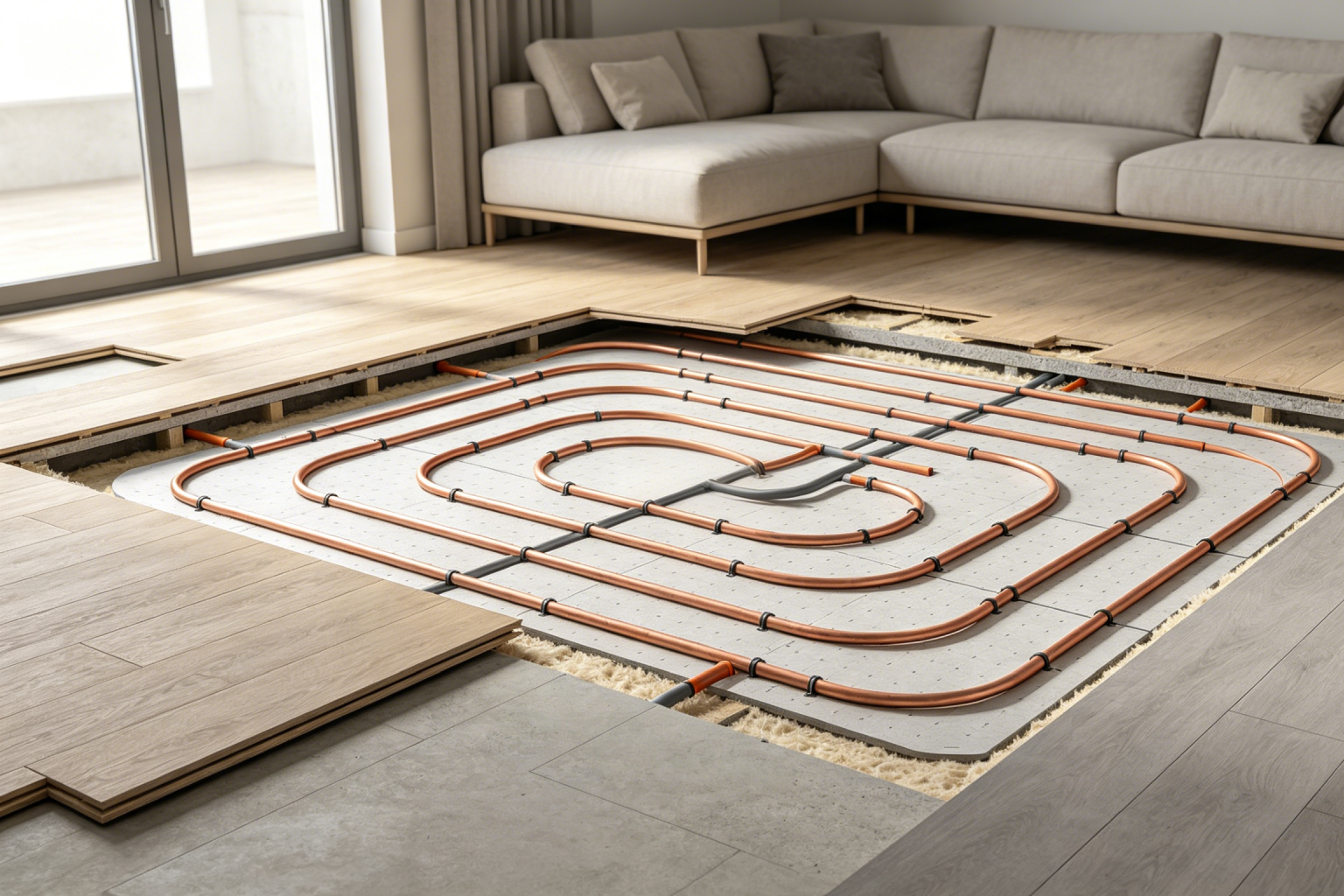
Floor Heating System Requirements and Challenges
Hydronic floor heating systems provide comfortable and energy-efficient indoor heating by circulating warm water through pipes installed beneath the floor surface. These systems operate at relatively low temperatures and require stable circulation to maintain consistent indoor comfort.
Because the piping network is embedded inside the floor structure, system reliability and long-term performance are critical. Proper system design and component selection help ensure safe operation, efficient heat transfer, and stable temperature control throughout the heating season.
System Requirements.
To ensure reliable and efficient operation, floor heating systems must meet several key technical requirements related to temperature control, flow stability, and system safety

System Challenges
Despite their advantages, floor heating systems can face operational challenges if the system is not properly designed, installed, or maintained.
- Uneven heating or temperature imbalance:
Improper flow distribution or insufficient circulation may cause certain areas to be warmer or cooler than others. A properly sized heating manifold helps balance water flow between different heating zones and ensures consistent heat distribution throughout the system. - Air accumulation in the system:Air trapped in the piping network can reduce heat transfer efficiency and create noise or flow instability.
- Pressure fluctuations during heating cycles:Thermal expansion can lead to pressure variations, increasing the risk of leaks or component stress if not properly managed.
- System response time and temperature control:Because the heating pipes are embedded in the floor structure, temperature changes occur gradually. Accurate temperature control is necessary to maintain comfort and prevent overheating.
- Long-term system reliability:Continuous operation over many heating seasons requires durable components and stable hydraulic performance to minimize maintenance and downtime.
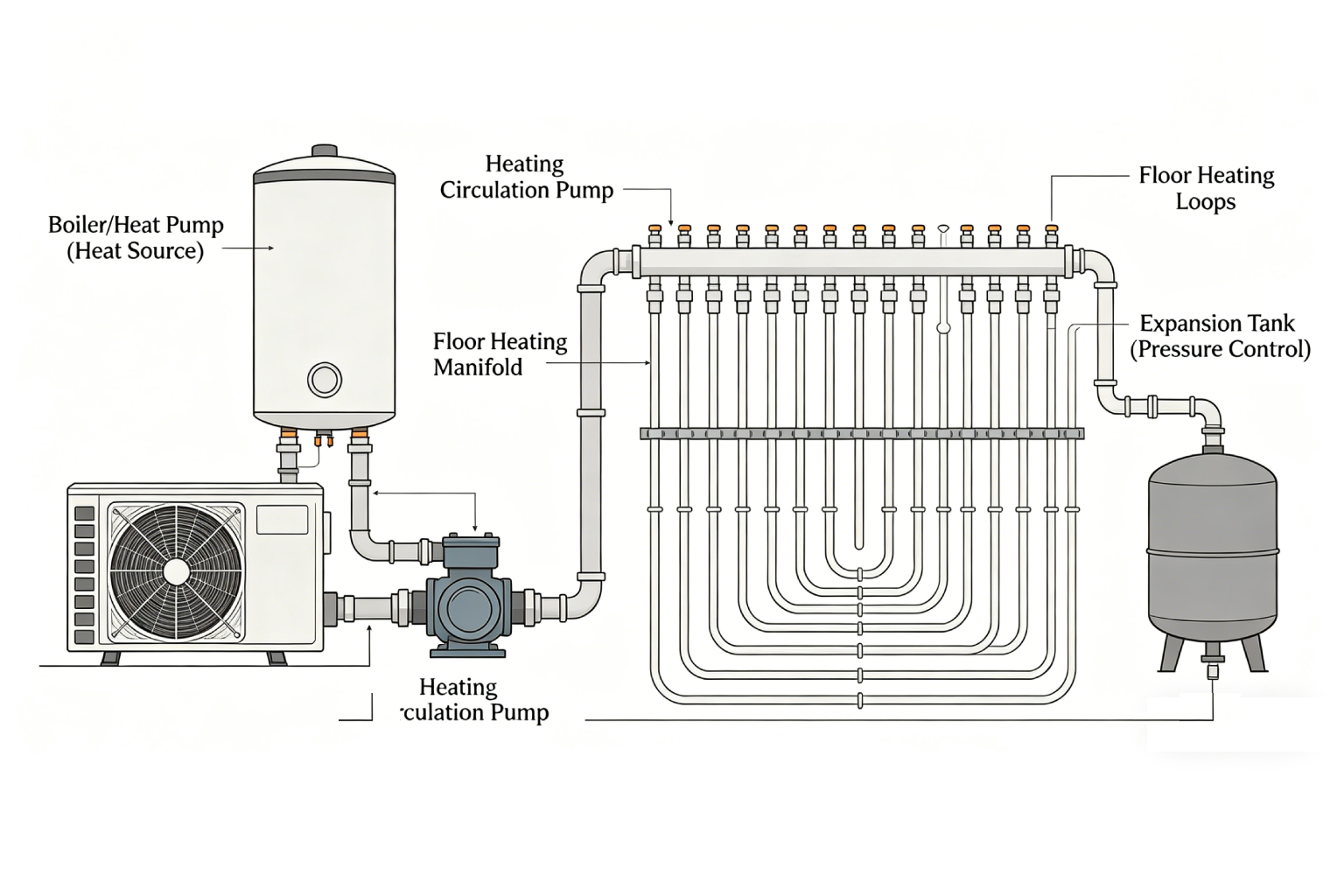
Standard Floor Heating System Solutions
A typical floor heating system consists of a heat source, circulation equipment, distribution components, and pressure control devices. These elements work together to deliver stable and efficient heating performance.
The standard system solution usually includes:
Heat source:Provides heated water for the system. Common options include boilers and heat pumps.
Circulation system:A heating circulation pump moves water through the floor heating loops to maintain consistent heat transfer.
Distribution system:A floor heating manifold distributes water evenly to multiple heating zones and allows flow adjustment.
Pressure control system:An expansion tank absorbs thermal expansion and stabilizes system pressure during operation.
This integrated system ensures reliable heating performance, energy efficiency, and long service life.
Floor Heating System Operation Principles
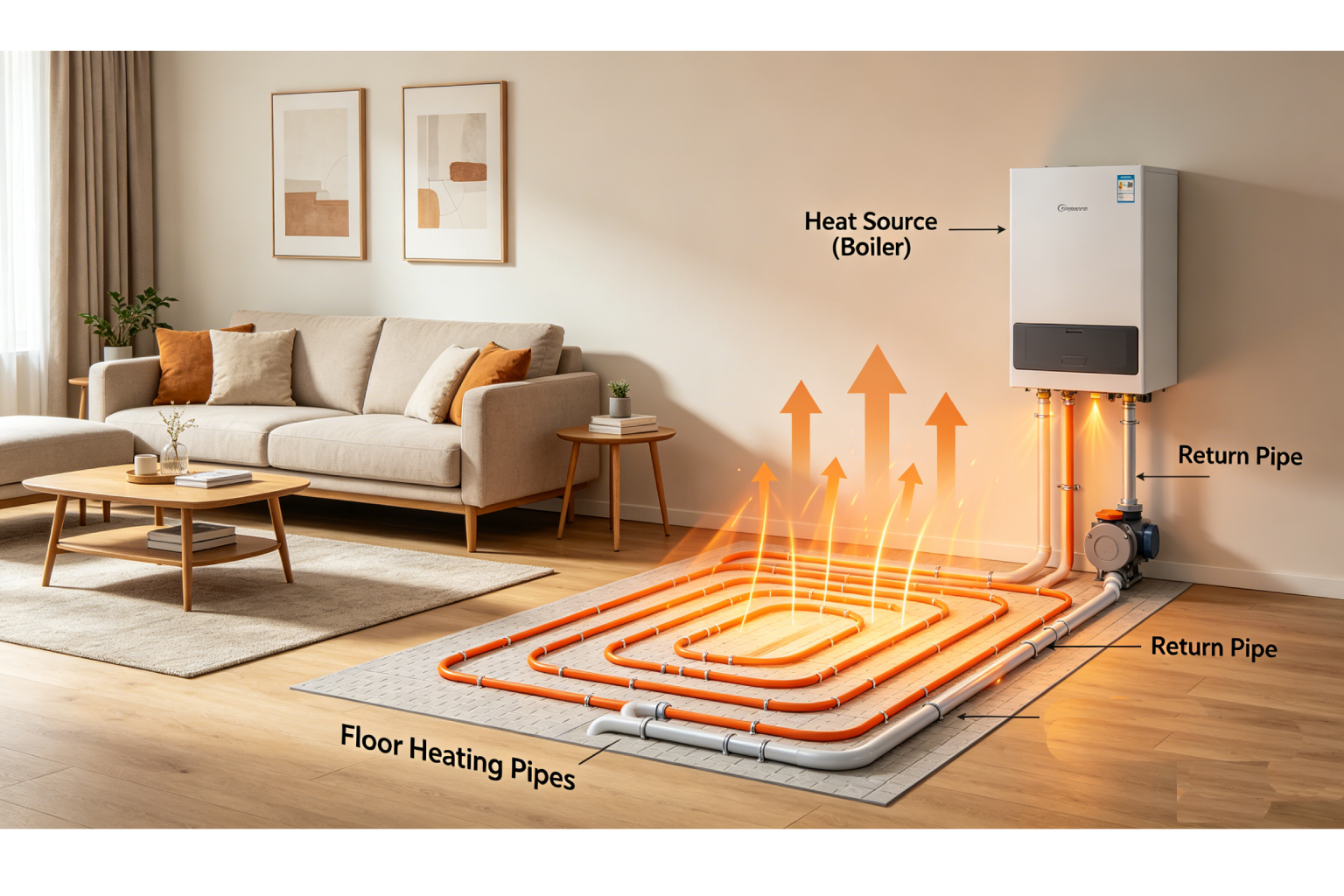
Floor heating systems operate by circulating warm water through pipes installed beneath the floor surface. Heat is transferred from the water to the floor and then radiated into the surrounding space.
The basic operating process includes:
- The heat source heats water to the required temperature
- The circulation pump moves heated water through the system
- Heat is transferred through the floor to the room
- Cooled water returns to the heat source for reheating
This continuous circulation process provides:
- Even heat distribution
- Quiet operation
- Stable indoor temperature
- Improved energy efficiency
Low-temperature operation also reduces heat loss and improves system safety.
Applicable Product Types and Typical System Configurations
Several key components are required to ensure reliable performance in floor heating systems. These products work together to maintain stable flow, temperature control, and system pressure.
Heating Circulation Pumps: Heating circulation pumps provide the driving force that moves water through radiant floor heating loops. They are designed for continuous operation and energy-efficient performance in residential and commercial hydronic heating systems.
Floor Heating Manifolds: Floor heating manifolds distribute heated water to multiple floor heating circuits while allowing precise flow control for each zone. They play a critical role in balancing and managing hydronic heating systems.
Expansion Tanks: Expansion tanks help maintain stable pressure within hydronic heating systems by absorbing water expansion during the heating process. They contribute to safer and more reliable system operation.
Representative Floor Heating Application Environments
While the core operating principles of hydronic floor heating systems remain consistent, system design requirements and operating conditions may vary depending on the building type, occupancy patterns, and heating load characteristics. Factors such as installation area, temperature demand, and system runtime can influence equipment selection, control strategies, and overall system configuration.
Common application environments include:
Residential buildings
(link to Industries → Heating Solutions for Bathrooms)
Commercial buildings
(link to Industries → Heating Solutions for Office Buildings)
Healthcare and educational facilities
(link to Industries → Heating Solutions for Public Facilities)
Industrial and specialized facilities
(link to Industries → Manufacturing & Processing Heating Applications)