


Wall Mount & Heating Units Overview
Alfa Heating Supply offers aluminum and copper-aluminum radiators for hydronic and hot water heating systems. These wall-mounted heating radiators are designed to transfer heat from circulating hot water into residential and light commercial spaces.
Our radiator selection includes sectional aluminum radiators and copper-aluminum radiators for different heating system requirements. Depending on the application, customers can select a suitable radiator based on heat output, material, dimensions, section configuration, and connection requirements.
Their compact structure allows installation along walls without occupying valuable floor space, making them suitable for mechanical rooms, workshops, offices, and utility areas. Modern wall mount radiators are typically manufactured using durable materials such as steel or aluminum to support long-term operation under controlled pressure and temperature conditions. Depending on system requirements, units may be configured for horizontal or vertical mounting and connected using standard threaded or flanged fittings for integration into different heating system layouts.
Key Features of Wall Mount Heating Units
- Corrosion-Resistant Aluminum Construction-Manufactured from corrosion-resistant aluminum using a specialized alloy formulation designed for long-term operation in hydronic heating systems. Aluminum provides fast heat transfer and stable thermal performance.
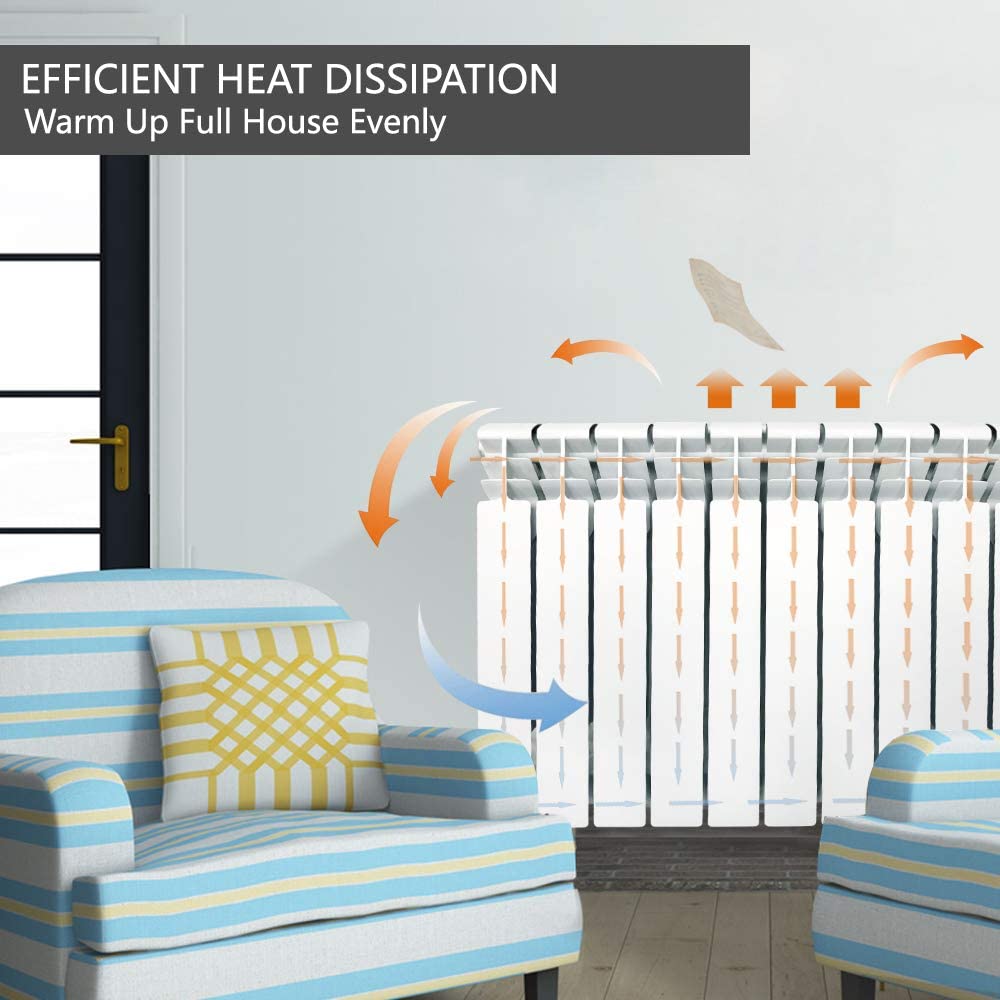
- High Thermal Efficiency-Heat is transferred through convection, conduction, and radiation, enabling rapid temperature response and efficient energy use in heating applications.
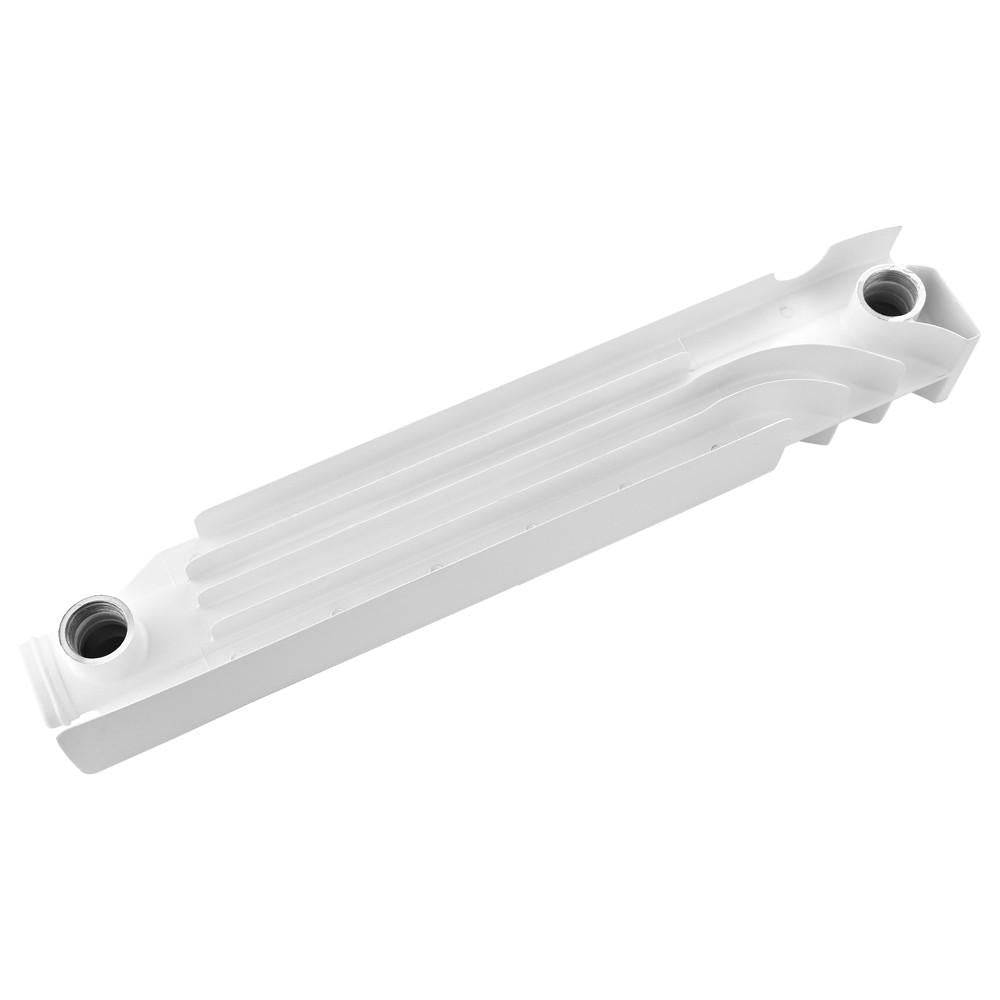
- High-Pressure Die-Casting Manufacturing-The radiator body is produced using a high-pressure die-casting process, with aluminum melted at approximately 1350°F (730°C) and formed using 800–1000 ton casting equipment, ensuring structural consistency without welded seams.
- Internal Corrosion Protection-An internal anti-corrosion coating protects the water channel from oxidation and scaling, supporting reliable performance in closed-loop heating systems.
- Durable Surface Finishing-Electrostatic powder coating and high-temperature baking provide a smooth, durable surface that resists discoloration and environmental exposure.
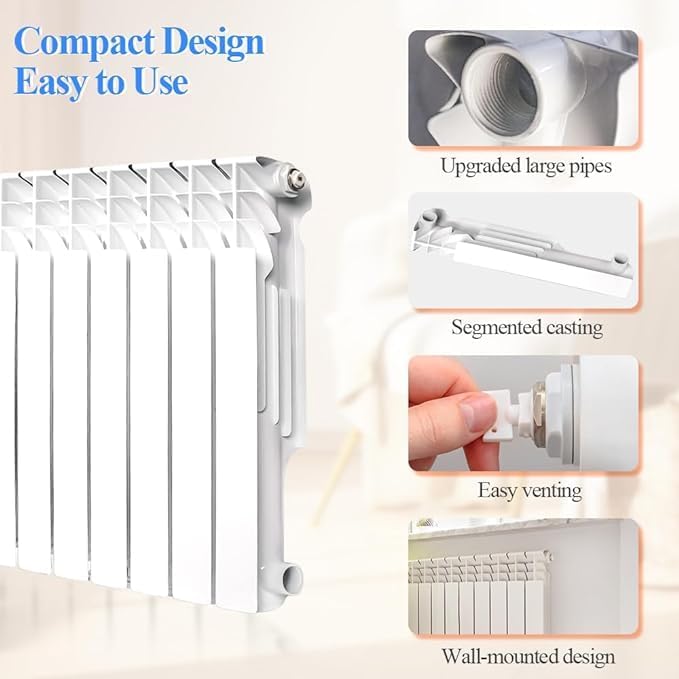
- Modular Section Design-The modular structure allows sections to be added or removed as needed, simplifying installation and system capacity adjustment.
- High-Temperature Safety Operation-Designed for safe operation in heating systems with water temperatures up to 250°F (121°C).
Copper-Aluminum Radiators for Hydronic Heating
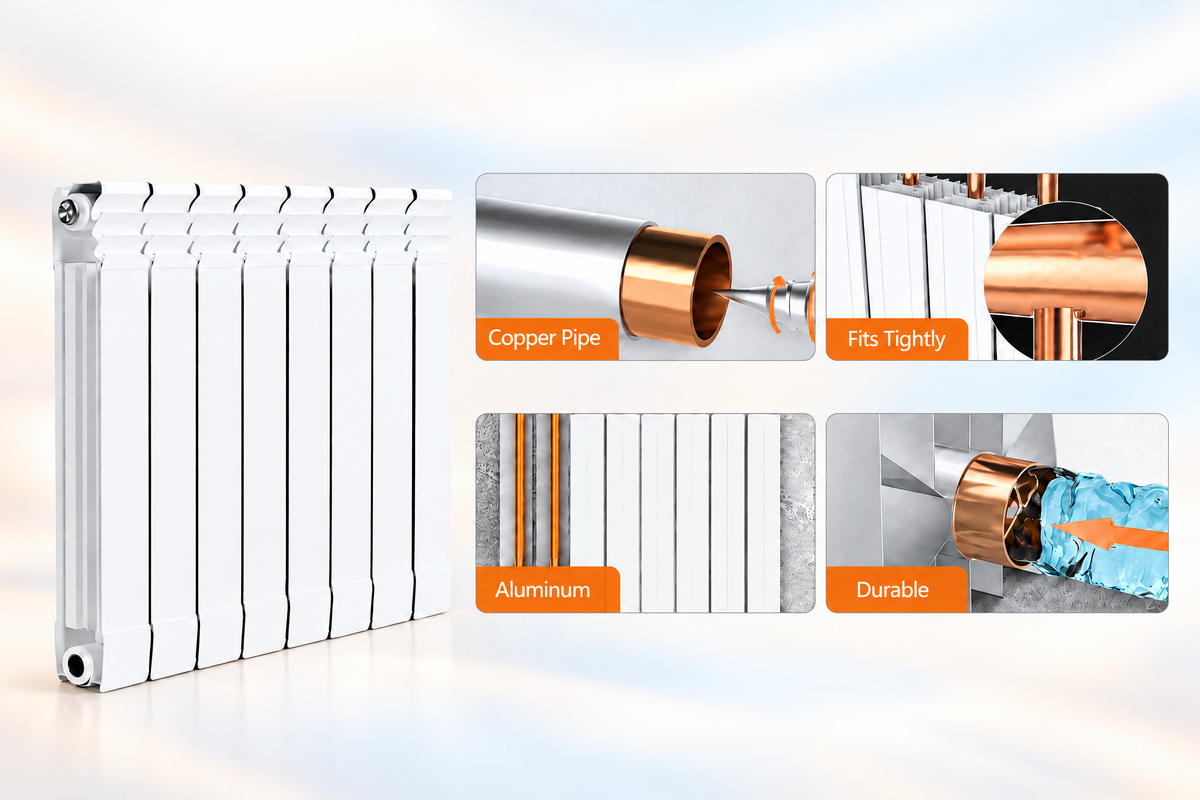
Copper-aluminum radiators provide a wall-mounted heating solution for residential and light commercial hydronic heating systems. Designed for closed-loop hot water applications, they provide gentle, steady warmth while helping maintain a comfortable indoor environment. The clean white finish suits a range of interior spaces.
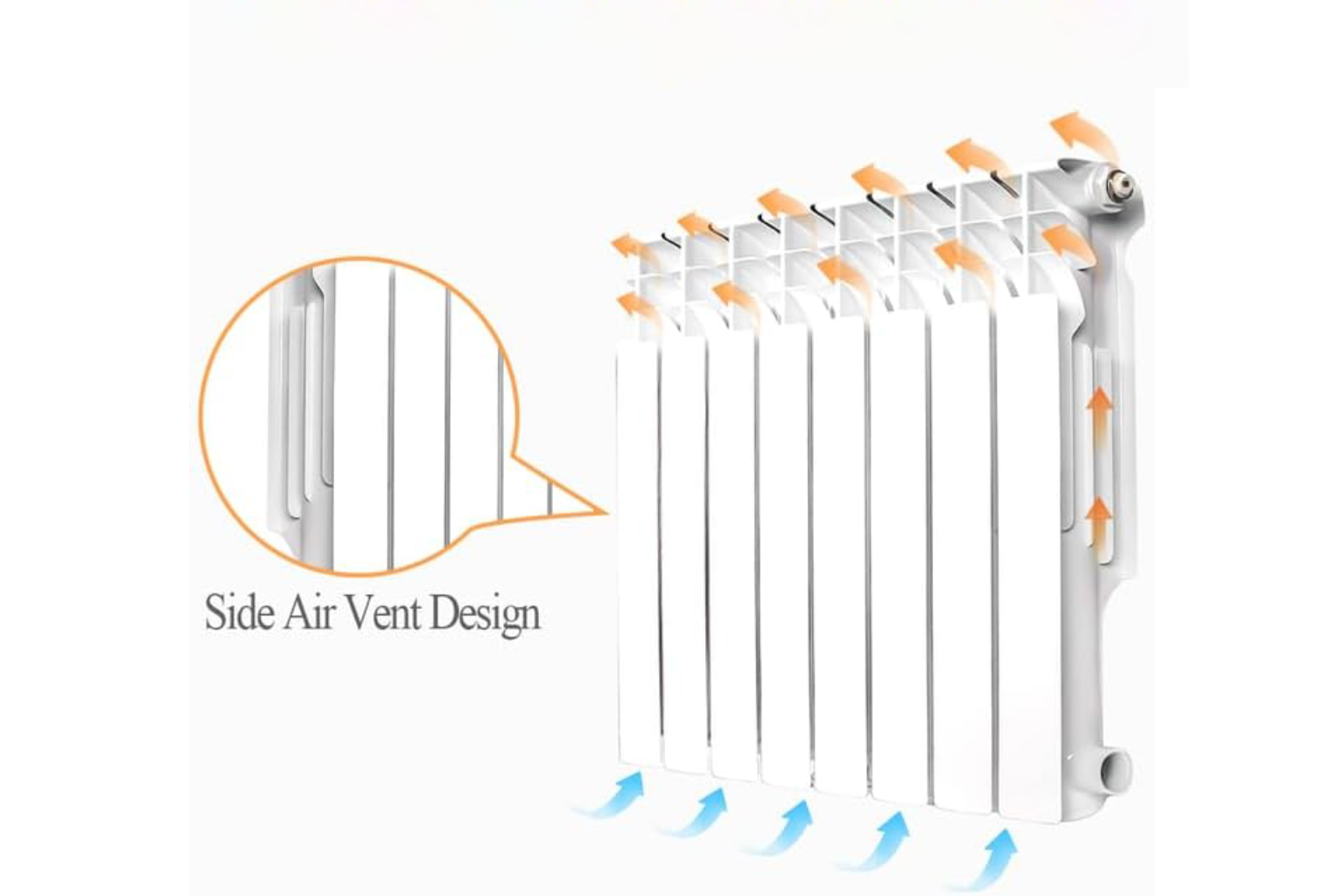
A multi-layer fin design helps increase heat dissipation, while the side deflector directs warm air upward to promote more even room heating and help reduce direct heat exposure to walls. Multiple independent heating chambers support faster heat transfer and airflow, while tight sealing helps provide reliable leak resistance for everyday hydronic heating applications.
When selecting a copper-aluminum radiator, consider the required heat output, number of sections, water temperature, connection size, available wall space, and heating load of the room. These radiators are designed for compatible hot water hydronic heating systems and include mounting hardware for wall-mounted installation.
Applications of Radiators in Heating Systems
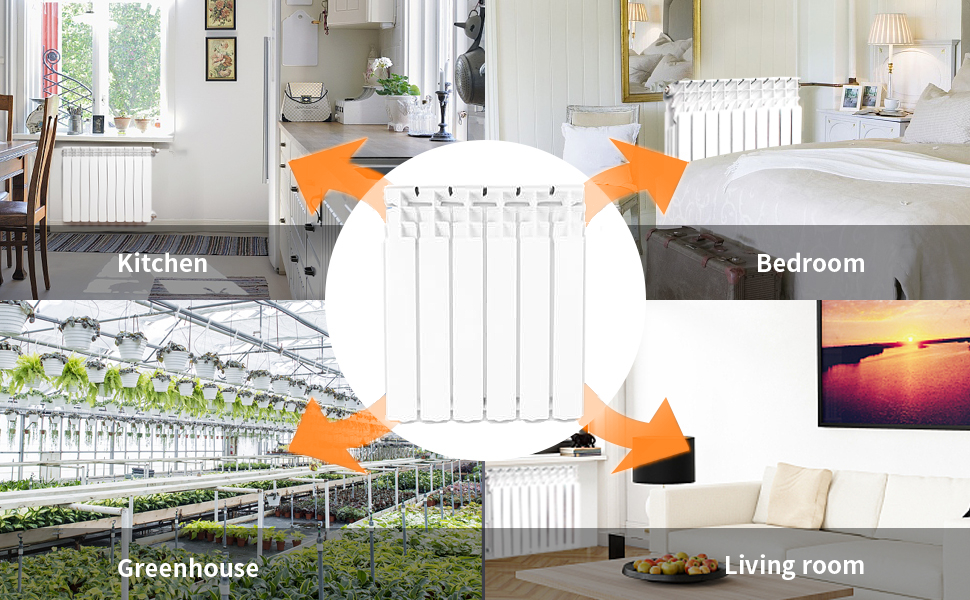
Radiators are used in a wide range of heating systems where consistent temperature control and reliable heat distribution are required. Their versatility allows integration into residential, commercial, and industrial environments, supporting both small-scale and large-scale heating operations. Depending on system design, radiators may operate within hydronic, boiler-based, or centralized heating networks to maintain stable indoor conditions and support overall system efficiency.


How Radiators Work in Heating Systems
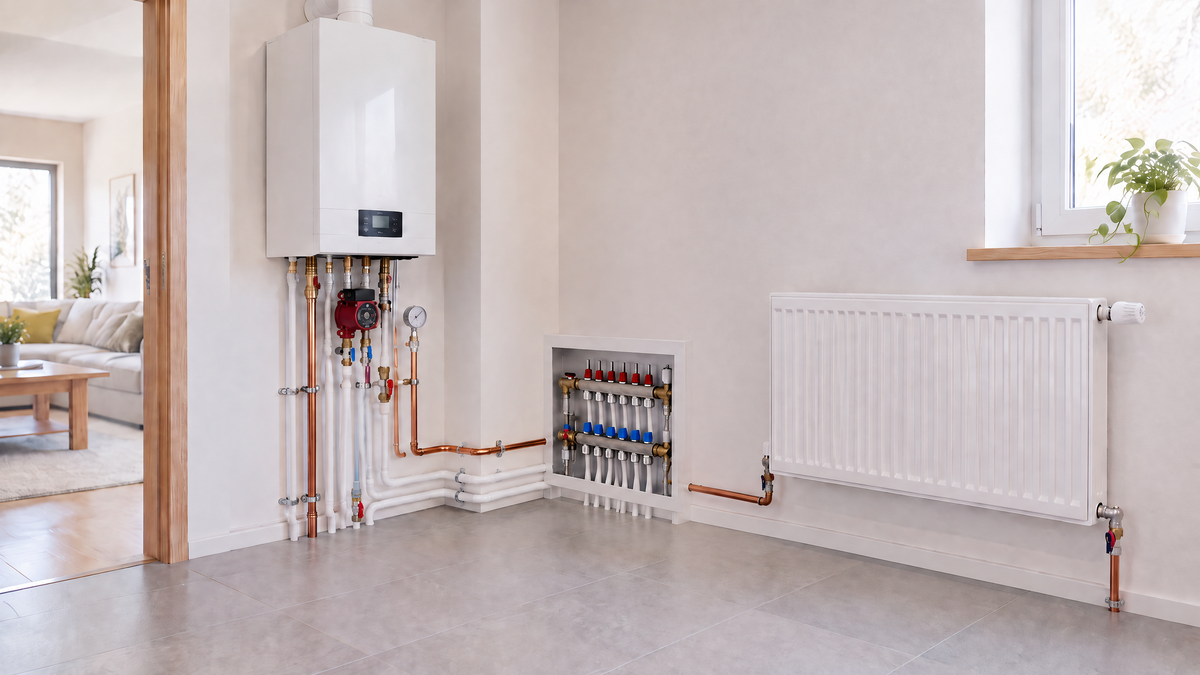
Radiators operate as heat exchange components within a closed-loop heating system. Heated water produced by a boiler, heat pump, or central heating unit flows through internal channels inside the radiator. As the hot water circulates, thermal energy is transferred from the radiator surface to the surrounding air through convection and radiation.
Once the heat is released into the space, the cooled water returns to the heating source through the return line, where it is reheated and recirculated. This continuous cycle maintains stable indoor temperatures and supports efficient energy use within the system.
Selecting the Right Radiators for Heating
Selecting a suitable radiator involves evaluating system capacity, installation conditions, and maintenance needs to ensure reliable heating performance.
- Heating Capacity-Choose heat output based on room size, insulation, and temperature conditions.
- System Compatibility-Ensure compatibility with boilers, heat pumps, or district heating systems.
- Installation Location-Consider wall space, airflow, and service access.
- Mounting Type-Select horizontal or vertical installation based on system layout.
- Maintenance-Routine inspection and cleaning help maintain long-term efficiency.
FAQ
Radiators are used to transfer thermal energy from heated water or steam into indoor spaces. In hydronic heating systems, radiators act as terminal heat emitters that distribute heat through convection and radiant heat transfer, maintaining stable indoor temperatures.
They are commonly installed in residential and commercial buildings as part of closed-loop heating systems, where heated water circulates from the heat source through the radiator and returns for reheating. Proper radiator sizing and placement are essential for achieving balanced heat distribution and system efficiency.
In a hydronic heating system, heated water is delivered from a boiler or heat pump to the radiator through supply piping. As the hot water flows through the radiator body, heat is transferred to the surrounding air and building surfaces.
After releasing thermal energy, the cooled water exits through the return connection and is recirculated back to the heat source. Flow rate, water temperature, and radiator surface area all influence heat output and overall system performance in radiator-based heating systems.
Old radiators are cumbersome due to their large water content. They require higher flow temperatures and therefore consume more energy. They are not suitable for the low operating temperatures of modern heat generators based on renewable energies. They no longer provide the desired thermal comfort.
Recently viewed
News
View all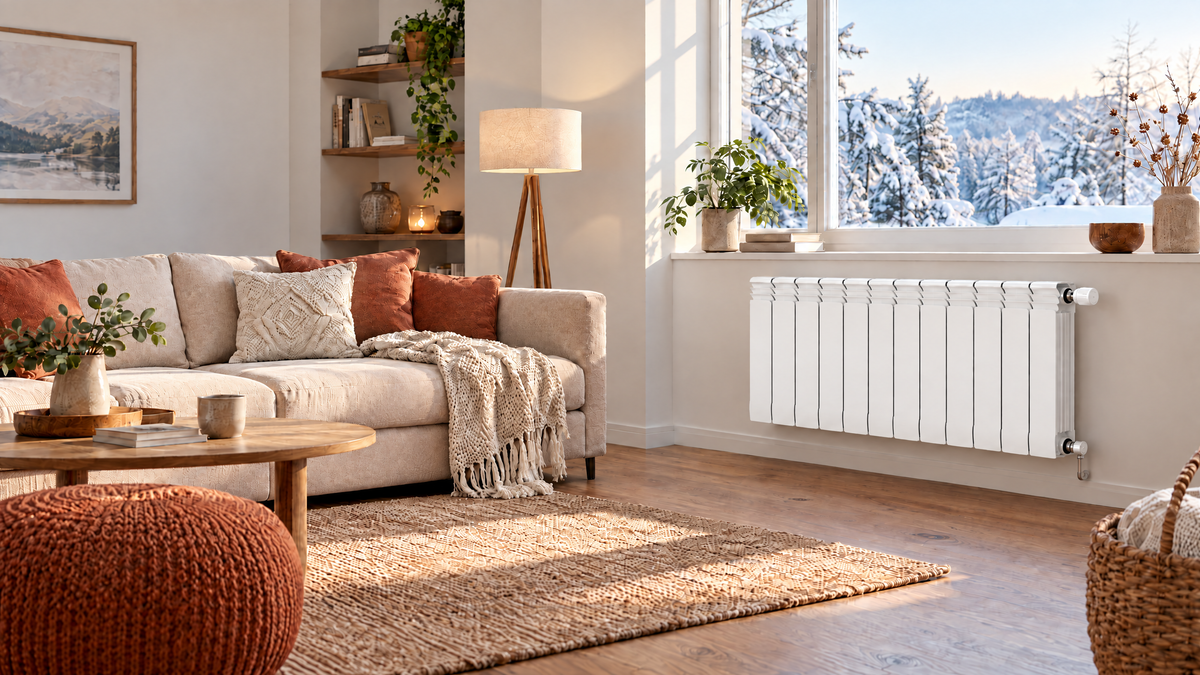
Boiler Radiator Heating System: How Hot Water Radiators Work
Can a Brazed Plate Heat Exchanger Be Used Between Two Water Circuits?
