
Plate Heat Exchangers
Plate heat exchangers provide highly efficient heat transfer in a compact and reliable design. Widely used in HVAC, industrial processing, domestic hot water systems, refrigeration, and fluid cooling applications, they enable effective temperature control while supporting stable system operation and energy efficiency. Heat is transferred between two separate fluid circuits through a series of thin corrugated metal plates, allowing high thermal performance within a relatively small installation footprint. The corrugated plate structure promotes turbulence across the flow channels, improving heat transfer efficiency while helping reduce fouling under properly designed operating conditions.
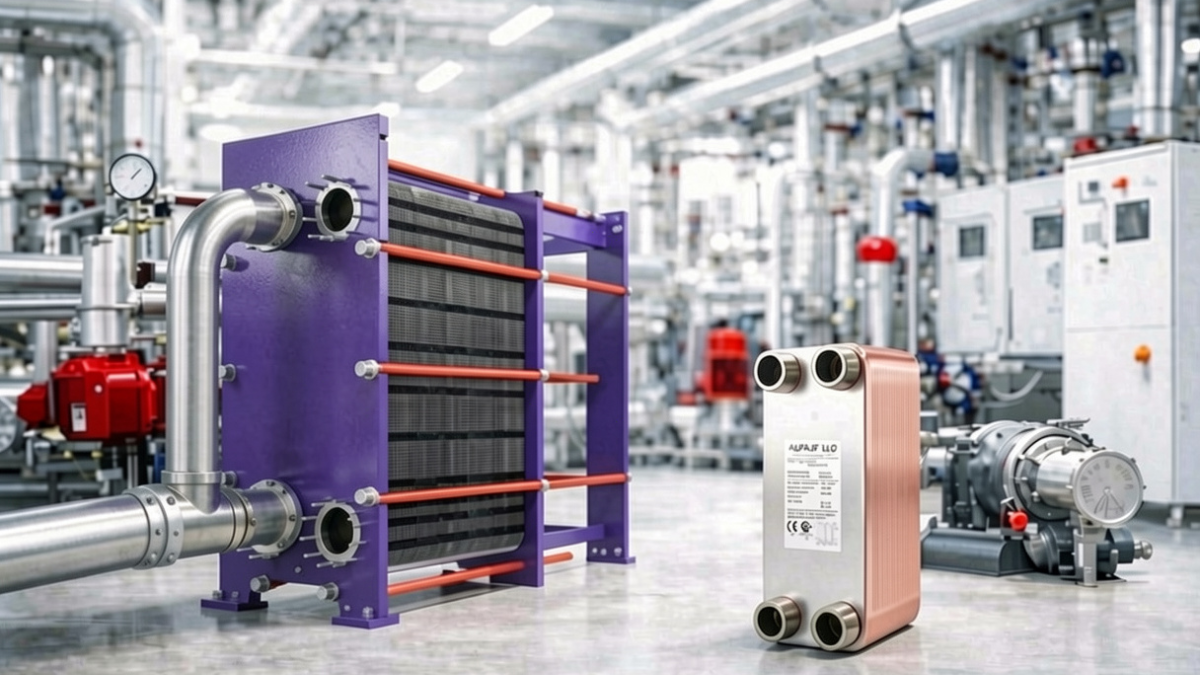
Wide Plate Heat Exchanger Portfolio


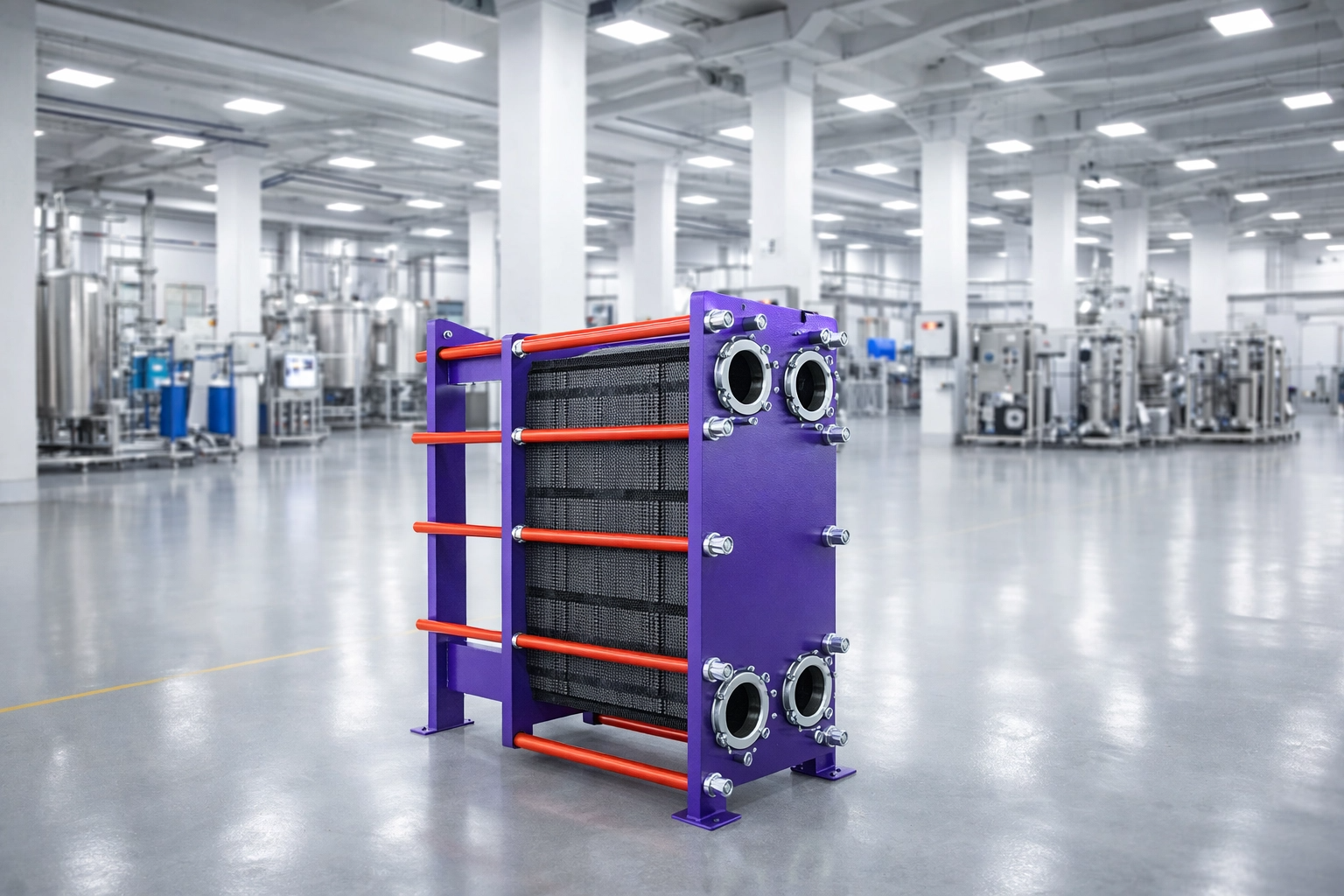
Why Choose Plate Heat Exchangers
- High Heat Transfer Efficiency
Optimized plate patterns create strong turbulence between fluids, maximizing heat transfer efficiency while reducing the required heat exchange surface.
- Compact and Space-Saving Design
The compact plate structure allows high thermal performance within a small footprint, making plate heat exchangers ideal for installations where space is limited.
- Energy Efficient Operation
Efficient heat transfer reduces energy consumption and operating costs while supporting stable temperature control in a wide range of applications.
- Reliable and Durable Construction
Manufactured with high-quality stainless steel plates and precision engineering, plate heat exchangers provide long service life and dependable performance.
How Plate Heat Exchangers Work
Plate heat exchangers transfer thermal energy between two fluids without mixing them. The fluids flow through separate channels formed by a series of thin metal plates.
These plates are designed with specialized patterns that create turbulence, increasing heat transfer efficiency while maintaining a compact design. In compact and high-pressure applications, brazed plate heat exchangers are widely used due to their durable, gasket-free construction.
As the hot and cold fluids pass through alternating channels, heat moves through the plate surface, allowing efficient temperature control in heating, cooling, and energy recovery applications.
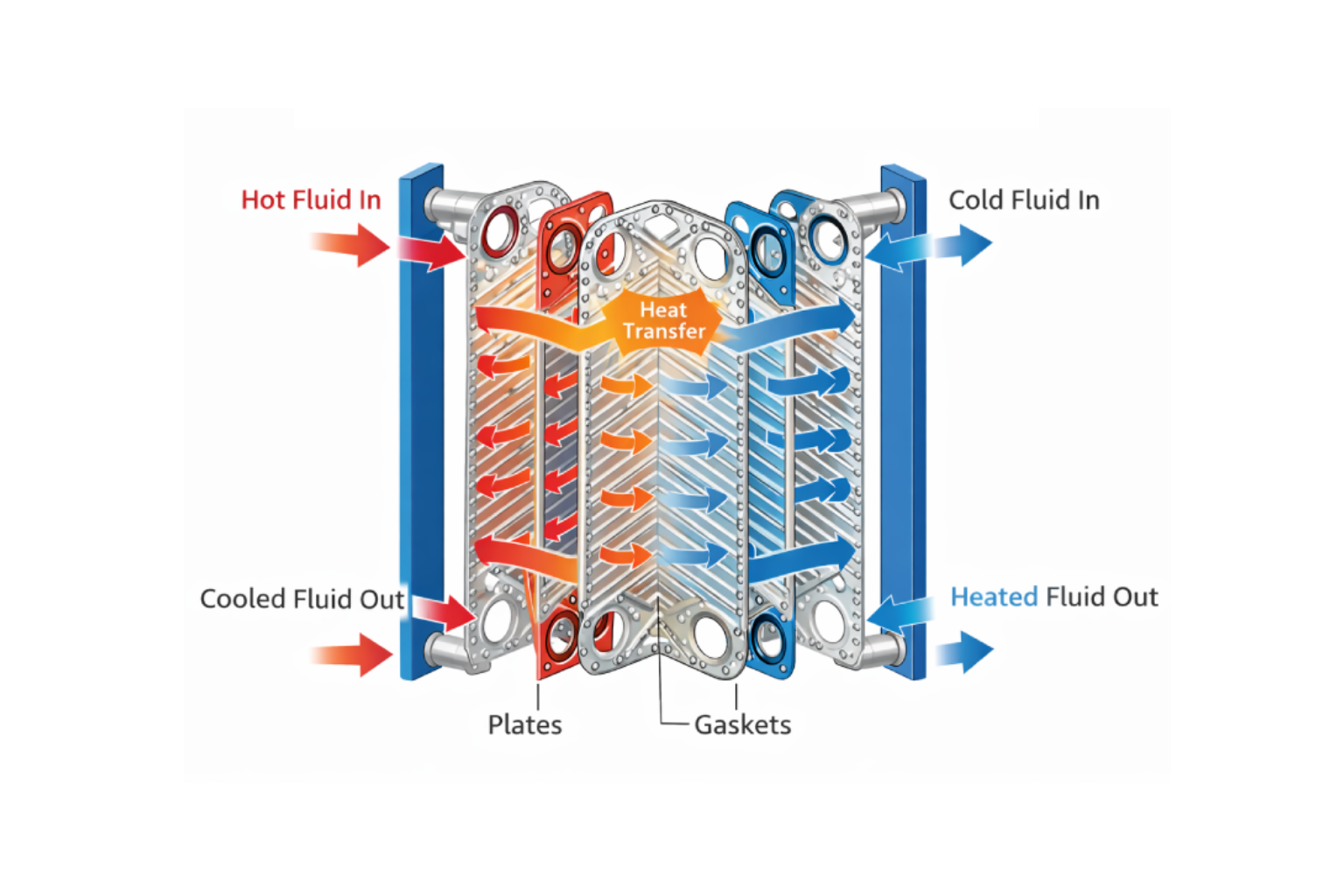
Plate Heat Exchanger Types
Different plate heat exchanger configurations are designed to meet varying operating conditions, temperature ranges, pressure requirements, and fluid compatibility needs across industrial and HVAC systems. Common solutions include Plate Oil Coolers used in hydraulic equipment, lubrication systems, and industrial machinery to maintain stable oil temperatures and protect system performance. Air Dryer Plate Heat Exchangers are widely applied in compressed air treatment systems to improve heat transfer efficiency during air drying processes. Brazed plate heat exchangers are commonly selected for compact systems requiring efficient thermal performance, reliable operation, and minimal maintenance across refrigeration, hydronic heating, and industrial cooling applications.
In refrigeration and process cooling systems, Brazed Plate Condensers are commonly used for refrigerant condensing and heat rejection, while Brazed Plate Evaporators support efficient thermal exchange in cooling and evaporation processes. These plate heat exchanger configurations are selected based on factors such as heat load, flow rate, installation space, fluid compatibility, and operating pressure requirements.
Typical Applications of Plate Heat Exchangers


FAQ
A plate heat exchanger is a type of heat exchanger that transfers heat between two fluids using a series of thin metal plates. The large surface area created by the plates allows highly efficient heat transfer in a compact design, making it widely used in HVAC, hydronic heating, and cooling systems.
Plate heat exchangers are generally more efficient and compact compared to shell and tube heat exchangers. In many applications, they can achieve higher heat transfer efficiency in a smaller footprint. In addition, plate heat exchangers allow flexible configuration by adding or removing plates, making them easier to maintain and adapt to different system requirements.
A plate heat exchanger works by allowing a hot fluid and a cold fluid to flow through alternating channels separated by metal plates. The heat is transferred from the hot fluid to the cold fluid without the two liquids mixing.
Gaskets or brazed sealing patterns guide the flow direction, ensuring each fluid follows a controlled path across the plates for maximum heat transfer efficiency.
News
View all
Boiler Radiator Heating System: How Hot Water Radiators Work
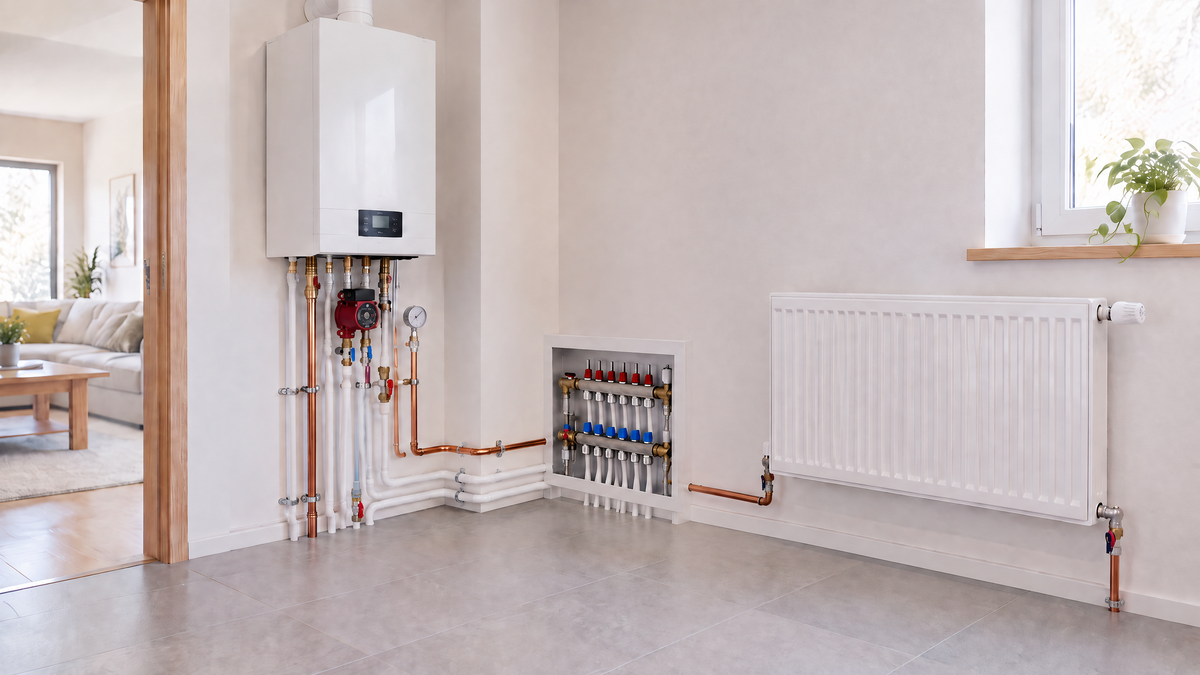
Can a Brazed Plate Heat Exchanger Be Used Between Two Water Circuits?
