

Circulation pumps play an important role in heating, cooling, hot water, and other hydronic systems. They move water or other compatible fluids through pipes and system components, helping distribute heat or cooling where it is needed.
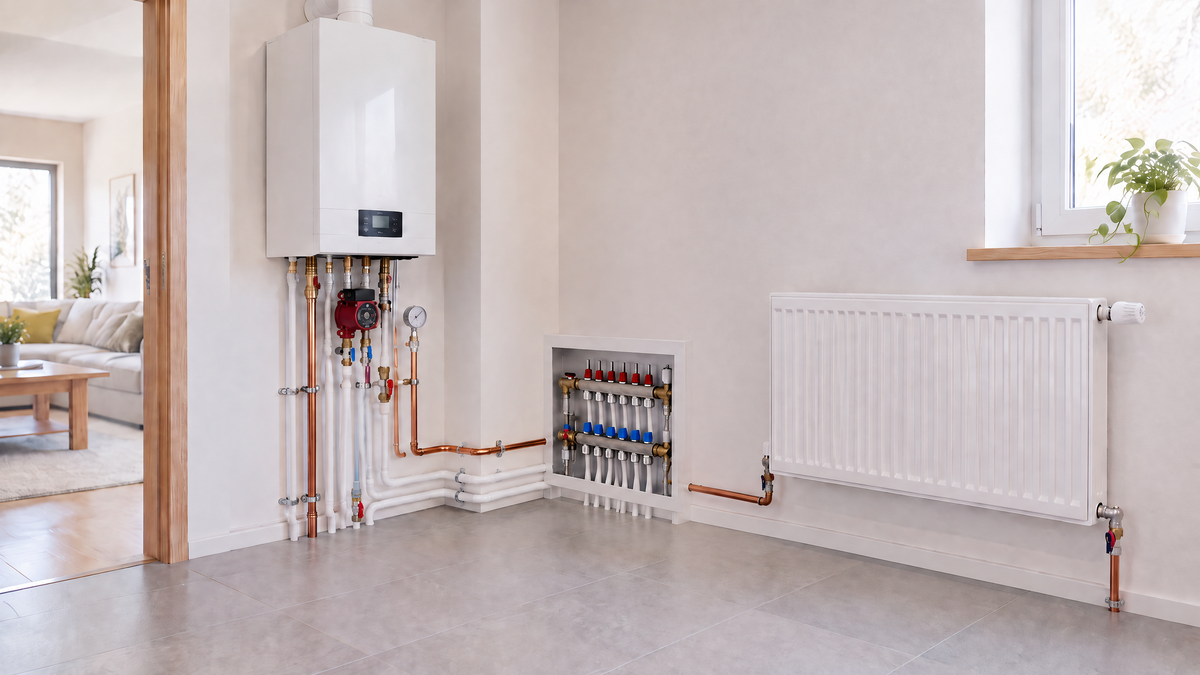
In a typical hydronic heating system, a circulation pump moves heated water from a boiler or other heat source to radiators, underfloor heating circuits, fan coils, or a heat exchanger. The cooler water then returns to the heat source to be heated again.
Understanding how circulation pumps work, what they are used for, and how to select the right pump can help improve system performance and reliability. This guide explains the working principle of circulation pumps, common types and applications, and how they work together with boilers, heat exchangers, radiators, and other heating components.
What Is a Circulation Pump?
A circulation pump is a mechanical device designed to move water or other compatible fluids through a piping system. Unlike a pump primarily used to transfer fluid from one location to another, a circulation pump is commonly used in a continuous or closed-loop circuit where fluid repeatedly travels through the system.
The main function of a water circulation pump is to maintain the required flow through the system. In heating applications, the pump moves heated water from the heat source to radiators, underfloor heating systems, fan coils, or other heat emitters. The cooler return water then flows back to the heat source.
Circulation pumps can be used in many different applications, including:
-
Hydronic heating systems
-
Boiler heating systems
-
HVAC heating and cooling systems
-
Solar thermal systems
-
Pool heating systems
-
Heat exchanger circuits
-
Industrial fluid circulation systems
Depending on the application, the pump may be referred to as a circulator pump, circulating pump, heating circulation pump, boiler circulation pump, or hot water circulation pump.
How Do Circulation Pumps Work?
The working principle of a circulating pump is relatively simple. Most circulation pumps use an electric motor to rotate an impeller. As the impeller turns, it creates a pressure difference across the pump, causing water to flow through the connected piping.
A typical heating circuit works as follows:
-
The boiler or another heat source heats the water.
-
The circulation pump moves the heated water into the supply piping.
-
The heated water flows through radiators, underfloor heating circuits, fan coils, or a heat exchanger.
-
Heat is transferred to the building or another fluid circuit.
-
The water cools as it passes through the system.
-
The cooler return water flows back to the heat source.
-
The cycle repeats while the system requires circulation.
The main components of a typical circulation pump include the motor, impeller, pump housing, shaft, and electrical controls. The motor provides the power needed to rotate the impeller, while the impeller transfers energy to the fluid and creates the pressure difference required for flow.
It is important to understand that a circulation pump does not create heat. Its primary function is to move fluid through the system. The heat is normally supplied by a boiler, water heater, heat pump, solar collector, or another heat source.
Types of Circulation Pumps
Different systems require different types of circulation pumps. The appropriate pump depends on the fluid, required flow rate, pressure or head, temperature, piping arrangement, and application.
Heating Circulation Pumps
Heating circulation pumps are commonly used in hydronic heating systems. They circulate heated water between the heat source and heat emitters such as radiators, underfloor heating systems, and fan coil units.
In a residential heating system, the pump may move water from a boiler through multiple heating zones before returning it to the boiler.
For systems using [radiators for heating], the circulation pump helps maintain the water flow required to distribute heat throughout the building.
Boiler Circulation Pumps
A boiler circulation pump moves heated water between the boiler and the heating circuit.
The required flow depends on the boiler output, temperature difference, piping arrangement, and pressure losses throughout the system. Larger systems may use multiple pumps for separate heating zones or primary and secondary circuits.
A properly selected boiler circulating pump helps maintain the flow required by the heating system and allows the boiler and heat emitters to operate as designed.
Hot Water Circulation Pumps
Hot water circulation pumps are commonly used in domestic hot water systems with a dedicated return loop.
The pump circulates heated water through the hot water piping and back to the water heater. This can reduce the waiting time for hot water at fixtures and reduce water wasted while users wait for the temperature to rise.
Hot water circulation is different from hydronic space heating because the circulating water is intended for domestic hot water service rather than primarily for transferring heat to radiators or other heating equipment.
HVAC Circulation Pumps
HVAC circulation pumps are used in hydronic heating and cooling systems. Depending on the system design, the circulating fluid may flow between boilers, chillers, air-handling equipment, fan coil units, and heat exchangers.
For example, a chilled-water system uses circulation pumps to move chilled water between the chiller and air-handling or terminal equipment.
In heating applications, the same basic principle is used to circulate heated water through the HVAC system.
Solar Circulation Pumps
Solar thermal systems use circulation pumps to move heat-transfer fluid between solar collectors, storage tanks, and heat exchangers.
The pump operates as part of a controlled circulation loop. When the solar collector can provide useful heat, the system controller can activate the pump to circulate the heat-transfer fluid.
Where Are Circulation Pumps Used?
Circulation pumps are used in many residential, commercial, and industrial systems where controlled fluid circulation is required.
Residential Heating Systems
In residential hydronic heating systems, circulation pumps move heated water from the heat source to radiators, underfloor heating circuits, or other heat emitters.
A typical system may include:
Boiler → Circulation Pump → Radiators → Return Piping → Boiler
The pump maintains the flow required to distribute heat throughout the system.
Boiler and Hydronic Heating Systems
Commercial and residential boiler systems may use one or more circulation pumps depending on the number of heating zones and the system design.
Multiple pumps can be used to serve separate zones, primary and secondary loops, domestic hot water circuits, or other parts of the system.
The correct pump selection should consider the flow and head requirements of the complete circuit rather than simply selecting a pump based on pipe size.
Domestic Hot Water Systems
Domestic hot water systems may use a circulation pump and return loop to keep hot water moving through the building's hot water piping.
This type of system is particularly useful in larger homes, commercial buildings, hotels, and other properties where fixtures may be located far from the water heater.
HVAC Heating and Cooling Systems
Circulation pumps are also used in hydronic HVAC systems to move heated or chilled water.
A system may include a boiler or chiller, pump, heat exchanger, air-handling unit, fan coil unit, or other terminal equipment.
The pump provides the flow required to transfer thermal energy between these components.
Solar Thermal Systems
Solar heating systems use circulation pumps to move heat-transfer fluid between solar collectors and storage or heat transfer equipment.
The circulation loop allows solar energy collected by the panels to be transferred to the storage tank or another heating circuit.
Pool Heating Systems
Circulation pumps are also an important part of pool heating systems.
In a typical pool heating application, pool water is circulated through a [pool heat exchanger], where heat is transferred from a separate heating-water circuit to the pool water.
For example:
Boiler → Heating Circulation Pump → Pool Heat Exchanger → Return
and on the pool side:
Pool → Pool Pump → Pool Heat Exchanger → Pool
The two fluids remain separated while heat passes through the heat exchanger.
For saltwater pools, material compatibility is an important consideration when selecting the heat exchanger because the heat exchanger is exposed to the pool-water environment.
How a Circulation Pump Works With Other Heating Components
A circulation pump is rarely an isolated component. In a complete heating or cooling system, it works together with heat sources, heat exchangers, radiators, valves, piping, and control equipment.
Understanding how these components work together is important when designing or selecting a hydronic system.
Circulation Pumps and Heat Exchangers
A circulation pump and heat exchanger often work together in systems where heat needs to be transferred between two separate fluid circuits.
The pump provides the required fluid flow through the heat exchanger, while the heat exchanger transfers thermal energy from one fluid to another without mixing the two fluids.
For example, a [brazed plate heat exchanger] can separate a boiler circuit from a secondary heating circuit while allowing heat to pass between them.
A simplified system can look like:
Boiler → Circulation Pump → Brazed Plate Heat Exchanger → Return
The secondary side can have its own pump and heating circuit:
Heat Exchanger → Circulation Pump → Radiators / Heating Circuit → Return
This type of arrangement is useful when two circuits have different flow requirements, temperatures, pressures, or fluid characteristics.
Circulation Pumps and Radiators
In a hydronic radiator system, the circulation pump moves heated water from the boiler or heat source through the radiator circuit.
The radiator releases heat into the room, while cooler water returns to the heat source.
A typical system therefore consists of several connected components:
Heat Source → Circulation Pump → [Radiators] → Return → Heat Source
The pump, piping, heat source, and radiators must work together as a complete system. Correct flow is important for maintaining consistent heat distribution.
Circulation Pumps and Boilers
A boiler supplies the heat, while the circulation pump provides the fluid movement required to distribute that heat.
Depending on the system design, separate pumps may be used for:
-
Primary boiler circulation
-
Secondary heating circuits
-
Individual heating zones
-
Domestic hot water
-
Heat exchanger loops
-
Radiator or underfloor heating circuits
Pump selection should therefore be based on the requirements of the specific circuit rather than the boiler output alone.
Circulation Pumps and Heat Exchanger Systems
Heat exchangers are often used when a heating source needs to transfer heat to another fluid circuit.
For example, a boiler can heat one water loop while a [plate heat exchanger] transfers that heat to a separate loop.
In this arrangement, circulation pumps maintain flow on the required sides of the heat exchanger.
The performance of the complete system depends on several factors, including:
-
Required flow rate
-
Temperature difference
-
Pressure drop
-
Heat exchanger capacity
-
Pipe size
-
Pump head
-
Fluid properties
This is why circulation pump selection should be considered together with the other components in the system.
Benefits of Using Circulation Pumps
A properly selected circulation pump can provide several benefits in heating, cooling, and hot water systems.
Consistent Fluid Flow
A circulation pump maintains the flow required to move water through the system and its connected components.
More Even Heat Distribution
In hydronic heating systems, proper circulation helps distribute heated water to radiators, underfloor heating circuits, and other heat emitters.
Reduced Hot Water Waiting Time
In domestic hot water recirculation systems, circulating hot water through a dedicated return loop can reduce the time users wait for hot water at fixtures.
Support for Heat Transfer
Heat exchangers require adequate fluid flow to transfer heat between two circuits. A properly selected pump helps provide the flow required by the heat exchanger and system design.
Flexible System Design
Circulation pumps can be used for individual zones, primary and secondary circuits, boiler loops, heat exchanger circuits, and other applications.
Improved System Control
Modern circulation pumps may be integrated with system controls to adjust operation according to heating demand, temperature, or other operating conditions.
How to Choose the Right Circulation Pump
Choosing the right circulation pump requires more than matching the pump to the pipe size. The pump should be selected according to the requirements of the complete system.
1. Determine the Required Flow Rate
The required flow rate depends on the heating or cooling load, fluid temperature difference, and system design.
For a heating system, the required flow should be consistent with the heat load and the intended supply and return temperatures.
2. Check Pump Head and Pressure
The pump must provide enough head to overcome pressure losses throughout the circuit.
These losses can come from:
-
Piping
-
Elbows and fittings
-
Valves
-
Radiators
-
Heat exchangers
-
Filters
-
Other system components
A heat exchanger can contribute a measurable pressure drop to the circuit, so its pressure-drop characteristics should be considered when selecting the pump.
3. Check Fluid Temperature
Verify that the pump is suitable for the expected operating temperature.
Heating systems may operate at significantly higher temperatures than some domestic or cooling applications, so the pump's temperature rating should match the actual system conditions.
4. Consider the System Type
Identify the intended application before selecting the pump.
Common applications include:
-
Hydronic heating
-
Boiler circulation
-
Domestic hot water
-
HVAC heating and cooling
-
Solar thermal
-
Pool heating
-
Heat exchanger circulation
-
Industrial fluid circulation
5. Check Pipe Size and Connections
The pump connections should be compatible with the existing piping system.
However, pipe size alone should not determine pump selection. Flow rate, head, pressure drop, and system requirements are also important.
6. Verify Electrical Requirements
Check the available voltage, frequency, motor power, control requirements, and installation environment before selecting a pump.
7. Consider Fluid Compatibility
The circulating fluid may be water, water-glycol, or another compatible fluid.
The pump and other wetted components should be suitable for the fluid being circulated and the expected operating conditions.
Circulation Pump vs. Recirculation Pump
The terms circulation pump and recirculation pump are sometimes used interchangeably, but they can refer to different applications.
A circulation pump generally refers to a pump that maintains fluid movement within a heating, cooling, or hydronic circuit.
A recirculation pump often refers specifically to a system where fluid is returned through a loop. Domestic hot water recirculation is a common example.
The actual pump selection depends on the system design, required flow, head, fluid temperature, and application rather than the terminology alone.
A circulation pump is an important component in many heating, cooling, hot water, and hydronic systems. Its primary function is to maintain the fluid flow required to move heat or cooling through the system.
From boiler circulation pumps and heating systems to HVAC, domestic hot water, solar thermal, and pool heating, circulation pumps can work together with heat exchangers, radiators, boilers, and other components to form a complete thermal system.
When selecting a circulation pump, consider the required flow rate, pump head, pressure drop, fluid temperature, system type, connections, electrical requirements, and fluid compatibility. Selecting the pump as part of the complete system—not as an isolated component—can help ensure reliable and efficient operation.
Explore [circulation pumps] for heating and fluid circulation applications, or learn more about [brazed plate heat exchangers], [pool heat exchangers], and [radiators for heating] for complete heating and heat-transfer system solutions.
FAQ
A circulation pump moves water or another compatible fluid through a heating, cooling, hot water, or other hydronic system. Its main purpose is to maintain the flow required by the system components.
A circulating pump typically uses an electric motor to rotate an impeller. The rotating impeller creates a pressure difference that moves fluid through the connected piping and system components.
Circulation pumps are used in hydronic heating, boilers, domestic hot water, HVAC, solar thermal systems, pool heating, heat exchanger circuits, and other fluid circulation applications.
A circulator pump is another common term for a circulation pump. It is generally used to maintain fluid flow within a heating, cooling, or hot water circulation circuit.
No. A circulation pump moves water through the system. Heat is normally supplied by a boiler, water heater, heat pump, solar collector, or another heat source.
A boiler circulation pump moves heated water between a boiler and the connected heating circuit. It helps provide the flow required to distribute heat to radiators, underfloor heating systems, heat exchangers, or other heating equipment.
Yes. Circulation pumps are commonly used with heat exchangers to provide the fluid flow required for heat transfer. In systems with two separate fluid circuits, each side may have its own pump depending on the system design.
The correct pump depends on the required flow rate, pump head, system pressure drop, fluid temperature, pipe configuration, and application. Pipe size alone is not sufficient to determine the correct pump.



![Brass Barbed Tees 1/2"x1/2"x1/2" Lead Free PEX Crimp"T" Fitting [5pk, 10pk, 25pk]](http://alfaheating.com/cdn/shop/products/brass-barded-tee.jpg?v=1603079042&width=600)
