Choosing the right intercooler is essential for managing engine performance and heat. Both air and water intercoolers cool compressed air before it enters the engine, but they do so using different methods and serve different needs. Understanding how each type works and where it performs best helps you make better decisions for your setup. This article explains the key differences between air and water intercoolers, their applications, and how they integrate with systems like Engine Oil Coolers and Plate Oil Coolers.
How Intercoolers Influence Engine Temperature and Performance
In high-performance engines, managing heat is critical. Turbocharged and supercharged systems compress air before it enters the engine, significantly increasing intake temperatures. When air becomes hotter, it loses density, and as a result, there is less oxygen available for combustion. This reduction in oxygen decreases engine efficiency and power output. Intercoolers are responsible for cooling that compressed air, helping to restore its density before it reaches the combustion chamber.
There are two primary types of intercooler systems: air-to-air and air-to-water. Though both serve the same purpose — cooling the intake charge — they do so using different mechanisms, and each is better suited for specific applications. For example, air-to-air intercoolers rely solely on ambient airflow, while air-to-water systems incorporate a separate coolant loop to extract heat from the compressed air.
Choosing the appropriate type of intercooler has a direct effect on engine performance, heat management, and even long-term engine reliability. An engine operating at cooler intake temperatures performs more consistently, produces more power, and experiences less mechanical stress. The correct intercooling system can also complement other cooling components, such as Engine Oil Coolers, which help reduce the temperature of lubricating oils, further supporting engine longevity.
Understanding the differences between intercooler types is essential when building or upgrading any turbocharged system. Matching the intercooler to your specific application — whether it is a road vehicle, marine engine, or industrial unit — ensures your engine runs at its most efficient operating temperature without unnecessary complexity or cost. From this foundation, we can examine how each system operates in detail and how they differ in terms of installation, maintenance, and overall efficiency.
Key Characteristics of Air Intercoolers
Air-to-air intercoolers, commonly referred to simply as air intercoolers, are the most widely used type, particularly in automotive applications. They operate by transferring heat from the compressed intake air into the ambient air flowing over their cooling fins. This heat exchange lowers the temperature of the intake air before it enters the combustion chamber, increasing its density and optimizing engine performance.
These systems are relatively simple to install because they do not require pumps, coolants, or additional plumbing. Instead, they use forward motion and airflow to facilitate cooling. As a result, air intercoolers are often positioned in front of the radiator or mounted in areas of high airflow, such as the front bumper or hood scoop.
Air intercoolers are particularly effective when the vehicle is moving at higher speeds, as the continuous flow of outside air supports efficient heat transfer. However, in low-speed or stationary conditions, their effectiveness can diminish due to reduced airflow. This makes them less ideal for heavy-duty or stop-and-go applications where engine temperatures remain high without consistent movement.
While installation and long-term ownership costs are typically lower than those of liquid-cooled systems, users should consider the limitations of air intercoolers in environments where heat soak is common or when engine output exceeds the capacity of passive air cooling.
When integrated with other components like Oil Coolers & Intercoolers, air intercoolers help form a complete thermal management system. For many standard driving scenarios, this combination delivers consistent performance with minimal maintenance requirements.
Choosing an air intercooler makes sense in applications with sufficient space, constant airflow, and a desire for a straightforward system. However, for scenarios requiring more compact solutions or additional heat rejection capabilities, water intercooling systems may be a more suitable option.
Functionality and Use Cases for Water Intercoolers
Water-to-air intercoolers, also known as liquid intercoolers, function by circulating coolant through a heat exchanger to remove heat from the compressed air. Unlike air intercoolers, these systems do not rely on ambient airflow for cooling. Instead, they use a coolant loop — usually driven by an electric pump — that transfers heat from the intake air to a radiator or external heat exchanger.
This setup offers a significant advantage: it enables more consistent and efficient cooling, regardless of vehicle speed or environmental airflow. Because water has a higher thermal conductivity than air, it can absorb and transfer heat more effectively. This makes Air to Water Intercoolers ideal for high-load applications, including marine engines, track vehicles, and industrial machinery that operate under intense conditions or at variable speeds.
Water intercoolers also offer more flexibility in terms of placement. Since they do not depend on air passing over them directly, they can be installed closer to the intake manifold. This shortens the path the air travels, improving throttle response and reducing lag. This feature is especially valuable in performance-oriented engines or confined engine bays where space is limited.
However, the increased complexity of water intercoolers necessitates the addition of components, including coolant reservoirs, extra pumps, piping, and sometimes sensors to monitor fluid levels and temperatures. Maintenance is also more involved, as the coolant system must be kept clean and sealed to avoid issues such as corrosion or pump failure.
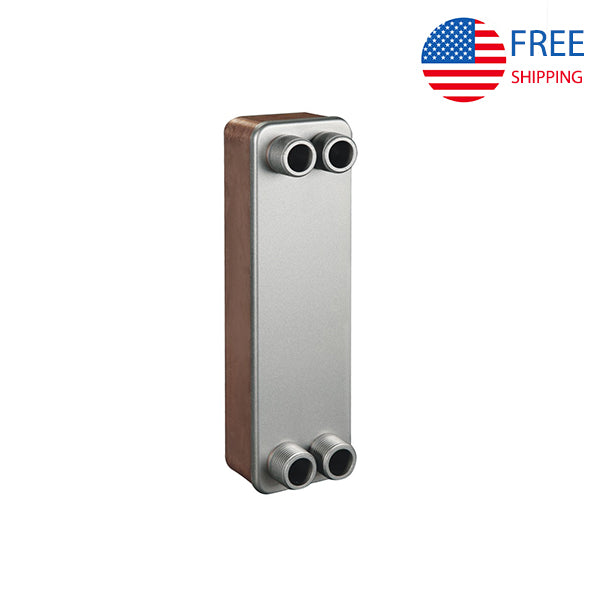
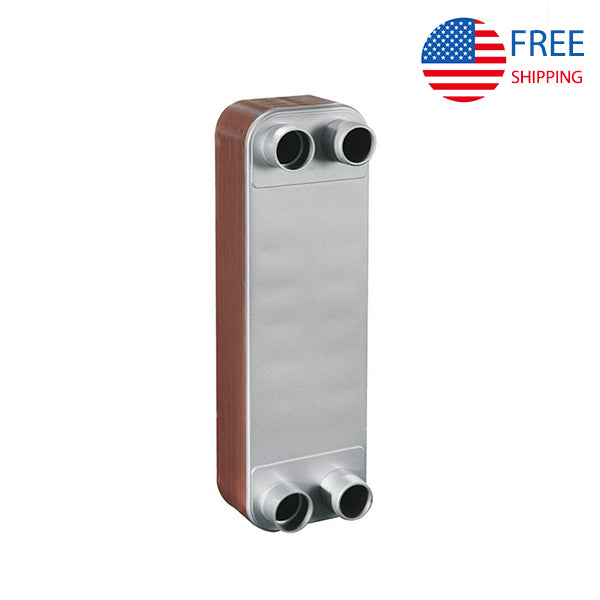
These systems often work in conjunction with other cooling solutions, such as Plate Oil Coolers, which use compact brazed plates to reduce the temperature of fluids like engine oil or transmission fluid. Integrating both systems provides stable, multi-point cooling for high-demand engines.
In performance scenarios or environments where airflow cannot be guaranteed, water intercoolers offer reliable, high-efficiency cooling. Despite the added cost and complexity, they are often the better choice for demanding or enclosed applications.
Performance Differences Between Air and Water Systems
While both air and water intercoolers serve the purpose of lowering intake temperatures, their performance can vary significantly based on operating conditions. The key difference lies in how each system dissipates heat and how consistently that performance remains under varying loads and environmental conditions.
Air intercoolers perform best under conditions where consistent and abundant airflow is available. For example, during highway driving or motorsport applications where a vehicle remains in motion, an air intercooler can deliver reliable performance with minimal support infrastructure. However, in slow-moving traffic or high ambient temperatures, their efficiency can drop significantly, which may impact engine performance over time.
Water intercoolers, by contrast, maintain performance more consistently because the cooling loop is independent of external airflow. The use of a dedicated pump and coolant enables the system to actively cool the intake air, even when the engine is stationary or under low-speed load. This makes Air to Water Intercoolers highly suitable for heavy-duty, off-road, or marine applications.
Additionally, water intercoolers have a faster response to heat spikes, enabling them to absorb sudden temperature increases more efficiently than air systems. They also allow for more compact designs, making them ideal for performance applications with limited space.
That said, their complexity and cost cannot be overlooked. Water intercoolers require regular maintenance and introduce additional points of failure, such as leaks or pump malfunction. For users prioritizing reliability and low upkeep, air intercoolers may still be the preferred choice.
Integrating high-efficiency intercooling with other thermal management systems, like Engine Oil Coolers, can dramatically improve both performance and durability. Engines operating at consistently lower temperatures exhibit better combustion efficiency, reduced wear, and improved longevity.
Ultimately, the decision between air and water intercooling depends not only on peak performance needs but also on environmental conditions, vehicle use cases, and design limitations.
Supporting Systems: The Role of Oil Coolers
Intercoolers play a vital role in managing intake air temperature, but engine performance is equally dependent on keeping oil temperatures within safe operating ranges. This is where Engine Oil Coolers come into play. They help maintain the viscosity and performance of engine oil under high-stress conditions by dissipating heat generated during combustion and friction.
In modern engines, especially those with forced induction, oil not only lubricates but also absorbs a significant amount of heat from internal components. If oil temperatures rise too high, it can degrade more quickly, leading to reduced lubrication performance and increased engine wear. Adding an oil cooler stabilizes oil temperature, which in turn improves engine reliability and lifespan.
Oil coolers can be air-cooled or integrated into a coolant-based system. In compact or high-efficiency systems, Plate Oil Coolers are often used due to their effective heat transfer and small footprint. These coolers utilize stacked brazed plates that create turbulent flow, maximizing thermal exchange while minimizing overall size.
Combining intercoolers with Oil Coolers & Intercoolers ensures comprehensive thermal control across multiple parts of the engine. This approach is especially important in applications where engines are subjected to sustained loads or high-speed operation, such as performance cars, heavy machinery, and marine engines.
The synergy between intercoolers and oil coolers is often overlooked, yet it plays a crucial role in overall system efficiency. By managing both air intake and oil temperatures, these components help maintain consistent output, protect engine materials, and support higher performance thresholds without overheating.
Specialized Cooling with Hydraulic Oil Coolers
In hydraulic systems, fluid temperature control is essential for maintaining efficiency and preventing component failure. Machines such as excavators, industrial presses, and agricultural vehicles often run continuously, generating significant heat in their hydraulic circuits. This is where Hydraulic Oil Coolers are crucial.
These systems prevent overheating of hydraulic fluids, which can lead to loss of viscosity, seal damage, and eventual system failure. Unlike engine oil, hydraulic fluid must operate within a narrow temperature window to maintain precise system control. Excess heat reduces system responsiveness and increases internal wear.
Hydraulic coolers work by transferring heat from the hydraulic fluid to a cooling medium, either air or water. In applications where a water intercooling system is already in place, it is often beneficial to integrate hydraulic cooling into the same loop. This shared approach enables a more compact system layout and a simplified heat rejection strategy.
Many modern machines include both intercooling and hydraulic cooling, particularly in enclosed or high-output applications. In these setups, components such as Plate Oil Coolers are also used for their space-saving advantages and effective thermal performance.
By combining Hydraulic Oil Coolers with intercoolers and oil cooling systems, manufacturers can ensure stable operating temperatures across all fluid systems. This not only enhances operational efficiency but also significantly extends the equipment’s service life.
Thermal consistency is not only about peak performance; it also safeguards the precision and safety of hydraulic systems over time.
Installation, Maintenance, and System Complexity
When comparing air and water intercoolers, considerations extend beyond performance. Installation complexity, required maintenance, and system integration all play a significant role in determining the right setup.
Air intercoolers are typically simpler to install. They require fewer parts, no coolant lines, and minimal support infrastructure. Maintenance is also straightforward — periodic inspections for leaks or clogged fins are usually sufficient.
In contrast, water intercoolers incorporate multiple components, including pumps, reservoirs, additional heat exchangers, and control systems. Installation may require custom mounting and careful planning to ensure coolant flow paths are efficient and leak-free. Maintenance is more involved and includes checking coolant levels, inspecting for corrosion, and monitoring pump function.
While air intercoolers are easier to manage in the long term, water systems allow for more customization and compactness. This trade-off is especially relevant in performance or marine applications, where space is tight and consistent cooling is critical.
The choice also affects compatibility with other thermal components. For example, integrating Oil Coolers & Intercoolers within a shared coolant loop can reduce space requirements and streamline heat management.
Ultimately, assessing the full scope of the engine or machine’s requirements — from airflow availability to maintenance expectations — is necessary for choosing the right solution. Both systems have their merits, and in some cases, a hybrid approach delivers the best results.