
Why Choose Brazed Plate Condensers
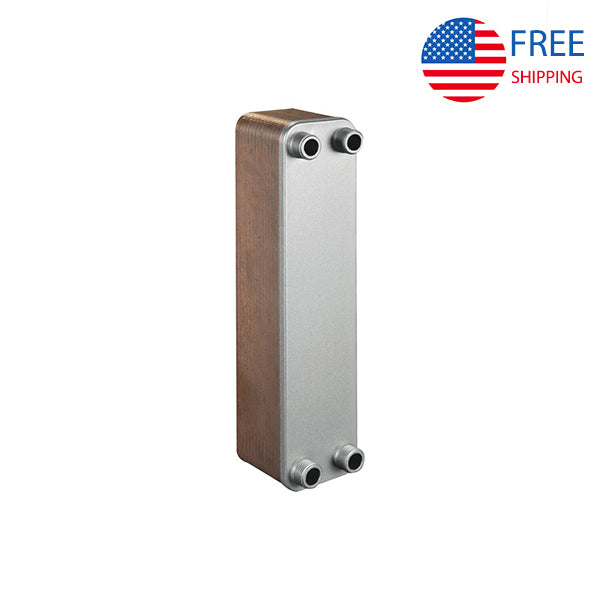
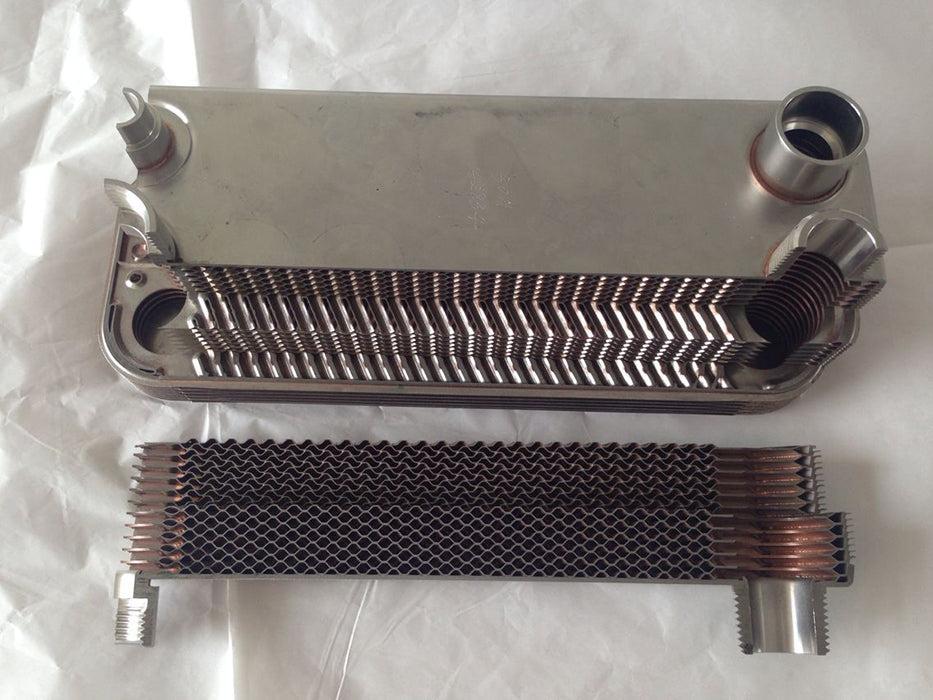
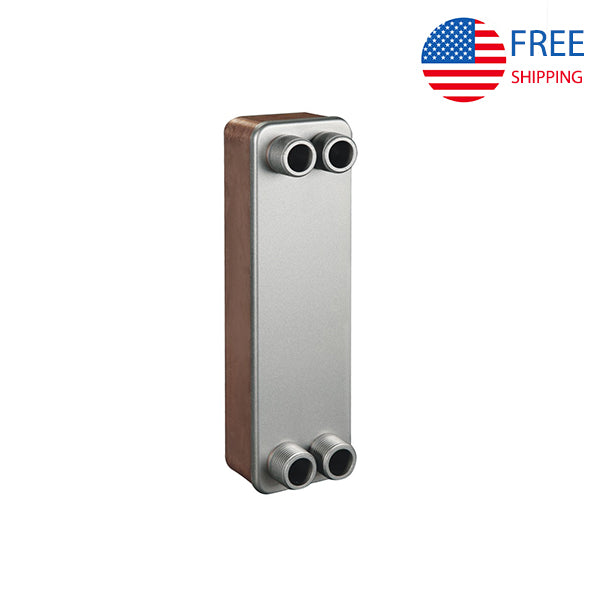
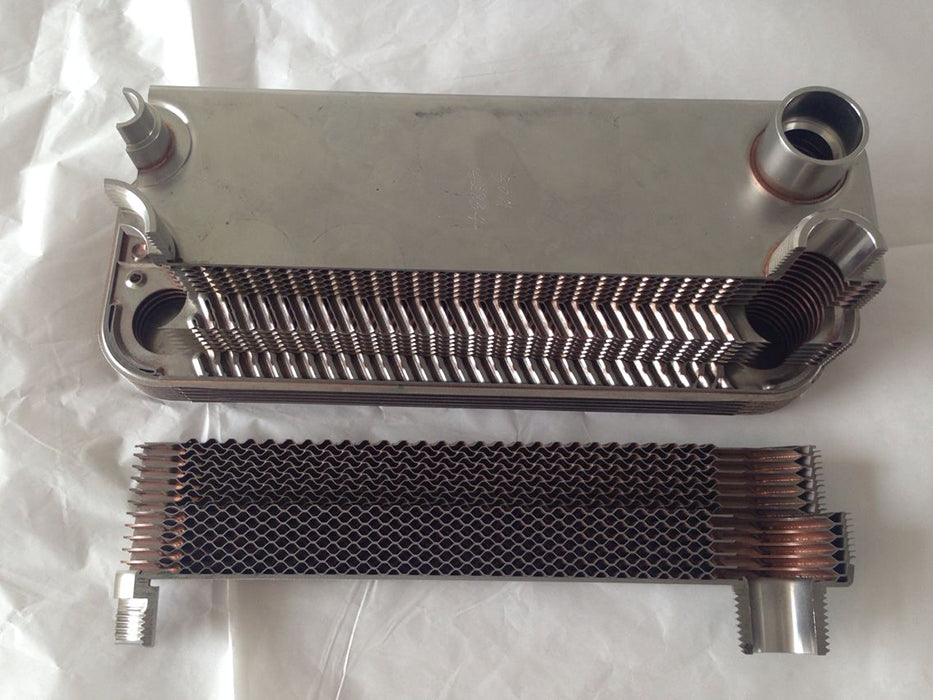
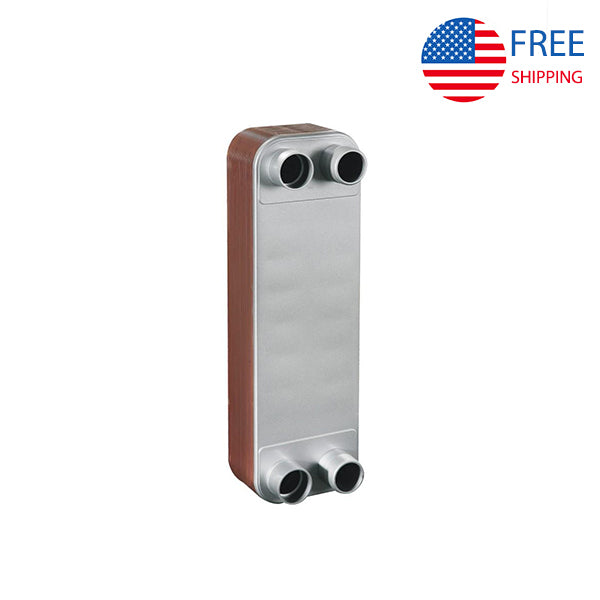
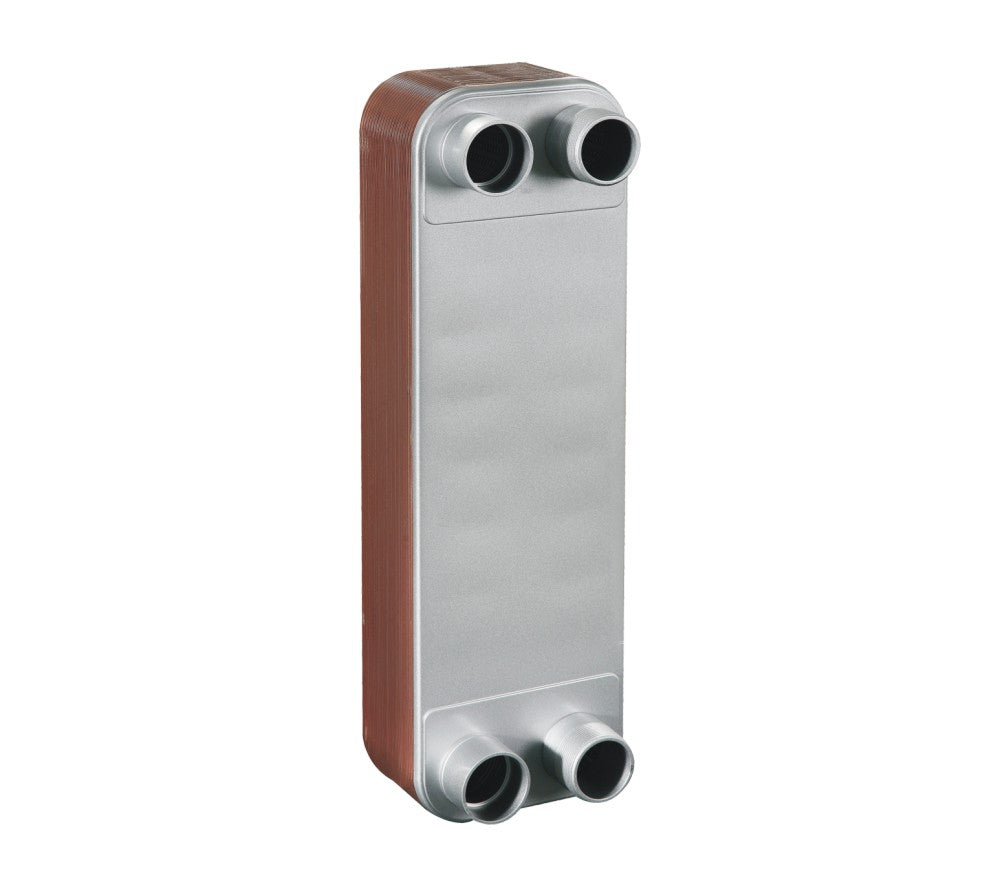
Brazed plate condensers are a compact type of plate heat exchangers designed for efficient heat exchange within a limited installation footprint. Their construction uses vacuum brazing technology to create strong, leak-proof joints without gaskets or seals, improving operational reliability and reducing maintenance requirements. This fully brazed design is well suited for refrigeration, HVAC, and process cooling systems operating under high pressure and repeated thermal cycling conditions.
- High thermal efficiency: Corrugated plates maximize surface area and create turbulence for fast heat transfer.
- Compact size: Suitable for installations with limited space or retrofits.
- Durability: Solid brazed joints resist pressure and temperature changes, providing long service life.
- Low maintenance: No gaskets or seals reduce risk of leaks and the need for regular disassembly.
- Flexible installation: Can be mounted horizontally or vertically and supports smaller supporting components.
Typical Applications
Brazed plate condensers are used in systems that require reliable condensation in compact spaces.


How Brazed Plate Condenser Work
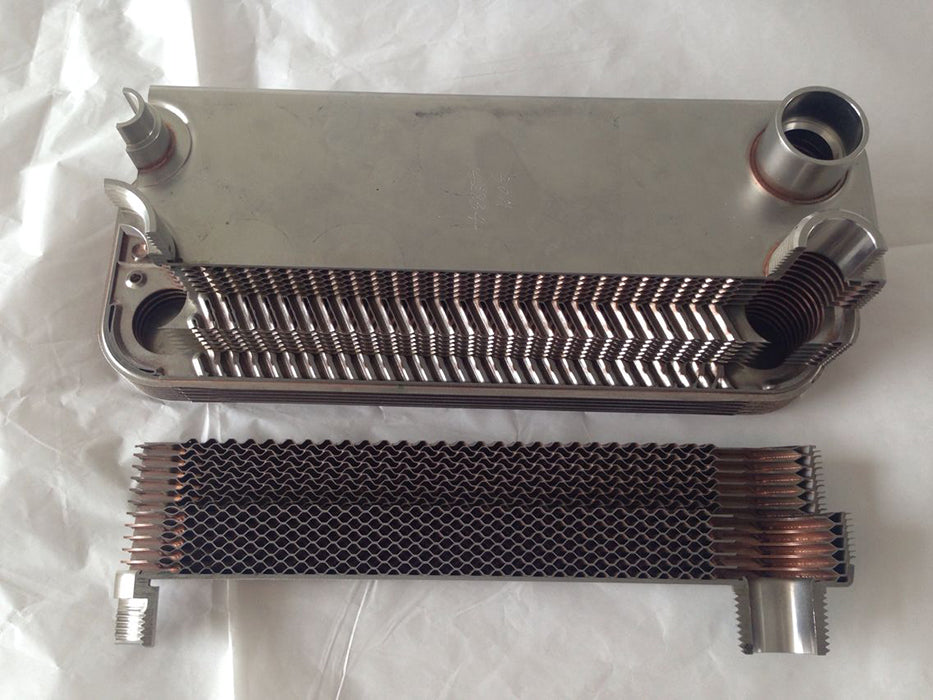
A brazed plate condenser efficiently transfers heat by directing hot fluid or refrigerant through a series of thin, corrugated metal plates, while a cooling medium flows on the opposite side. The corrugated plates maximize surface area and induce turbulence, enhancing heat transfer within a compact footprint. As heat moves through the metal plates, the fluid temperature drops and vapor condenses, while the cooling medium carries away the absorbed heat. This design enables stable and rapid temperature control, high thermal efficiency, and reliable operation in systems such as HVAC, refrigeration, data center cooling, and industrial applications, making brazed plate condensers an effective solution where space, performance, and durability are critical.
How to Select a Brazed Plate Condenser
When selecting a brazed plate condenser, consider the following factors:
- Cooling capacity: Ensure the unit can handle the system's heat load.
- Fluid flow rates: Match the condenser to the hot fluid and cooling medium flow rates.
- Operating pressure: Check maximum working pressure of the system and condenser.
- Operating temperature: Verify that the unit can handle inlet fluid temperatures and ambient conditions.
- Installation space: Confirm that the unit fits the available area and orientation (horizontal or vertical).
- Connection types: Select appropriate ports and sizes for integration with your system.
Proper selection ensures efficient heat transfer, reliable operation, and reduced system complexity.

FAQ
A condenser is a two-phase heat exchanger since the refrigerant-side design anticipates a change of phase from gas to liquid between entering and leaving conditions. Accordingly, the inlet connections are of larger size than those of the outlet to accommodate the less dense but equal mass flow of refrigerant.
A brazed plate condenser is a type of heat exchanger designed to remove heat from a vapor and convert it into a liquid. It achieves this by using a series of thin, corrugated metal plates stacked together and permanently joined through a vacuum brazing process. This method of construction eliminates the need for gaskets, allowing for a more compact and leak-resistant unit.
What makes it so practical is the high surface area created between plates. This allows for very efficient thermal transfer in a small space. Each unit is pressure-resistant, compact, and designed for operation in demanding conditions. The rugged design and all-metal construction ensure that you don’t need to worry about common failure points, such as seals or joints.
Compact design = more installation flexibility. These units are frequently selected for use in HVAC systems, chillers, heat pumps, and industrial cooling applications. System designers often turn to this technology when space is limited but performance still matters.
Brazed plate condensers are designed to efficiently handle condensation duties across various systems. By condensing vapor using direct metal-to-metal heat transfer, they remove heat quickly and efficiently. Their construction also makes them suitable for a wide range of fluids, depending on the application and system layout.
If your setup demands reliability, efficiency, and minimal maintenance, this type of condenser offers a well-balanced solution without adding complexity.
Yes, a brazed plate condenser is commonly used in refrigeration systems, including commercial chillers, residential heat pumps, and industrial freezers. Its compact size and strong performance make it ideal for systems that demand efficient heat removal in tight layouts.
In a refrigeration setup, the condenser’s job is to take vapor refrigerant from the compressor and remove enough heat to turn it into a liquid. The brazed plate design accomplishes this quickly and efficiently. The heat from the refrigerant is transferred through the plates and carried away by a cooling fluid, typically water or a water-glycol mixture.
Faster condensation results in lower energy use and improved cooling output. Such a result is crucial in refrigeration systems, where energy efficiency has a direct impact on long-term operating costs.
These condensers also facilitate the design of flexible, space-conscious systems. You’ll find them used in systems that require lightness, reliability, and ease of service—especially in tight mechanical rooms or mobile refrigeration units. The ability to mount them in multiple orientations helps simplify piping layouts and reduce installation time.
Unlike older condenser designs, a brazed plate version delivers high thermal efficiency without the bulk. This makes it a preferred solution in both OEM refrigeration builds and retrofit installations.