The core difference starts with the operating environment. In a direct comparison of marine heat exchanger vs standard heat exchanger, the marine unit is built for salt-laden air, humidity, motion, and repeated load changes, while the standard unit usually works in controlled plant or building conditions. That changes the design basis from the first stage. Material choice, sealing, and expected service life all follow from that choice.
A marine heat exchanger faces corrosion, fouling, and mechanical stress at the same time. Seawater and brackish water can attack metal surfaces, while vibration from the engine and hull adds fatigue. Start-stop cycles and maneuvering also create temperature swings that are harder to manage. In that setting, stability matters as much as heat transfer.
System role also matters. A heat exchanger at sea protects oil and coolant from overheating, and overheating reduces lubricant quality and can trigger faults. Marine installations often handle oil, freshwater, or a glycol mix, and oil is the harder medium because it is more viscous and responds more slowly to temperature change. That is why marine units often need more surface area and tighter temperature control. The design has to match the medium, not only the power level.
- lube oil coolers for engine oil temperature control
- freshwater coolers in closed-loop cooling circuits
- fuel heaters or fuel coolers in selected systems
- charge air coolers as part of the same cooling ecosystem
The comparison also shows practical differences in service. Marine equipment is made for harder access, more frequent inspection, and longer exposure to contamination. Standard equipment is usually easier to service but is not designed for the same corrosion risk. The result is a clear split between stationary duty and marine duty.
Materials and design features used in marine service
Material selection drives marine durability. In a heat exchanger for marine engines, corrosion resistance has to cover seawater, chlorides, and galvanic effects, while the structure also has to tolerate pressure cycles and vibration. Cupronickel is common because it performs well in seawater and supports good heat transfer. Titanium gives even higher resistance, but the price is higher. Bronze and stainless steel also appear in marine systems, depending on exposure and circuit type.
Design details support the same goal. A marine cooling heat exchanger often uses a compact shell, removable end covers, and tube layouts that improve both heat transfer and cleaning access. Sacrificial anodes help protect the wetted side from galvanic attack. Straight tube arrangements can simplify mechanical cleaning, while denser patterns increase thermal surface in limited space. These features reduce downtime in tight engine rooms.
| Cecha | Marine heat exchangers | Standard heat exchangers |
| Odporność na korozję w solance | Wysoka, z naciskiem na seawater service | Niższa, zwykle bez stałej ekspozycji na solankę |
| Tolerancja na zabrudzenia po stronie wody | Średnia do wysokiej, zależnie od konstrukcji | Średnia, w kontrolowanych warunkach pracy |
| Odporność na wibracje | Podwyższona, projekt pod ruch kadłuba i silnika | Niższa, praca w stabilnym otoczeniu |
| Serwisowalność | Ułatwione otwieranie i czyszczenie w ograniczonej przestrzeni | Prostszy dostęp, mniej ograniczeń montażowych |
| Typowe materiały | Cupronickel, titanium, bronze, stainless steel | Stainless steel, carbon steel, aluminum alloys |
| Ryzyko mieszania mediów | Zredukowane przez szczelność, anody i kontrolę przylg | Zwykle niższe wymagania ochronne |
| Koszt całkowity | Wyższy CAPEX i OPEX | Niższy koszt wejścia i prostsza eksploatacja |
| Wymagania filtracji | Wysokie, szczególnie dla seawater loops | Średnie, zależne od medium procesowego |
Marine units cost more for clear reasons. Droższe materiały, anody, testy szczelności, i rozwiązania pod wibracje podnoszą cenę całego zestawu. Koszt obejmuje też armaturę, uszczelki, i elementy montażowe. W starszych silnikach zamknięcie obiegu bywa ryzykowne, bo korozja i osady często są już obecne w kanałach wodnych.
Where each exchanger type works best
Wybór zależy od zastosowania. A marine heat exchanger is chosen where seawater, motion, and irregular engine load are part of normal work, while standard units fit fixed systems with cleaner fluids and easier access. The same heat-transfer principle applies in both cases, but the duty profile is different. That is why application controls the selection more than size alone.
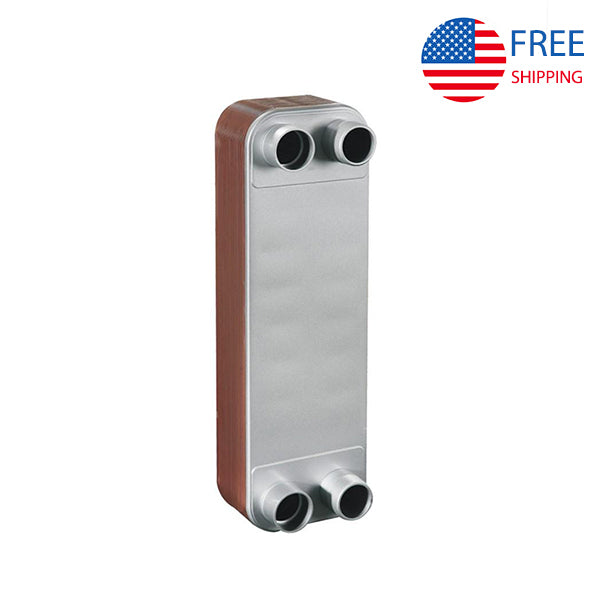
In marine practice, the phrase types of marine heat exchangers usually covers shell and tube, plate, brazed plate, and keel cooler designs. Shell and tube units tolerate dirt better and are easier to clean mechanically. Plate units are compact and efficient, but they need better filtration and more careful service. Brazed plate units are very compact, yet in practice they are often replaced rather than repaired when fouling becomes serious. Keel coolers solve the seawater problem in a different way by moving heat through hull-mounted surfaces.
- Propulsion systems use robust exchanger layouts for jacket water and charge air cooling.
- Generators need steady temperature control during long operating cycles.
- Marine HVAC often uses plate units for compact chilled-water loops.
- Industrial plants prefer standard models for stable process duty.
- Closed-loop cooling systems can use either type, depending on fluid quality and exposure.
Shell and tube designs are often the safer choice where filtration is limited or fouling is expected. Plate units win when space is tight and fluid quality is controlled. Standard exchangers remain practical in land-based service, but marine systems demand more resistance, more access, and more tolerance for harsh conditions. That is the real dividing line.