Choosing between two heat exchanger designs starts with understanding how each transfers heat, where it performs best, and how it fits a heating system.
From the article you will learn:
- how heat moves between two separate media through a solid exchanger surface
- why air-side and water-side systems use different internal designs
- which factors influence temperature approach and thermal stability
- how flow rate changes the transfer process in closed-loop systems
- where buffer tanks and hydraulic separation improve system control
- which installation layouts match ventilation-linked and hydronic setups
- how source medium type affects exchanger sizing and operating behavior
- what practical roles different exchanger arrangements play in building systems
- how to compare use cases for air-based and liquid-based heat transfer
how air to water and water to water heat exchangers work
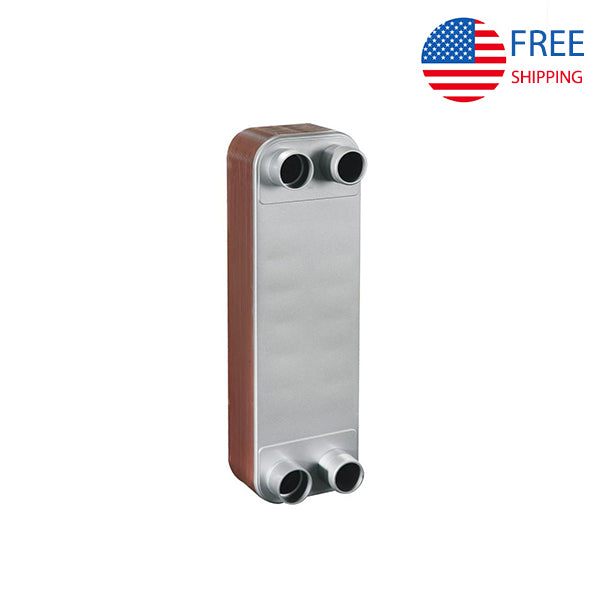
Heat exchangers transfer energy through a solid wall, so the media stay separate while heat moves from the warmer side to the cooler side. In an air to water heat exchanger, air passes over fins, tubes, or coils and gives up thermal energy to water moving inside the circuit. In a water to water heat exchanger, the transfer happens between two liquid loops, usually through plates or tubes, with no direct mixing. The shared principle is the same in both cases: temperature difference drives the transfer, and surface area supports it.
The material of the exchange surface matters because it must conduct heat efficiently. Copper, stainless steel, and aluminum appear often because they move energy well and resist operating stress. Air-side units use fins to increase contact area, while liquid-side units use plates or narrow channels to intensify turbulence and improve exchange. The result is a controlled process, not a direct blend of fluids.
The core difference in air to water vs water to water heat exchanger operation lies in the carrier medium. Air transports heat less effectively than water, so air-based designs need more surface area and more airflow control to reach the same output. Water-based designs usually achieve a more compact build and steadier transfer because water carries more heat per unit volume. That difference shapes both construction and performance.
Typical selection factors at the start of a project include:
- target purpose such as heating, cooling, recovery, or temperature stabilization
- available media, such as air, water, chilled water, process water, or glycol
- required temperatures, including cases below ambient conditions
- space limits, environmental exposure, and service access
- reliability, maintenance frequency, and corrosion or dust resistance
key differences in performance and system design
Performance depends on the stability of the source medium and the way flow is managed on each side of the exchanger. In an air to water vs water to water heat exchanger comparison, air-side operation faces larger temperature swings because ventilation rate, outdoor conditions, and coil loading change more quickly. Water-side operation usually stays more stable because both circuits remain enclosed and easier to control. That difference affects consistency, control range, and sizing.
Water also carries heat more effectively than air, so liquid loops usually reach a tighter temperature approach between inlet and outlet. Air-side systems lose more useful energy through leakage, casing losses, and uneven distribution across the coil face. Closed loops reduce exposure to ambient conditions and keep transfer conditions more predictable. For that reason, many types of heat exchangers heating system layouts use sealed circuits, controlled pumping, and hydraulic separation to keep return temperatures steady.
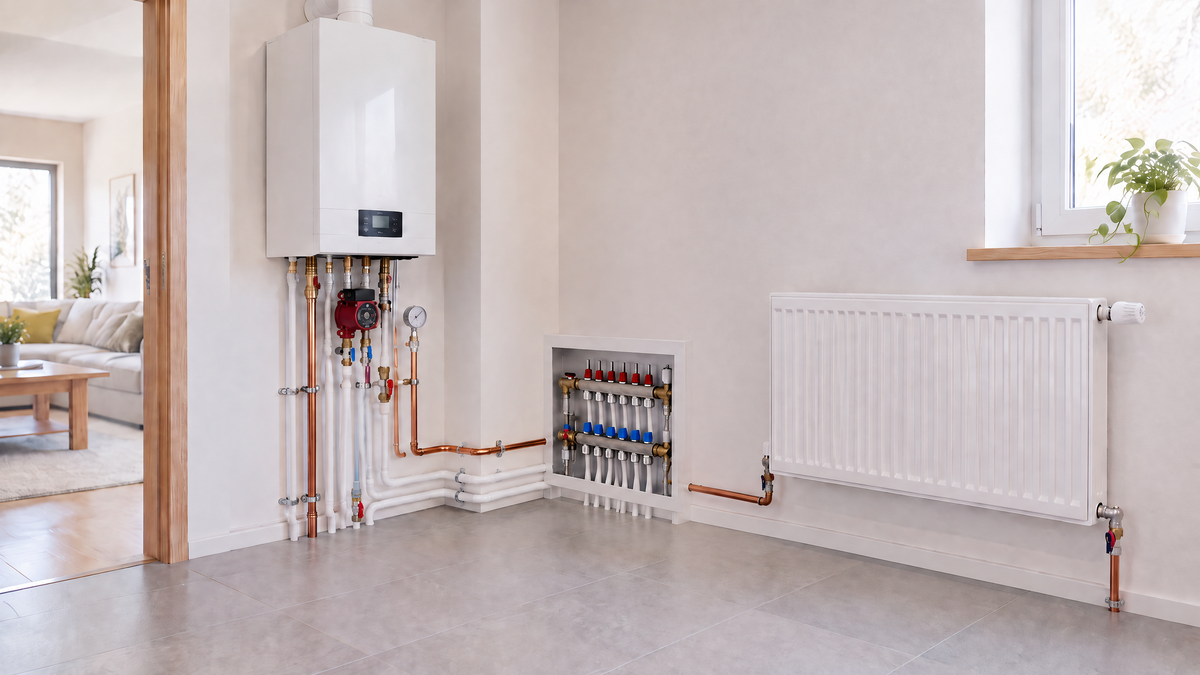
Installation context changes the result as well. A heat exchanger for hydronic heating often works with circulation pumps, balancing valves, expansion volume, and a buffer tank that smooths load changes between the source and the demand side. Low flow reduces transfer, while excessive flow raises pumping demand and can narrow the temperature difference too far. Stable hydraulics support more reliable output.
Practical comparison:
- Source medium stability: air varies more, water stays steadier
- Heat transfer intensity: water usually delivers stronger transfer than air
- System exposure: air-side units face more leakage and fouling risk
- Control behavior: closed loops support tighter temperature management
- Typical build: air-side units need more face area, water-side units stay more compact
where each heat exchanger fits best
The best fit depends on the medium already present in the system and on where the heat needs to go. An air to water heat exchanger is used where air already carries the thermal load, especially in ventilation-linked systems, air handling sections, rooftop units, and recovery stages tied to conditioned airflow. A water to water heat exchanger fits separate liquid loops, such as boiler isolation, process loop separation, low-temperature radiant systems, or transfers between a central plant and a building-side circuit. The installation structure often decides the choice before the final equipment selection starts.
Application fit in building services also depends on pressure separation, water quality, and temperature zoning. A heat exchanger for hydronic heating appears often in radiant floor systems, district connections, and retrofit projects where a new secondary loop is added to an existing plant. That arrangement supports cleaner integration between circuits with different conditions. It also helps isolate the demand side from the source side.
Across broader types of heat exchangers heating system arrangements, the most useful rule is simple: air-based transfer fits air streams, and liquid-based transfer fits liquid circuits. That makes planning easier when the goal is to match the exchanger to the structure of the network rather than to a single device category. Selection becomes a matter of system geometry, not preference.
- Ventilation-linked heating: air stream to coil in an air handling unit
- Boiler separation: primary loop isolated from a secondary distribution loop
- Radiant floors: source loop separated from low-temperature floor circuits
- Process water loops: one liquid circuit transfers heat to another
- District-style transfer points: central network water feeds a building-side loop