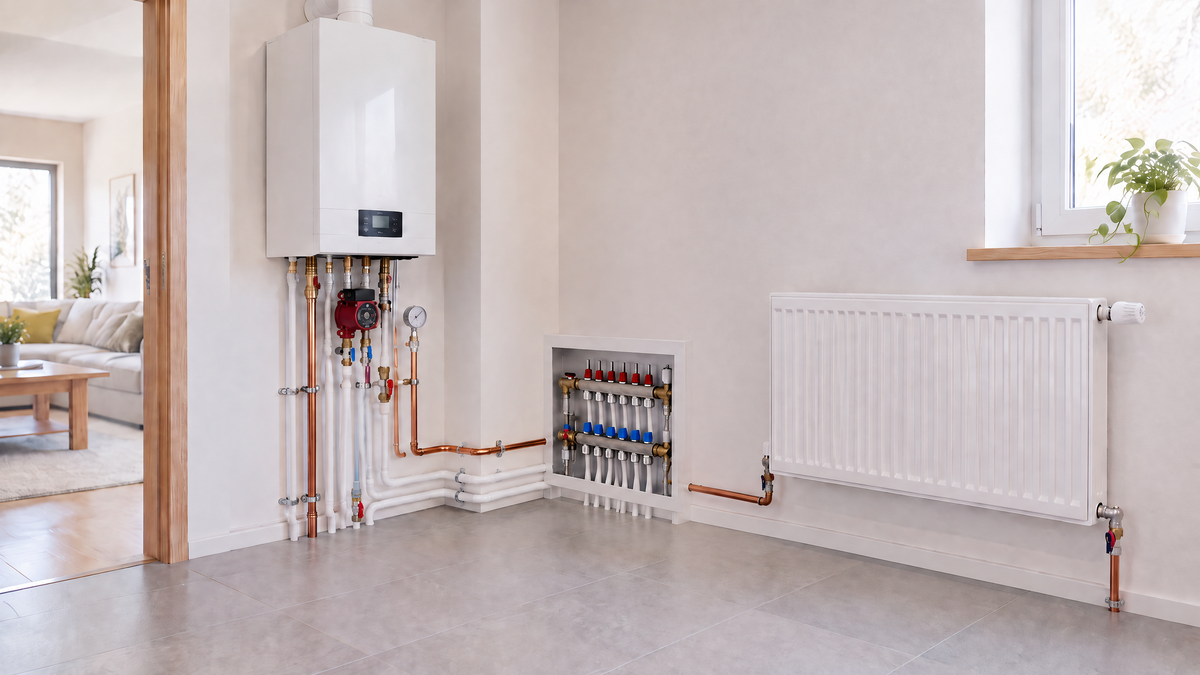
Swimming pool heating systems rely on heat exchangers to transfer heat efficiently between two separate water circuits. In residential and commercial pools, the most common materials used for pool heat exchangers are titanium and stainless steel. Both materials are widely used, but their performance can vary significantly depending on water chemistry, operating temperature, and system design.
For saltwater pools in particular, choosing the correct heat exchanger material is important because salt and chlorine can accelerate corrosion over time. Pool owners often compare titanium vs stainless steel pool heat exchangers when selecting equipment for a new installation or replacing an older unit.
This guide explains the differences between titanium and stainless steel heat exchangers, how each material performs in saltwater swimming pools, and which type may be more suitable for different pool systems.
Why Saltwater Pools Need Special Heat Exchanger Materials
Saltwater pools use a salt chlorinator system to generate chlorine from dissolved salt in the water. Although the water usually contains a lower chlorine concentration than traditional chlorine pools, the presence of chloride ions creates a more corrosive environment for many metals.
Over time, corrosion can affect the internal surfaces of a swimming pool heat exchanger, especially when the system operates at elevated temperatures or experiences inconsistent water chemistry.
Common conditions that may increase corrosion risk include:
- High salt concentration
- Low pH levels
- High water temperature
- Poor water circulation
- Improper chemical balancing
- Continuous exposure to chlorinated water
Because of these conditions, material selection becomes an important factor in the lifespan of a pool heat exchanger.
Many standard stainless steel heat exchangers perform well in closed-loop heating systems or freshwater applications, but saltwater swimming pools often require materials with stronger resistance to chloride corrosion. This is one reason titanium pool heat exchangers are frequently used in modern saltwater pool systems.
Pool heating systems commonly paired with heat exchangers include:
- Gas boilers
- Solar heating systems
- Water-to-water heat pumps
- Hydronic heating systems
- Wood-fired pool heaters
Depending on the heating source and pool water chemistry, either a shell and tube heat exchanger or a plate heat exchanger may be used.
Titanium vs Stainless Steel Pool Heat Exchanger: Key Differences
Titanium and stainless steel are both durable materials, but they behave differently when exposed to chlorinated or saltwater environments.
The table below outlines several important differences between the two materials in swimming pool applications.
|
Feature |
Titanium Pool Heat Exchanger |
Stainless Steel Pool Heat Exchanger |
|
Corrosion Resistance |
Very high |
Moderate to good |
|
Saltwater Compatibility |
Excellent |
Limited in high-salt environments |
|
Resistance to Chlorides |
Strong |
Can be affected by pitting corrosion |
|
Typical Lifespan |
Long-term in saltwater pools |
Depends on water chemistry |
|
Maintenance Requirements |
Generally lower |
Requires closer water monitoring |
|
Cost |
Higher initial cost |
Lower initial cost |
|
Common Applications |
Saltwater pools, spas, marine systems |
Freshwater pools, hydronic systems |
Titanium forms a highly stable oxide layer that helps protect the metal from corrosion, especially in chloride-rich environments. This characteristic makes titanium heat exchangers commonly used in marine equipment, desalination systems, and saltwater swimming pools.
Stainless steel pool heat exchangers are often made from grades such as 304 or 316L stainless steel. While 316L offers improved corrosion resistance compared to 304 stainless steel, chloride exposure can still lead to localized corrosion over time under certain operating conditions.
For freshwater swimming pools with properly maintained chemistry, stainless steel heat exchangers may provide reliable performance. However, in saltwater pools, titanium is generally considered the safer long-term material choice.
Why Titanium Pool Heat Exchangers Are Preferred for Saltwater Pools
Titanium pool heat exchangers are widely used in saltwater swimming pool systems because of their excellent resistance to chloride corrosion and long-term durability.
Alfa Heating Supply offers titanium shell and tube pool heat exchangers designed for saltwater pool applications.
Unlike many metals that can experience pitting corrosion when exposed to salt and chlorine, titanium forms a stable oxide layer on its surface. This protective layer helps prevent corrosion even under demanding water conditions.
For this reason, titanium heat exchangers are commonly selected for:
- Saltwater swimming pools
- Commercial pool facilities
- Coastal installations
- Spas and wellness facilities
- Marine and seawater heating systems
The main advantages of titanium pool heat exchangers include:
Excellent Corrosion Resistance
Saltwater environments contain chloride ions that can attack metal surfaces over time. Titanium provides strong resistance against chloride-induced corrosion, making it suitable for continuous exposure to saltwater and chlorinated pool water.
Long Service Life
Because titanium is highly resistant to corrosion and chemical attack, titanium heat exchangers typically require less replacement and maintenance compared with less corrosion-resistant materials.
Compatibility with Different Heating Sources
Titanium pool heat exchangers can be integrated with various heating systems, including:
- Gas boilers
- Heat pumps
- Solar pool heating systems
- Wood-fired pool heaters
- Hydronic heating systems
Suitable for High-Demand Pool Applications
Titanium heat exchangers are commonly used in commercial and high-capacity swimming pool systems where reliable operation and reduced downtime are important considerations.
Which Heat Exchanger Material Lasts Longer in Saltwater Pools?
In most saltwater pool systems, titanium heat exchangers typically last longer than stainless steel units because titanium has stronger resistance to chloride-induced corrosion.
One of the main challenges in saltwater systems is pitting corrosion. Pitting occurs when chloride ions attack small areas on the metal surface, gradually forming microscopic holes. Once pitting begins inside a heat exchanger, the damage can expand and eventually lead to leakage or reduced heat transfer efficiency.
316L stainless steel offers better corrosion resistance than standard stainless steel, but it is not completely immune to chloride attack. Factors such as water temperature, salt concentration, and chemical imbalance can accelerate corrosion in stainless steel pool heat exchangers.
Titanium behaves differently in these conditions because its protective oxide layer remains stable even in aggressive saltwater environments. For this reason, titanium heat exchangers are widely used in:
- Saltwater swimming pools
- Coastal installations
- Seawater heating systems
- Spa heating applications
- Marine heat transfer equipment
Lifespan also depends on maintenance practices. Regardless of material, pool owners should regularly monitor:
- pH levels
- Chlorine concentration
- Salt concentration
- Water hardness
- Flow rate
- Scale buildup
Poor water chemistry can shorten the operating life of any swimming pool heat exchanger.
In some installations, stainless steel heat exchangers may still operate successfully for many years, especially in indoor pools or low-salinity systems. However, for continuous saltwater exposure, titanium is generally considered more resistant to long-term corrosion.
Shell and Tube vs Plate Heat Exchanger for Swimming Pools
In addition to material selection, pool owners often compare shell and tube heat exchangers with plate heat exchangers.
Both designs transfer heat between two fluid circuits, but their structures and maintenance characteristics differ.
Shell and Tube Pool Heat Exchanger
A shell and tube heat exchanger contains internal tubes surrounded by an outer shell. One fluid flows through the tubes while the second fluid flows around them.
This design is commonly used in swimming pool heating systems because it can handle:
- Higher flow rates
- Variable water quality
- Scale buildup
- Debris in pool circulation systems
Titanium shell and tube heat exchangers are especially common in saltwater pools due to their corrosion resistance and relatively simple maintenance.
Advantages of shell and tube heat exchangers include:
- High heat transfer efficiency, with heat transfer coefficients up to 10,000 W/m²·°C
- Heat exchange capacity typically 3–7 times higher than traditional heat transfer equipment
- Compact structure that requires significantly less installation space
- Stainless steel and titanium material options for improved resistance to temperature, pressure, and corrosion
- Helical threaded tube bundle design that helps reduce thermal stress
- Designed flow velocity up to 5.5 m/s to help minimize fouling and dirt accumulation
- Suitable for high-flow circulation systems
- Easy installation and long service life
- Manufactured in accordance with ASME Section VIII-1 standards
They are frequently used with:
- Swimming pool boilers
- Pool heat pump systems
- Solar pool heating systems
- Commercial swimming pools
- Saltwater pool heating systems
- Marine and seawater heating applications
Plate Heat Exchanger for Pools
A plate heat exchanger uses multiple thin metal plates stacked together to create heat transfer channels.
Plate heat exchangers are compact and efficient, but they are more sensitive to water quality and fouling compared to shell and tube designs.
In swimming pool applications, brazed plate heat exchangers are sometimes used in:
- Small residential pools
- Hot tubs
- Closed-loop heating systems
- Freshwater applications
However, standard brazed plate heat exchangers may not always be suitable for direct saltwater pool circulation unless specifically designed with compatible materials.
Factors to consider when comparing shell and tube vs plate heat exchangers include:
|
Consideration |
Shell and Tube |
Plate Heat Exchanger |
|
Saltwater Durability |
Generally better |
Depends on material |
|
Maintenance Access |
Easier |
More limited |
|
Heat Transfer Efficiency |
Moderate |
High |
|
Space Requirement |
Larger |
Compact |
|
Fouling Resistance |
Better |
More sensitive |
|
Pool Application |
Common |
Limited in some saltwater systems |
How to Choose the Best Pool Heat Exchanger for Your Pool System
Selecting the right pool heat exchanger involves more than choosing between titanium and stainless steel. Several system factors affect overall performance and compatibility.
Pool Type
Saltwater pools usually benefit from titanium heat exchangers because of their resistance to chloride corrosion.
Freshwater pools may use either titanium or stainless steel depending on budget, maintenance practices, and operating conditions.
Heating Source
Different heating systems require different heat exchanger configurations. Common combinations include:
- Boiler to pool heat exchanger
- Heat pump pool heat exchanger
- Solar pool heating exchanger
- Wood boiler pool heat exchanger
The heating source affects required flow rate, pressure drop, and heat transfer capacity.
Pool Size and Heating Capacity
Heat exchanger sizing is typically based on:
- Pool volume
- Desired heating time
- BTU/hr or kW output
- Water flow rate
- Temperature difference
An undersized heat exchanger may heat the pool slowly, while an oversized unit can increase installation costs unnecessarily.
Water Chemistry
Stable water chemistry helps extend heat exchanger lifespan regardless of material.
Important parameters include:
- pH balance
- Chlorine levels
- Salt concentration
- Calcium hardness
- Total alkalinity
Improper chemistry can increase scaling or corrosion inside the heat exchanger.
Installation Environment
Outdoor pools in coastal regions may experience more aggressive corrosion conditions due to humid salt air exposure. In these environments, titanium heat exchangers are commonly preferred.
Indoor pools or low-salinity systems may have different material requirements.
Titanium and stainless steel pool heat exchangers each have advantages depending on the pool environment and heating system design.
For saltwater swimming pools, titanium heat exchangers are generally chosen for their stronger resistance to chloride corrosion and long-term durability. Stainless steel heat exchangers may still be suitable for some freshwater or controlled-water applications where corrosion risk is lower.
In addition to material selection, factors such as heat exchanger type, pool size, water chemistry, and heating source all influence overall system performance.
Understanding these differences can help pool owners and installers select a swimming pool heat exchanger that matches the specific requirements of the pool system while maintaining reliable heat transfer over time.
FAQ
Titanium is generally considered the better choice for saltwater pools because it offers superior corrosion resistance against salt and chlorinated water. Stainless steel heat exchangers may corrode more quickly in high-salinity environments.
A titanium pool heat exchanger can last many years with proper maintenance and balanced water chemistry. Titanium is highly resistant to rust, scaling, and chemical corrosion, making it ideal for long-term saltwater pool use.
Stainless steel heat exchangers can be used in some low-salinity or freshwater applications, but they are generally not recommended for saltwater pools. Continuous exposure to salt and chlorine may reduce the lifespan of stainless steel components over time.