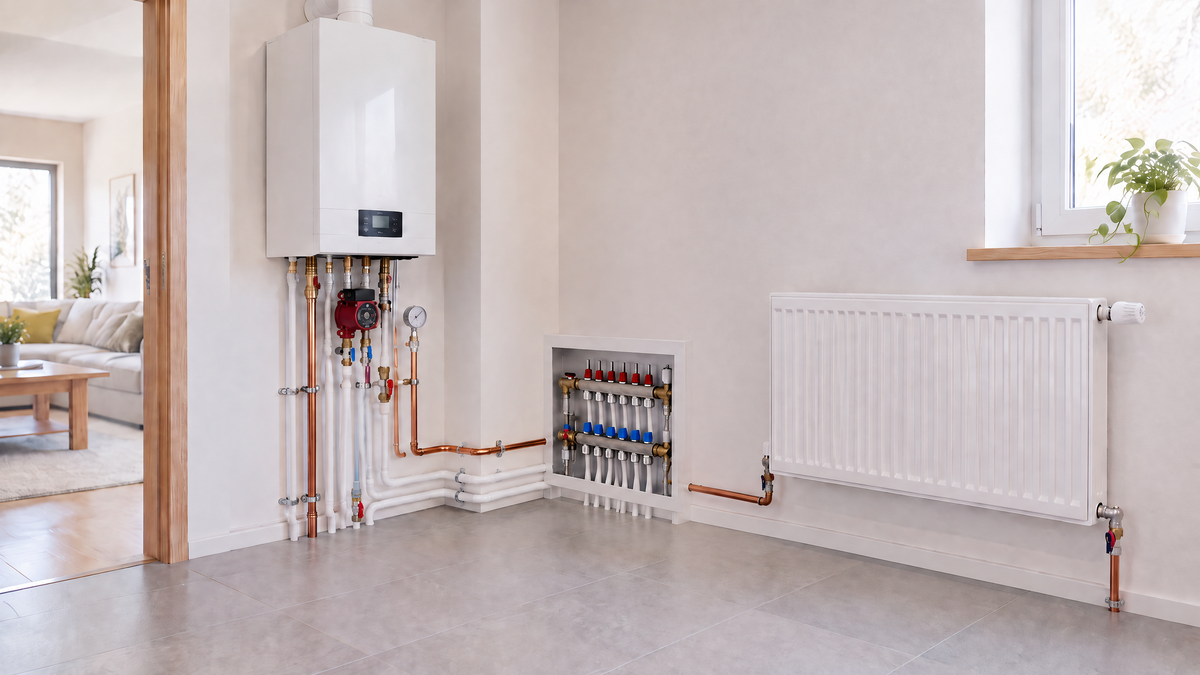
Choosing between hydronic heating and forced-air heating affects energy use, comfort, maintenance, and long-term costs. The better option depends on the building, climate, and heating goals.
From the article, you will learn:
- How hydronic heating and forced air distribute heat
- Which system usually loses less energy during operation
- How comfort levels differ in daily use
- What installation and retrofit costs involve
- How maintenance needs compare over time
- Which building types suit each system best
- How ducts and pipes affect overall efficiency
- What factors matter most before making a final choice
How hydronic heating and forced air work
Hydronic heating uses hot water that moves through pipes to radiators, baseboards, or underfloor loops. Forced-air heating warms air inside a furnace or air handler and pushes it through ductwork into rooms. This basic difference matters because water carries heat more effectively than air, whereas air cools faster as it moves through long ducts or uninsulated spaces. In a direct hydronic heating vs. forced-air comparison, hydronic systems usually deliver steadier indoor temperatures, while forced-air systems respond faster when a thermostat calls for heat. Faster response does not always mean lower energy use. The heat source, insulation level, zoning layout, and distribution losses all influence total efficiency.
Energy efficiency starts with heat distribution losses
Energy efficiency depends not only on equipment rating but also on how much heat is lost before it reaches occupied rooms. Hydronic systems often perform well because sealed water loops limit distribution waste. Forced-air systems can lose heat through duct leaks, inadequate insulation, or ducts routed through attics, crawl spaces, or garages. When homeowners compare a forced air vs. a water heating system, distribution losses often explain why utility bills differ, even when both systems use efficient boilers or furnaces. Water also stores heat longer than air, which helps maintain stable output after the burner cycles off. Forced air can still be efficient in compact homes with short, sealed, insulated ducts and modern variable-speed equipment.
Why water-based heat often keeps more energy indoors
Water transfers heat more efficiently than air, so hydronic systems can move thermal energy with less volume and less drift during distribution. That reduces losses between the heat source and the room emitter. A strong measure of hydronic heating efficiency is how consistently the system maintains room temperature without repeated high-output cycles. Radiant floor systems are especially effective because they warm surfaces and occupants directly, which can reduce the need for higher thermostat settings. This does not mean every hydronic installation is automatically efficient. Poor controls, incorrect pipe sizing, or inadequate insulation can reduce the gains that water-based systems typically offer under proper design conditions.
Comfort differences also affect real energy use
Comfort influences energy consumption because people often adjust the thermostat based on how the heat feels, not only on the number displayed on the wall control. Hydronic heating provides even, quiet warmth and avoids the temperature swings common in some forced-air systems. Many occupants feel comfortable at a slightly lower setpoint with radiant floors or panel radiators. That can reduce fuel use over a full season. In a hydronic heating system vs. forced air heating evaluation, comfort is not a secondary issue. It affects run time, cycling frequency, and how often occupants raise the heat. Forced air has an advantage when a quick warm-up is important, especially in buildings with intermittent occupancy patterns.
Air movement, stratification, and temperature swing
Forced-air heating heats rooms quickly, but the supply cycle can create bursts of warm air followed by cooler intervals when the system shuts off. This pattern may lead to larger thermostat adjustments during the day. Air movement can also stir dust and create vertical temperature layering, especially in rooms with high ceilings. Hydronic systems usually reduce these effects because heat is emitted more gradually across surfaces. On a second look at hydronic heating efficiency, a lower temperature swing often helps maintain stable indoor conditions with fewer thermostat corrections. Stable comfort can matter as much as rated equipment efficiency, especially in homes where occupants spend long hours indoors during the heating season.
Installation cost and retrofit complexity
Initial cost can shift the decision even when long-term energy savings favor one option. Forced-air systems are often easier to install in homes that already have ducts, especially when heating and cooling share the same distribution path. Hydronic heating may require changes to pipe routing, manifold planning, radiator placement, or floor assembly for radiant systems. These factors can raise upfront cost and labor time. In older homes without existing ductwork, however, hydronic solutions may avoid major changes to ceilings or walls. A fair hydronic heating vs. forced-air assessment should separate installation costs from operating costs. A lower purchase price does not always mean lower ownership cost across fifteen or twenty years of use.
When retrofits change the efficiency equation
Retrofit projects often produce different results than new construction because the building already has structural limits, insulation patterns, and service routes. Adding forced-air heating to a finished house may require soffits, dropped ceilings, or long duct runs, which can reduce efficiency. Adding hydronic heat may be simpler when wall radiators or low-profile piping layouts are possible. The answer to which is better, hydronic or forced air heating, often changes when retrofit constraints are included. A compact house with no duct chase may benefit more from hydronic distribution, while a property already using central air may gain value from retaining a combined forced-air system. The right answer depends on layout, envelope quality, and usage pattern.
Maintenance, indoor air quality, and system lifespan
Maintenance affects annual cost and long-term performance. Forced air systems require regular filter changes, duct inspections, blower service, and attention to airflow balance. Hydronic systems require checks of pumps, valves, pressure, water quality, and boiler operation, but they do not rely on filters or on moving large volumes of air through the building. That can benefit occupants sensitive to dust circulation. Lifespan also matters. Well-maintained hydronic components often remain in service for many years, though boilers and controls still need proper care. At Alfa Heating, system planning focuses on correctly matching components from the start because installation quality directly affects both energy use and service frequency throughout the equipment’s life.
Which system makes more sense for different buildings
The best system depends on building type, climate, and how the space is used. Hydronic heating often suits homes where steady comfort, quiet operation, zoning, and lower distribution loss matter most. It is also a strong option for radiant floors, larger homes, and buildings where occupants value stable temperatures over rapid recovery. Forced-air may be the better fit for smaller homes, mixed heating-and-cooling applications, or buildings that need a fast response after setback periods. When owners ask which is better, hydronic or forced air heating, the honest answer is that hydronic usually wins on heat delivery efficiency and comfort, while forced air often wins on lower entry cost and easier integration with central cooling.
Final comparison by efficiency, cost, and daily performance
Hydronic heating is usually more energy-efficient because water-based distribution loses less heat than ducted air does in many real buildings. Forced-air systems can still perform well when the duct system is short, sealed, and insulated, and the equipment uses modern controls. In a final review of forced-air vs. water heating systems, daily performance should include comfort stability, service needs, retrofit difficulty, and total operating cost, rather than utility use alone. For many homes, hydronic offers lower distribution loss and more even heating. For other properties, forced-air remains a sensible choice because it combines heating and cooling in a single network and often reduces initial project costs.
FAQ
Hydronic heating is often more energy efficient because water carries heat with less distribution loss than air. The difference is greatest when forced-air ducts are long, leaky, or poorly insulated.
Forced-air systems often have a lower installation cost when ductwork already exists. In homes without ducts, the project can become more complex, and hydronic heating may be more practical in some layouts.
Hydronic heating usually feels more even because it reduces drafts and temperature swings. Forced air heats rooms faster, but some occupants notice cycles of warm air followed by cooler intervals.
Hydronic systems do not move air through ducts, so they do not circulate dust as forced-air systems can. Indoor air quality still depends on ventilation, filtration, and building conditions.
Forced-air can be a strong choice when a single duct network is used for both heating and cooling. That shared setup can lower project complexity compared with separate heating and cooling systems.
Hydronic heating needs checks on boilers, pumps, valves, and pressure levels. Forced air needs filter changes, blower service, and duct inspection. The better-maintained system will usually perform more efficiently.
Homes that value quiet operation, steady room temperature, and zoning often benefit from hydronic heating. It is especially useful in larger homes and in projects using radiant floor heating.
Compare installation cost, seasonal energy use, duct or pipe layout, maintenance needs, comfort preference, and whether the building also needs central cooling before making a final decision.