

Why Choose Brazed Plate Evaporators
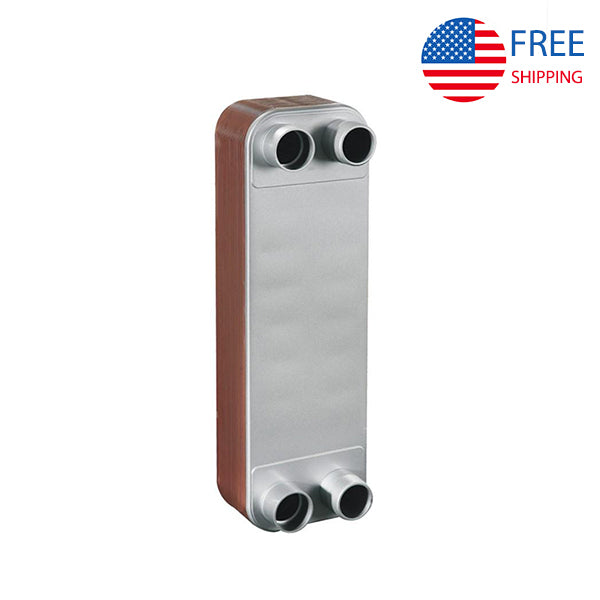
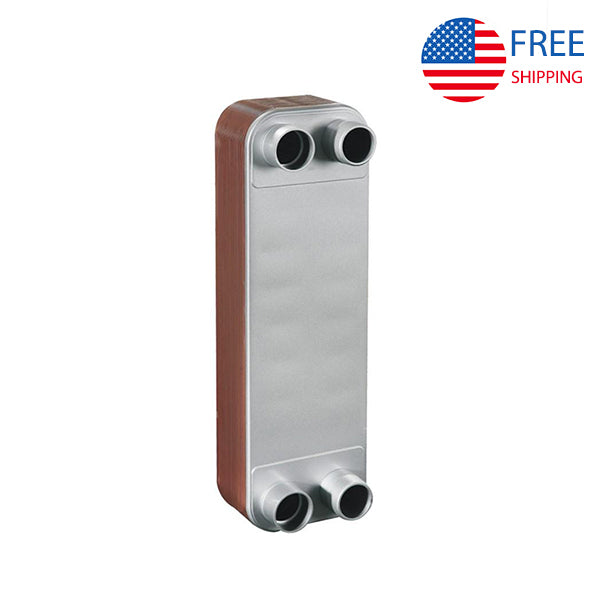
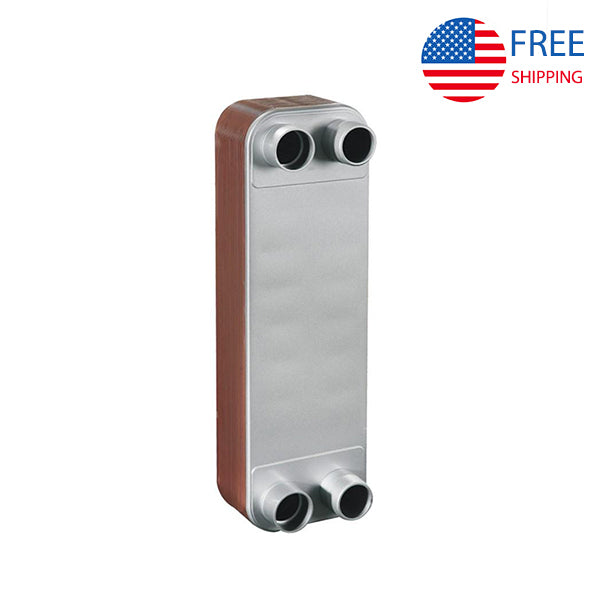
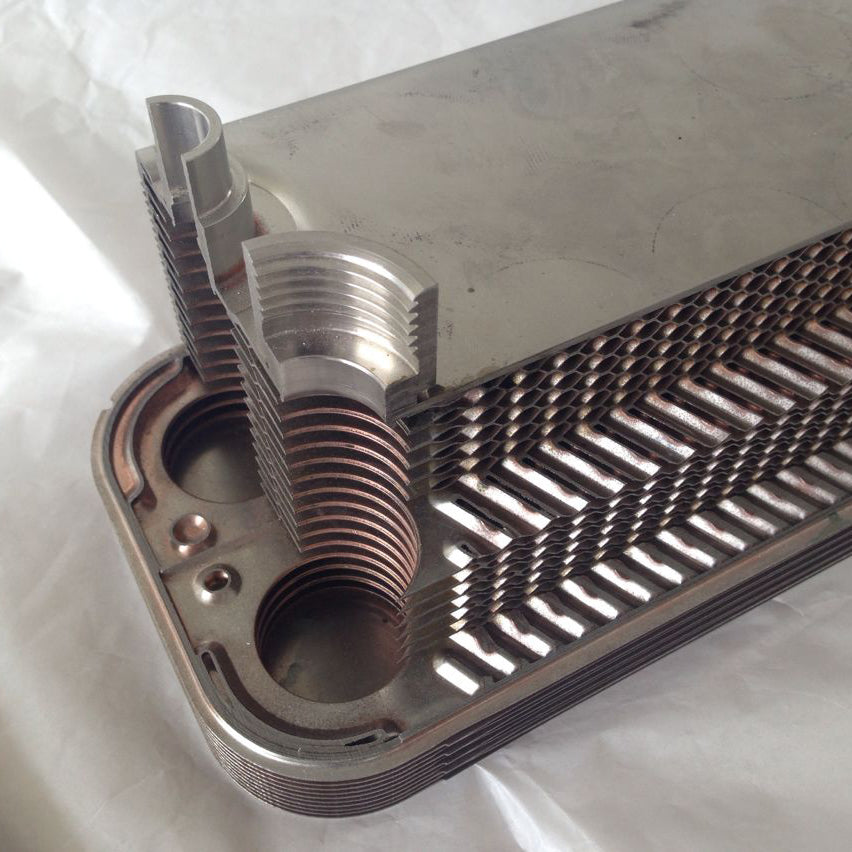
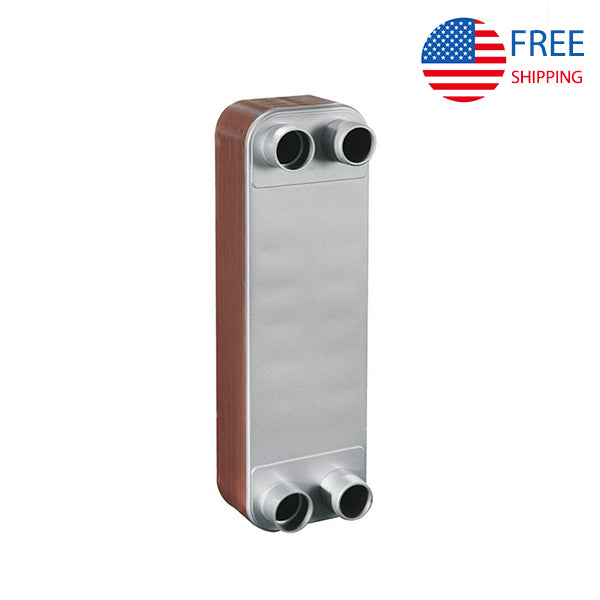
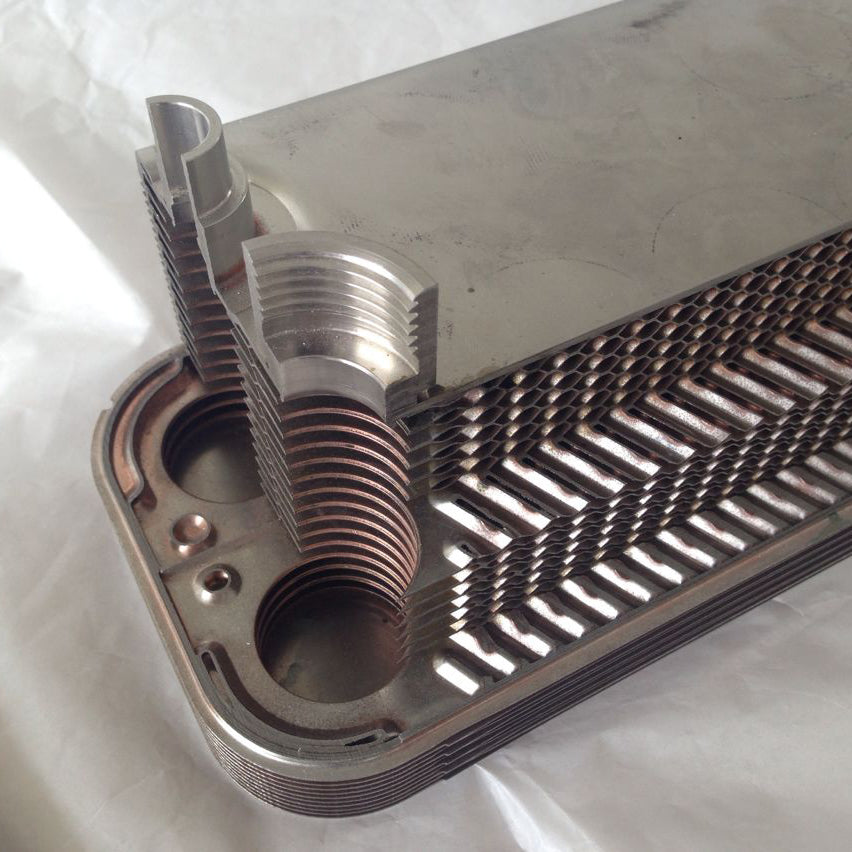
Brazed plate evaporators are a compact type of plate type heat exchanger designed to provide efficient and reliable temperature control in HVAC, refrigeration, and industrial cooling systems. Their fully brazed construction supports high thermal performance within a compact footprint, making them suitable for applications requiring stable heat transfer, space-saving installation, and long-term operational reliability.
- Precise Temperature Control: Compact plate design maximizes surface area and induces turbulence, ensuring stable and consistent cooling under varying loads.
- High Thermal Efficiency: Rapid heat transfer supports energy-efficient operation and reduces temperature fluctuations.
- Durable Construction: Corrosion-resistant stainless steel channels withstand high pressure and thermal cycling for long service life.
- Easy Integration: Threaded NPT connections and R22 compatibility allow straightforward installation into existing systems.
- Low Maintenance: Solid brazed construction eliminates gaskets, reducing leaks and maintenance needs.
- Versatile Application: Suitable for both industrial and HVAC environments where performance, stability, and space optimization are critical.
Typical Applications
Brazed Plate Evaporators are used in systems that require controlled and efficient cooling.


How Brazed Plate Evaporators Work
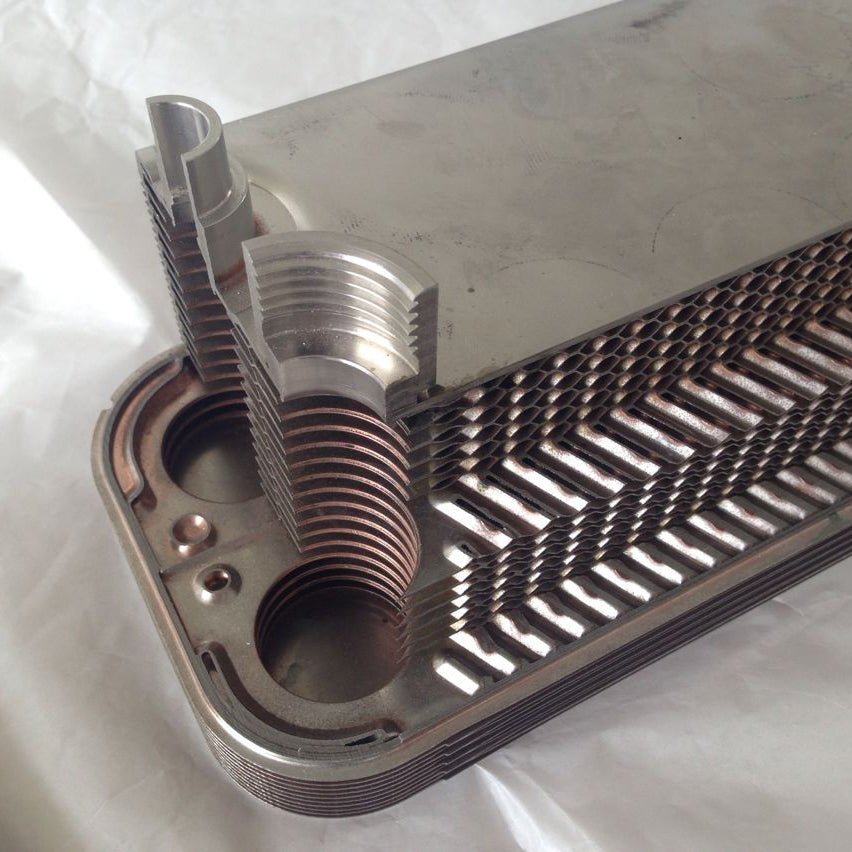
A Brazed Plate Evaporator absorbs heat from a surrounding medium as refrigerant flows through a series of thin, corrugated plates while a cooling medium moves on the opposite side. The design maximizes contact surface area and induces turbulence, allowing rapid and uniform heat transfer. As heat passes through the plates, the refrigerant evaporates, lowering the temperature of the target medium while the cooling medium carries away absorbed heat. This continuous phase change and efficient thermal transfer maintain consistent temperatures, reduce energy waste, and ensure reliable performance in HVAC, refrigeration, and industrial cooling systems.
How to Select a Brazed Plate Evaporator
Selecting the correct Brazed Plate Evaporator requires consideration of system requirements and operating conditions:
- Pipe Size: Choose models compatible with 1” to 3” NPT connections.
- Refrigerant Type: Ensure compatibility with R22 systems.
- Cooling Capacity: Match the evaporator to the system’s heat load to prevent under- or over-sizing.
- Installation Constraints: Verify available space and orientation for vertical or horizontal mounting.
- System Requirements: Consider continuous or batch operation, airflow, and pressure conditions.
Proper selection ensures stable system output, high energy efficiency, and minimal maintenance while optimizing performance and space within HVAC and industrial cooling applications.

FAQ
A brazed plate evaporator is a compact heat exchanger used in refrigeration, HVAC, and industrial cooling systems to absorb heat from a liquid or process medium. It consists of multiple thin, corrugated stainless-steel plates that are vacuum-brazed together to form a sealed, high-efficiency heat transfer unit.
Inside the evaporator, refrigerant flows through one set of channels while the fluid to be cooled flows through adjacent channels in the opposite direction. Heat transfers across the metal plates, causing the refrigerant to evaporate from liquid to vapor while the process fluid is cooled. This design maximizes surface area and turbulence, enabling rapid and stable heat absorption within a small footprint.
Brazed plate evaporators are widely used in systems that require reliable temperature control, high thermal efficiency, and space-saving installation.
Selecting the correct size of a brazed plate evaporator depends on the system’s cooling load and operating conditions. Oversizing can increase cost and reduce efficiency, while undersizing may lead to insufficient cooling performance.
To properly size a brazed plate evaporator, the following information is typically required:
- Cooling capacity (kW or BTU/h)
- Inlet and outlet fluid temperatures
- Flow rate of the fluid to be cooled
- Refrigerant type
- Operating pressure and temperature
- Application type (chiller, refrigeration, or industrial process)
Providing these parameters allows engineers to accurately match the evaporator to the system requirements, ensuring stable performance, energy efficiency, and long service life.
Tip: If you are unsure about sizing, simply provide your system data sheet or operating conditions, and our technical team can recommend a suitable model.
The main difference between a brazed plate evaporator and a shell and tube evaporator lies in size, efficiency, and application suitability.
A brazed plate evaporator uses multiple thin stainless-steel plates to create a large heat transfer surface within a compact unit. This design provides higher thermal efficiency and faster heat transfer compared to traditional shell and tube designs.
Shell and tube evaporators, on the other hand, are typically larger and better suited for systems with very high flow rates, dirty fluids, or applications that require easy mechanical cleaning.
In most modern HVAC and refrigeration systems, brazed plate evaporators are preferred due to their compact size, lower installation cost, and high energy efficiency.