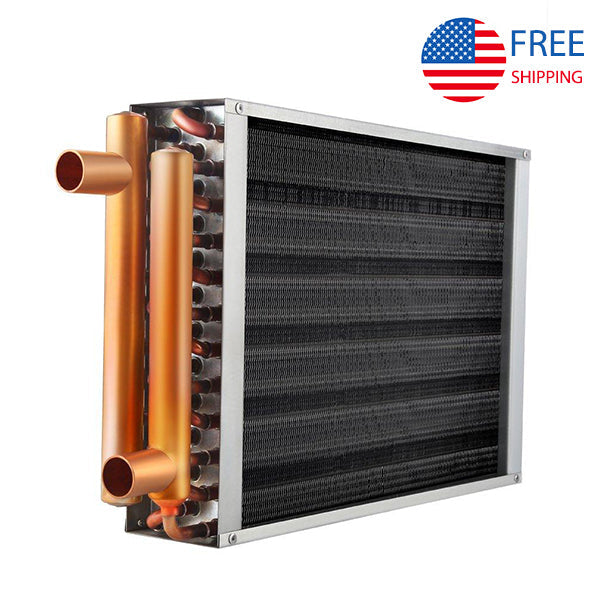
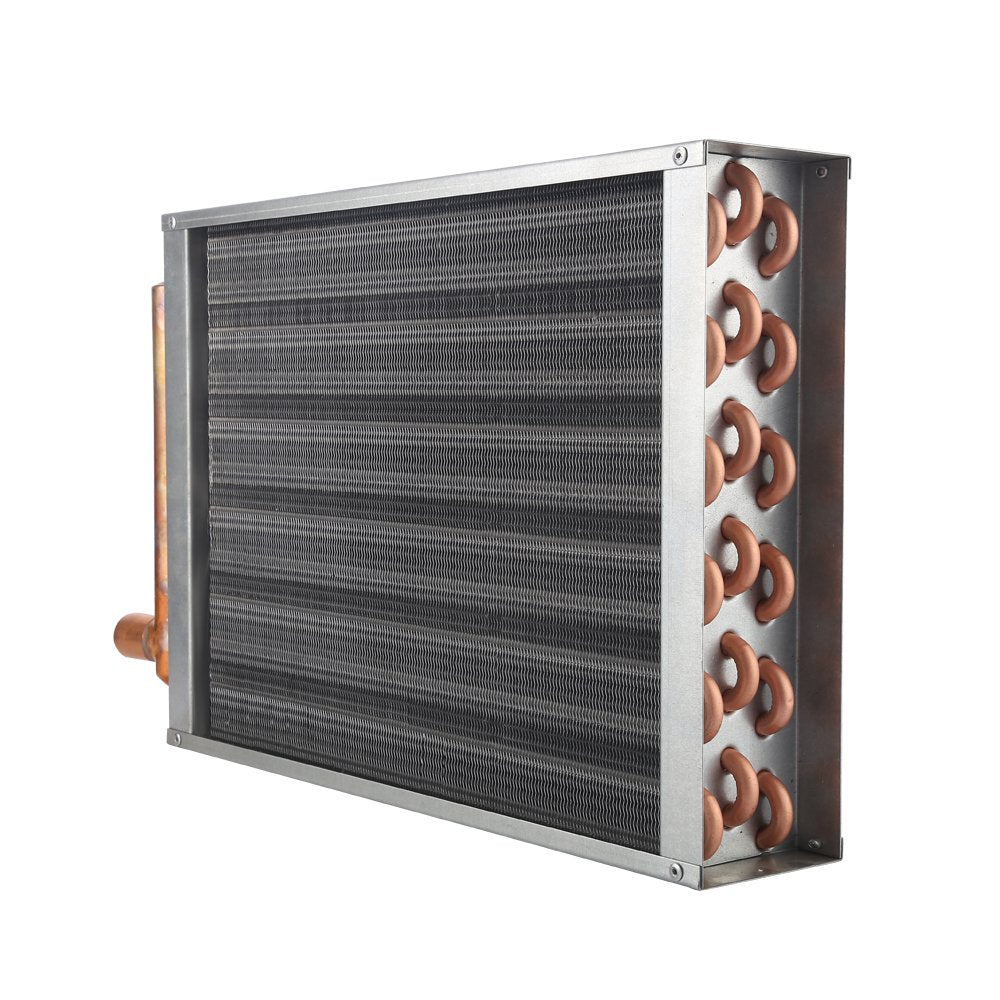
Water to Air Heat Exchangers for Hydronic Heating and HVAC Applications
Water to air heat exchangers provide efficient thermal transfer for hydronic heating, HVAC, and industrial heating applications. These systems transfer heat from hot water circuits to moving air streams, helping maintain stable indoor temperatures and consistent heating performance under different operating conditions.
Commonly integrated with outdoor wood boilers, hydronic heating systems, forced air furnaces, and HVAC air handlers, water to air heat exchangers allow hot water-based heat sources to work with air distribution systems without mixing the two fluid circuits.
At Alfa Heating Supply, our water to air heat exchanger solutions are designed for reliable heat transfer, compact installation, and long-term durability in residential, commercial, and industrial heating applications.
Key Benefits of Water to Air Heat Exchangers:
- Efficient heat transfer between hot water and air for heating applications
- Compatible with hydronic heating systems, boilers, outdoor wood boilers, and HVAC air handlers
- Copper tube and aluminum fin construction for effective thermal performance
- Multiple BTU capacities available for different heating requirements
- Compact coil designs for installation in limited spaces
- Reliable operation under varying water temperatures and airflow conditions
Water to Air Heat Exchangers for Hydronic Heating Systems
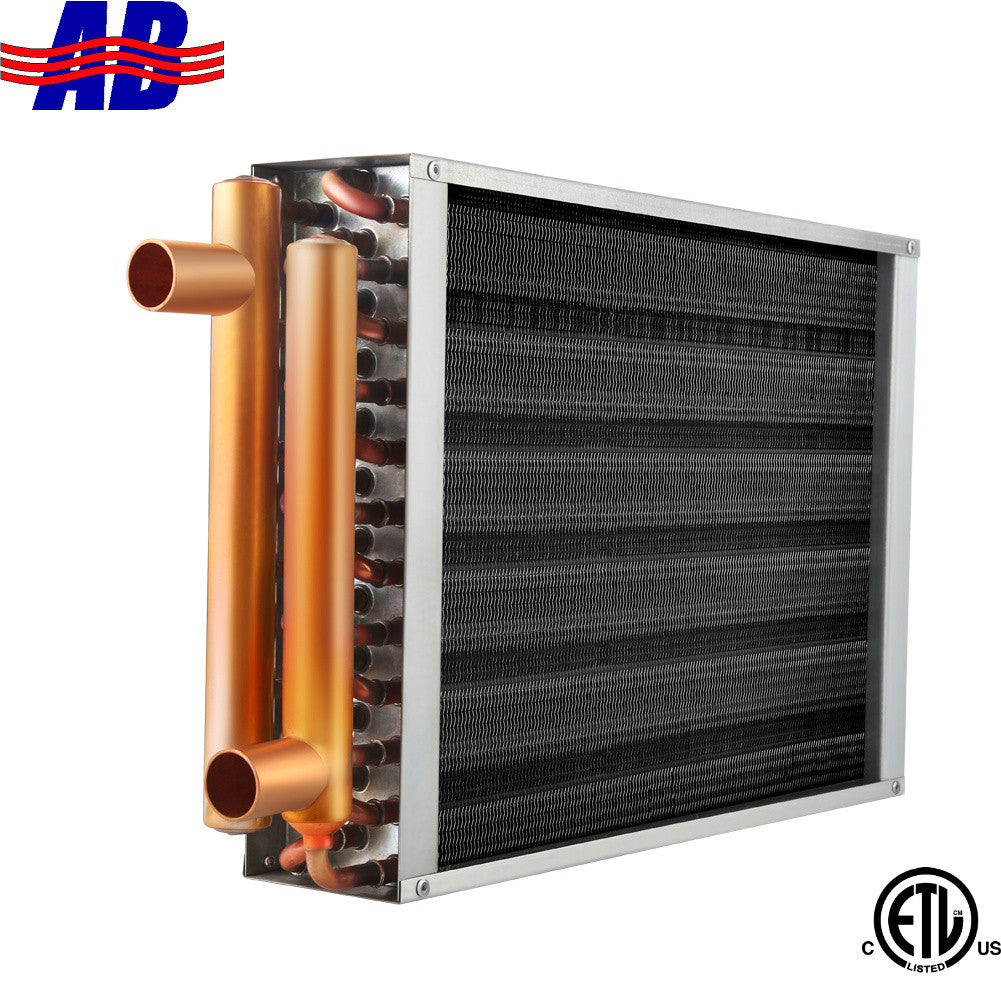
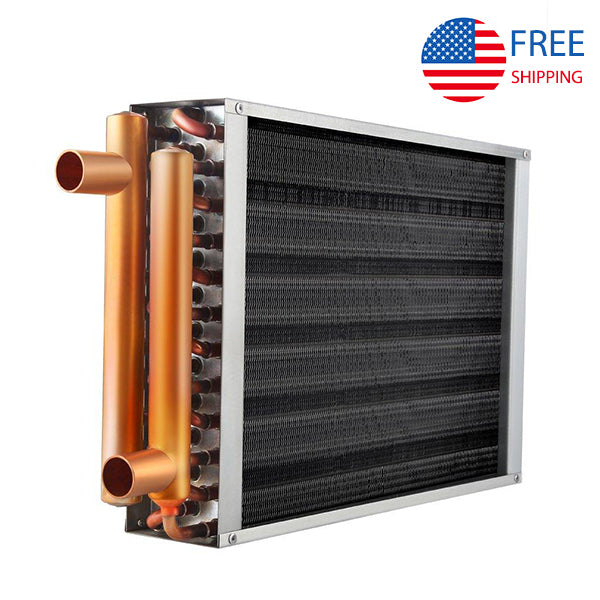
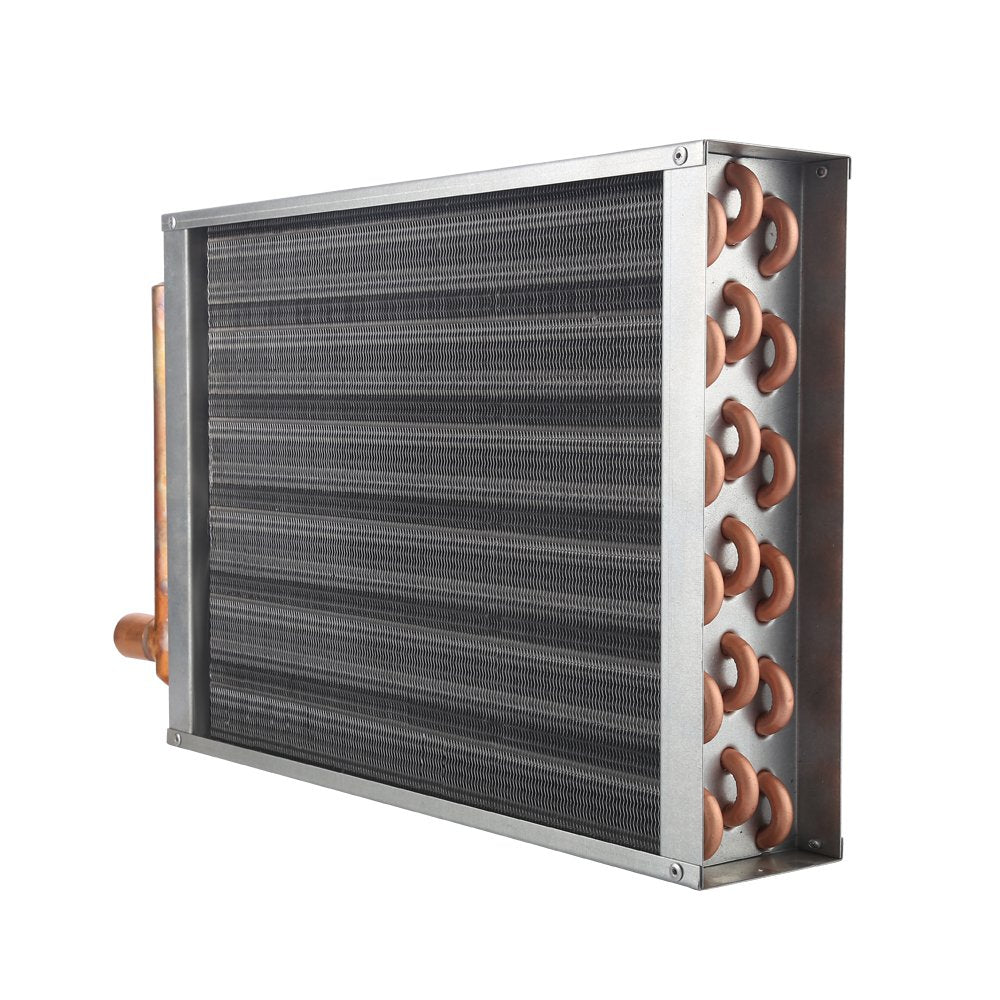
Water to air heat exchangers are components used in hydronic heating systems to transfer thermal energy from hot water to circulating air. The system typically consists of a copper tube circuit with aluminum fins designed to increase surface area and improve heat transfer efficiency between the fluid and air streams.
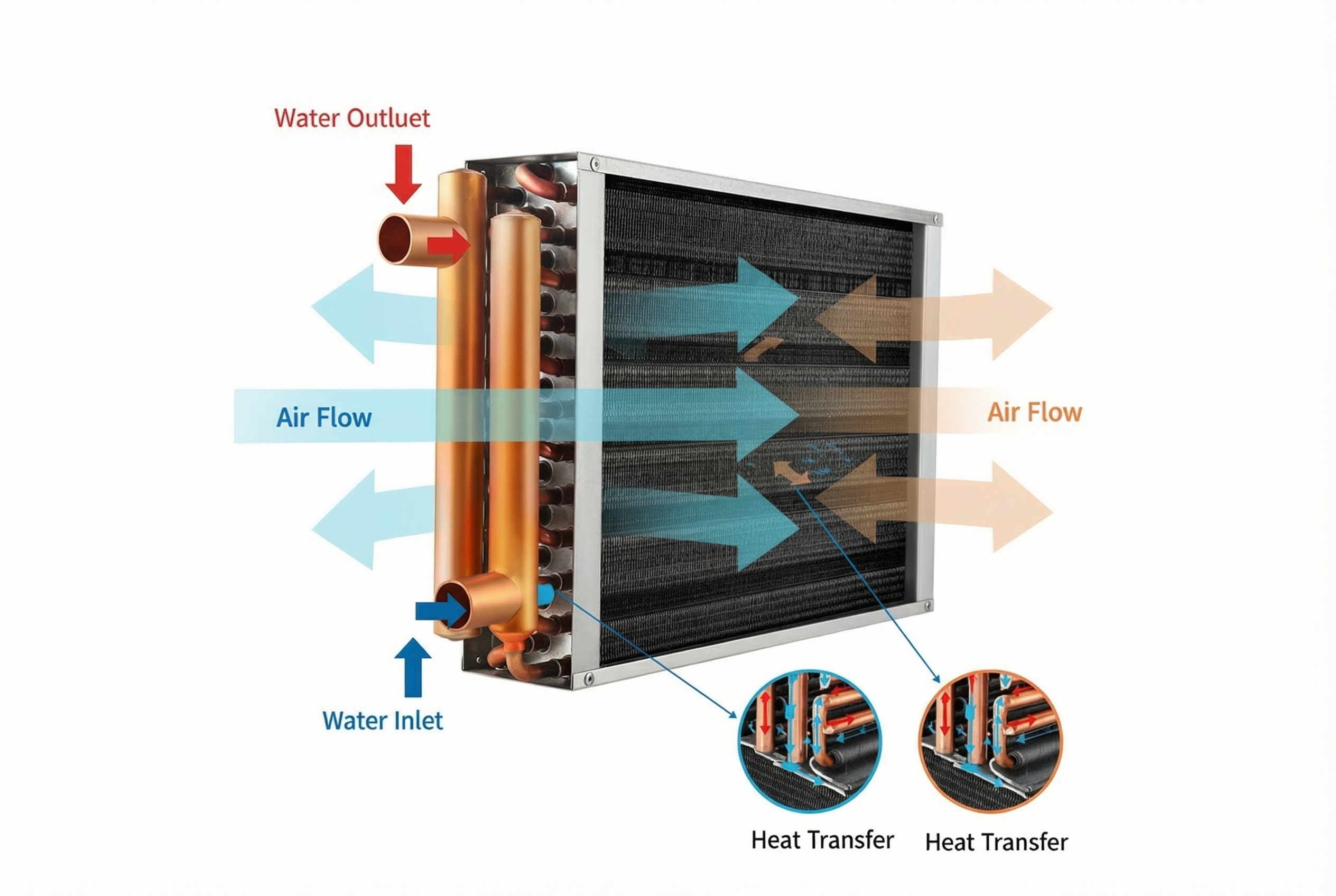
In a hydronic setup, heated water is supplied from a boiler, heat source, or storage tank and circulated through the heat exchanger coil. Air is then forced across the coil surface by a fan or air handler, allowing thermal energy to be transferred from the water to the air without direct mixing of the two media.
These heat exchangers are commonly integrated into forced air distribution systems where hydronic heat sources are used as the primary energy input. Typical applications include residential heating systems, workshop heating, greenhouse environments, and air handling units that require compatibility with hot water circuits.
The performance of a water to air heat exchanger is influenced by several factors, including water temperature, flow rate, air velocity, coil surface area, and fin density. Proper sizing is determined based on required heat output, system pressure drop limitations, and available supply water temperature.
Copper tube and aluminum fin construction is widely used due to its thermal conductivity characteristics and mechanical durability in closed-loop hydronic systems. The coil geometry is selected to balance heat transfer performance with airflow resistance within the system design parameters.
Applications of Water to Air Heat Exchangers
Water to Air heat exchangers are widely used in hydronic heating and thermal transfer systems where efficient heat exchange between water and air is required. These systems are commonly installed in residential, commercial, marine, and industrial environments to provide reliable and energy-efficient heating solutions.
Typical applications include the following system categories:


How Water to Air Heat Exchangers Work
Water to air heat exchangers operate by transferring thermal energy from hot water to moving air through a finned coil design. Heated water flows through copper tubes while air passes across aluminum fins, allowing efficient heat transfer without direct mixing between the water and air streams.
The fins increase the heat transfer surface area and improve thermal performance, making these heat exchangers suitable for hydronic heating systems, forced air applications, outdoor wood furnaces, and HVAC air handlers.
The performance of a water to air heat exchanger depends on several factors, including water temperature, water flow rate, airflow volume, coil surface area, and fin density. Proper coil selection and airflow design are essential for achieving reliable heating output and energy-efficient operation.
Key Considerations When Selecting an Water to Air Heat Exchanger
When selecting an water to air heat exchanger, several technical factors should be evaluated to ensure proper performance:
- Heat transfer requirements: The required thermal capacity based on system load
- Flow rates: Water and air flow rates to maintain optimal heat exchange
- Operating temperature and pressure: Ensure materials and design meet system conditions
- Material selection: Corrosion-resistant metals such as stainless steel or copper
- Space and installation constraints: Dimensions and airflow requirements for proper integration
These considerations are essential for designing efficient air cooled heat exchangers and ensuring effective water to air systems operation. For more details on working principles, applications, and selection factors, refer to our guide on Water to Air Heat Exchanger.
Water to Air Heat Exchangers for Outdoor Boilers
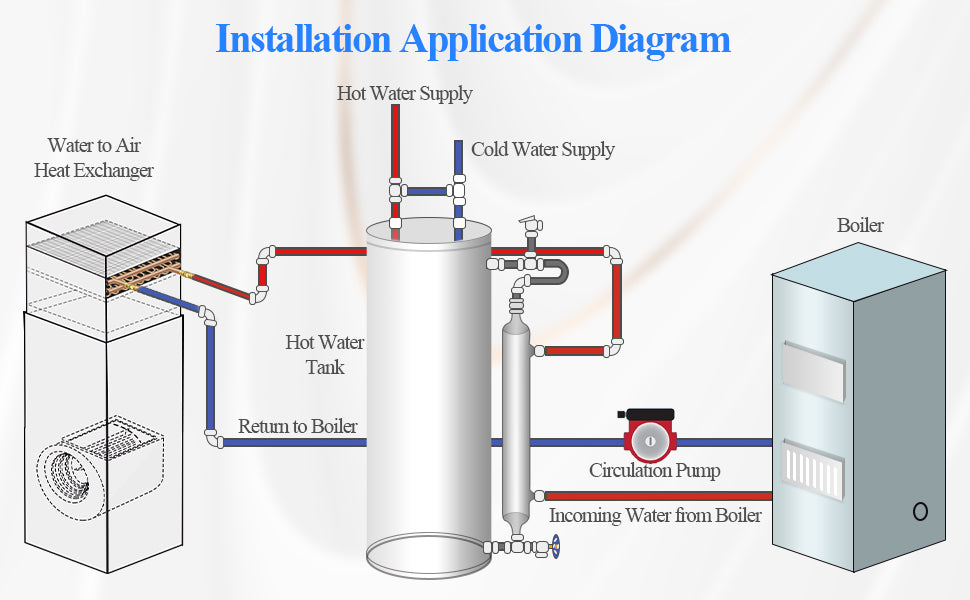
Water to air heat exchangers are widely used with outdoor boilers, outdoor wood boilers, and hydronic heating systems to transfer heat from hot water circuits into forced air heating systems. These heat exchangers allow boiler-based heat sources to work with existing HVAC ductwork, air handlers, and forced air distribution systems without mixing the water and air circuits.
An outdoor boiler water to air heat exchanger is typically installed inside a furnace cabinet, air handler, or custom duct system. Hot water from the outdoor boiler or wood-fired heating system circulates through copper tubes, while air passes across the aluminum fins to absorb thermal energy and distribute warm air throughout the building.
A wood boiler water to air heat exchanger provides an efficient solution for residential heating, workshops, garages, agricultural buildings, and other spaces where wood boilers or hydronic heat sources are used. By connecting a water-based heating system with an air delivery system, these heat exchangers provide flexible heating options while maintaining reliable thermal performance.
Our boiler water air heat exchanger solutions are available in multiple sizes and BTU capacities to match different airflow conditions, water temperatures, and heating requirements. Proper selection of coil dimensions, water flow rate, and air volume helps ensure efficient operation as a hydronic air heater for various heating applications.
Common applications include:
- Outdoor wood boiler heating systems
- Hydronic forced air heating systems
- Residential and commercial HVAC systems
- Workshops, garages, and agricultural buildings
- Greenhouses and industrial heating applications
FAQ
A water to air heat exchanger is used to transfer heat from hot water (or hydronic systems) into air for space heating applications such as wood boilers, furnaces, garages, workshops, greenhouses, and HVAC air handling systems.
Yes. Water to air heat exchangers are commonly used with outdoor wood boilers and hydronic heating systems to distribute heat into forced air systems, providing efficient whole-building heating.
The required size depends on BTU output, airflow (CFM), and application. Small garages may require 60,000–100,000 BTU, while residential or shop heating systems may require 120,000–240,000 BTU or more.
They can be installed in furnace ductwork, air handlers, garage heaters, greenhouse ventilation systems, and custom hydronic HVAC systems.
Hydronic coils are a type of water to air heat exchanger. They use copper tubes and aluminum fins to transfer heat from hot water into air streams in HVAC systems.
Recently viewed
News
View all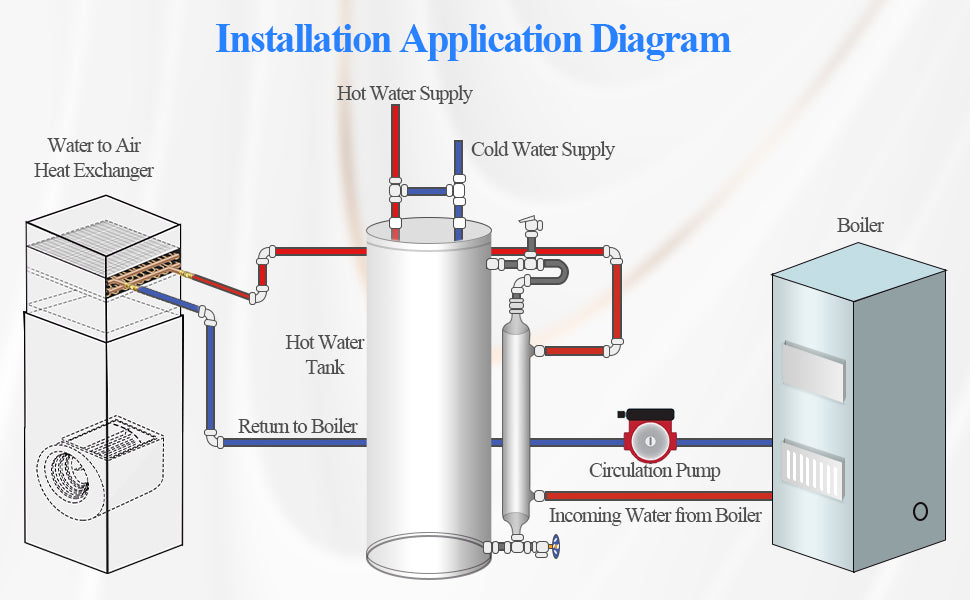
Water to Air Heat Exchanger: How It Works, Applications, and Selection Guide
How to Choose the Right Pool Heat Exchanger: A Complete Sizing and Selection Guide