Heating a swimming pool efficiently requires more than simply selecting a powerful heat source. A properly selected pool heat exchanger plays an important role in transferring thermal energy between the heating system and pool water while maintaining system efficiency and reliability.
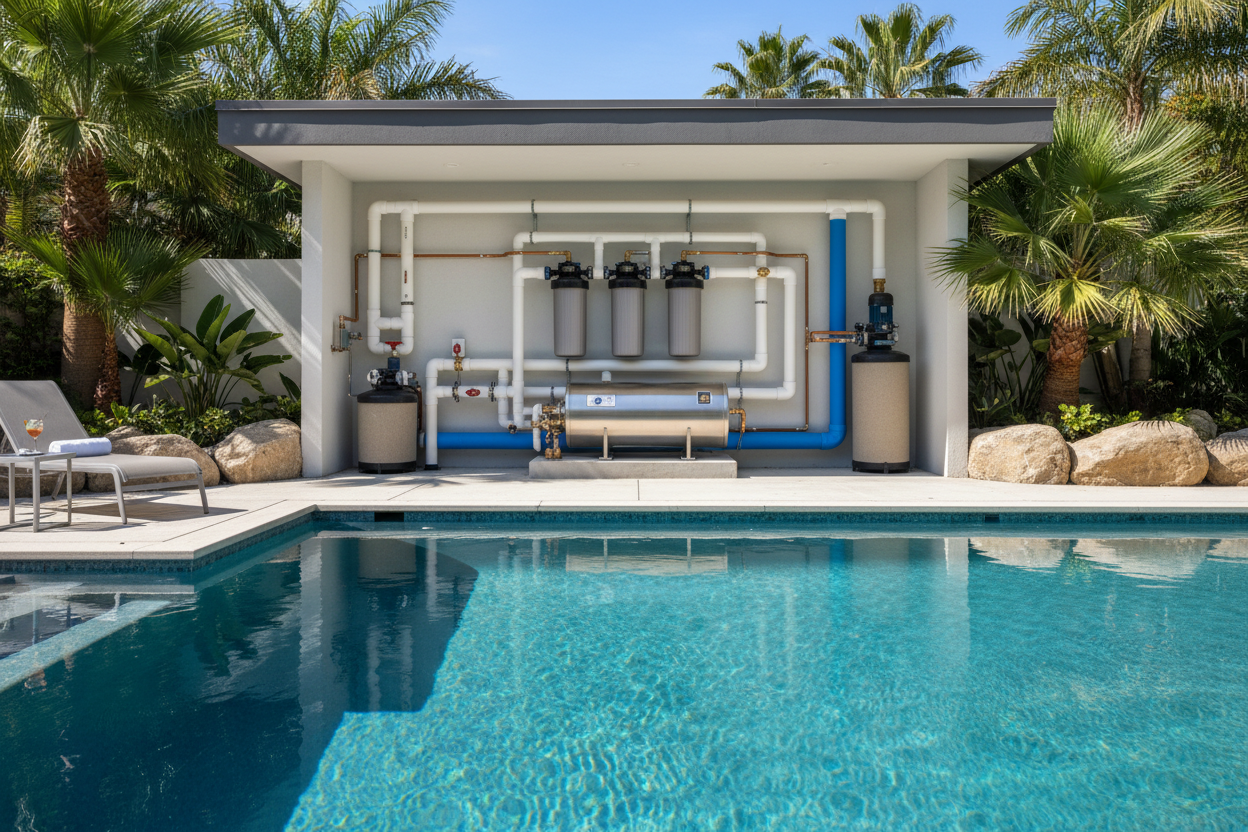
A pool heat exchanger allows different heating sources, such as boilers, solar thermal systems, geothermal systems, and external heaters, to heat pool water without direct contact between the heating source and chemically treated pool water.
However, choosing the right swimming pool heat exchanger requires careful consideration of several factors, including pool size, heating capacity, water flow rate, operating conditions, and material compatibility.
This guide explains how pool heat exchangers work, when they are needed, how to size them correctly, and how to choose between titanium and stainless steel models.
What Is a Pool Heat Exchanger and How Does It Work?
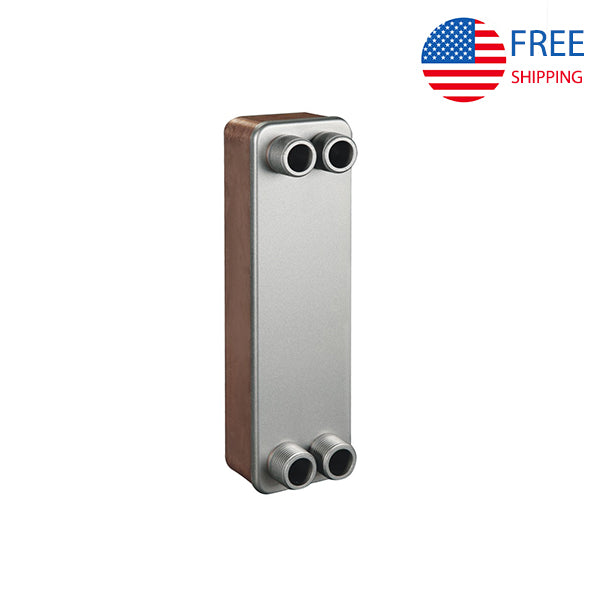
A pool heat exchanger is a device that transfers heat from one fluid circuit to another without allowing the two fluids to mix.
In a typical swimming pool heating system, the heat exchanger separates the heating source loop from the pool water loop.
The process works as follows:
- Hot water from a boiler, solar heating system, or other heat source flows through one side of the heat exchanger.
- Pool water circulates through the opposite side.
- Heat transfers through the heat exchanger surface, warming the pool water.
Most pool heat exchangers use a shell and tube design because it provides efficient heat transfer, reliable operation, and good resistance to continuous water circulation.
Common applications for pool heat exchangers include:
- Residential swimming pools
- Saltwater pools
- Commercial pools
- Indoor swimming pools
- Spas and hot tubs
- Solar pool heating systems
- Boiler-based pool heating systems
One of the main advantages of using a heat exchanger is that it protects the heating equipment from direct exposure to pool chemicals, extending the service life of the entire heating system.
When Do You Need a Heat Exchanger for a Swimming Pool?
A swimming pool heat exchanger is commonly used when the pool heating source cannot or should not directly connect to the pool water system.
Unlike traditional pool heaters that directly heat pool water, heat exchangers provide an isolated heat transfer solution between different systems.
Solar Pool Heating Systems
Solar thermal systems are often connected to pools through a heat exchanger.
The solar loop collects heat from solar collectors, and the heat exchanger transfers this energy into the pool water.
Benefits include:
- Reduced energy consumption
- Use of renewable energy
- Suitable for larger swimming pools
Boiler-Based Pool Heating Systems
Many indoor and commercial swimming pools use boilers as the primary heating source.
A pool heat exchanger separates the boiler water from pool water, preventing chlorine and other chemicals from entering the heating equipment.
This improves system reliability and reduces maintenance requirements.
Geothermal Pool Heating Systems
Geothermal heating systems use underground thermal energy to heat water.
A heat exchanger transfers heat between the geothermal loop and the pool circulation system while keeping both fluid circuits separate.
External Heating Sources
Wood boilers, waste heat recovery systems, and other external heating sources can also be integrated with swimming pools using a heat exchanger.
This provides flexibility while maintaining safe operation.
How to Size a Pool Heat Exchanger?
Selecting the correct size is one of the most important steps when choosing a pool heat exchanger.
An undersized heat exchanger may result in:
- Slow pool heating
- Difficulty reaching the desired temperature
- Longer operating times
- Reduced system efficiency
An oversized heat exchanger may increase initial costs without providing significant additional benefits.
The correct size depends on several operating factors.
Pool Volume
The size of the swimming pool directly affects the required heating capacity.
Larger pools contain more water and require more energy to increase the temperature.
Typical pool sizes include:
- Small residential pools: 10,000–20,000 gallons
- Large residential pools: 20,000–40,000 gallons
- Commercial pools: 50,000 gallons or more
Temperature Rise Requirement
The required temperature increase is another important factor.
For example:
Current pool temperature: 65°F
Desired pool temperature: 80°F
Required temperature rise:
15°F
A larger temperature increase requires a higher heat transfer capacity.
Heating Time
The expected heating time affects the required heat exchanger size.
A system designed to heat a pool within a few hours requires a larger heat exchanger compared with a system designed to maintain temperature gradually.
Water Flow Rate
Flow rate is critical for proper heat transfer performance.
The heat exchanger must match:
- Pool pump flow rate
- Heating source flow rate
Incorrect flow conditions can reduce efficiency and increase pressure drop.
Basic Pool Heating Calculation
A simplified calculation for estimating heating requirements is:
Required BTU/hr = Pool Volume × 8.34 × Temperature Rise ÷ Heating Time
For example:
Pool volume: 20,000 gallons
Temperature rise: 10°F
Heating time: 24 hours
Required heating capacity:
20,000 × 8.34 × 10 ÷ 24
≈ 69,500 BTU/hr
The selected pool heat exchanger should typically have a capacity above the calculated requirement to provide reliable performance under real operating conditions.
Titanium vs Stainless Steel Pool Heat Exchangers: Which One Should You Choose?
Material selection is one of the most important factors when choosing a pool heat exchanger.
The correct material depends on water chemistry, operating environment, and application requirements.
Titanium Pool Heat Exchangers
Titanium is considered one of the best materials for demanding pool heating applications because of its excellent corrosion resistance.
Advantages of titanium heat exchangers include:
- Excellent resistance to saltwater corrosion
- High resistance to chlorine and chemical exposure
- Long service life
- Reliable performance in aggressive environments
Titanium pool heat exchangers are recommended for:
- Saltwater pools
- Commercial swimming pools
- Spas
- Coastal applications
- Pools with high chemical exposure
For saltwater pool systems, titanium is often the preferred choice because saltwater can accelerate corrosion in many traditional metals.
Stainless Steel Pool Heat Exchangers
Stainless steel, especially SS316L, provides good corrosion resistance and is widely used in standard swimming pool applications.
Advantages include:
- Good corrosion resistance
- Cost-effective solution
- Efficient heat transfer performance
Stainless steel pool heat exchangers are commonly used for:
- Residential freshwater pools
- Indoor pools
- Systems with well-controlled water chemistry
Material Selection Guide
| Application | Recommended Material |
|---|---|
| Saltwater pool | Titanium |
| Commercial pool | Titanium |
| Spa applications | Titanium or SS316L |
| Residential freshwater pool | SS316L |
| Standard pool heating | SS316L |
Key Factors to Consider When Buying a Pool Heat Exchanger
Material selection is important, but other technical specifications should also be considered before purchasing a swimming pool heat exchanger.
Heat Transfer Capacity
Heat exchanger capacity is typically measured in:
- BTU/hr
- kW
The selected model should provide enough capacity to meet the pool heating requirements.
Flow Rate
The heat exchanger must support the required water flow rate.
Important parameters include:
- Pool side flow rate
- Heating side flow rate
- Pressure drop
A properly matched flow rate ensures efficient heat transfer.
Connection Size
Connection size affects installation compatibility.
Common connection sizes include:
- 1 inch
- 1.5 inches
- 2 inches
- 2.5 inches
The connection size should match the existing piping system to avoid unnecessary modifications.
Operating Temperature and Pressure
Before selecting a heat exchanger, check:
- Maximum operating temperature
- Maximum working pressure
- Compatibility with the heat source
This is especially important for boiler systems and commercial pool applications.
Counterflow Design
Many efficient heat exchangers use counterflow technology.
In a counterflow design, hot and cold fluids move in opposite directions, creating a larger temperature difference across the heat exchanger surface.
This improves heat transfer efficiency and helps maximize performance.
Common Pool Heat Exchanger Problems and How to Avoid Them
Even a high-quality heat exchanger may experience performance issues if it is incorrectly sized or installed.
Pool Is Not Heating Efficiently
Possible causes:
- Heat exchanger is too small
- Insufficient water flow
- Heating source does not provide enough capacity
Solution:
Check the heating requirements and select a properly sized model.
Corrosion or Leakage
Possible causes:
- Incorrect material selection
- High salt concentration
- Poor water chemistry control
Solution:
Choose titanium models for saltwater pools and other demanding environments.
Excessive Pressure Drop
Possible causes:
- Incorrect heat exchanger size
- Flow rate exceeds design limits
Solution:
Select a model that matches the required flow conditions.
Why Choose Alfa Heating Pool Heat Exchangers?
Alfa Heating provides pool heat exchanger solutions designed for residential and commercial heating applications.
Our product range includes:
- Titanium pool heat exchangers
- Stainless steel pool heat exchangers
- Shell and tube heat exchanger designs
- Solutions for solar, boiler, and pool heating systems
Key features include:
- Corrosion-resistant materials
- Efficient heat transfer performance
- Multiple capacity options
- Flexible application compatibility
Whether you are heating a residential swimming pool or designing a commercial pool heating system, selecting the correct heat exchanger size and material is essential for long-term reliability and efficient operation.
Choosing the right pool heat exchanger requires careful consideration of pool size, heating capacity, flow rate, operating conditions, and material compatibility.
Titanium heat exchangers are an excellent choice for saltwater pools and demanding environments due to their superior corrosion resistance. Stainless steel heat exchangers provide a reliable and cost-effective solution for standard freshwater pool applications.
By selecting the correct size and material, a properly designed swimming pool heat exchanger can improve heating efficiency, reduce maintenance requirements, and provide reliable performance for many years.