A water to air heat exchanger is a highly efficient heat transfer device that transfers thermal energy between a hot water circuit and an air stream. These heat exchangers are widely used in residential, commercial, and industrial heating systems, including hydronic heating systems, outdoor boiler systems, HVAC applications, and forced air heating solutions.
Unlike traditional electric heaters or fuel-based heating equipment, a water to air heat exchanger uses existing hot water sources, such as boilers, heat pumps, or solar thermal systems, to efficiently warm air and distribute heat throughout a building.
This guide explains how water to air heat exchangers work, their common applications, and how to select the right model for your heating system.
What Is a Water to Air Heat Exchanger?
A water to air heat exchanger is a type of finned coil heat exchanger designed to transfer heat from circulating water to air.
The basic construction typically includes copper tubes and aluminum fins. Hot water flows through the copper tubes while air passes across the fin surface. Heat moves from the water through the tube walls and fins into the air, creating a warm air supply for space heating.
The main components include:
- Copper tubing for water circulation
- Aluminum fins to increase heat transfer area
- Frame and casing for structural support
- Air-side and water-side connections
Because of their compact design and efficient heat transfer performance, water to air heat exchangers are commonly installed in air handlers, duct systems, furnaces, and custom heating equipment.
For a complete range of products, visit our [Water to Air Heat Exchangers] collection.
How Does a Water to Air Heat Exchanger Work?
The working principle of a water to air heat exchanger is based on transferring heat between two different mediums without mixing them.
The typical heating process works as follows:
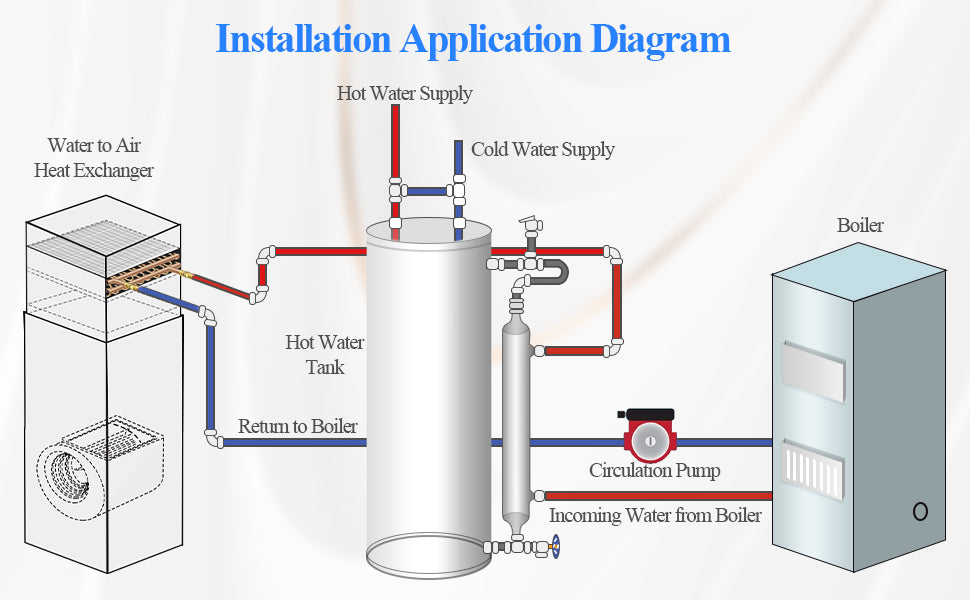
- A heat source, such as a boiler, heat pump, or solar heating system, heats the water.
- A circulation pump moves hot water through the heat exchanger tubes.
- Air passes through the aluminum fins using a fan or blower.
- Heat transfers from the hot water into the air.
- The heated air is distributed through ductwork or directly into the space.
The performance of a water to air heat exchanger depends on several factors, including:
- Water inlet temperature
- Water flow rate
- Airflow volume (CFM)
- Heat transfer surface area
- Temperature difference between water and air
For this reason, proper selection is important to ensure the heat exchanger can deliver the required heating capacity.
Common Applications of Water to Air Heat Exchangers
Water to air heat exchangers are used in many heating applications where a water-based heat source needs to provide warm air.
Outdoor Boiler Heating Systems
One of the most common applications is an outdoor boiler water to air heat exchanger system.
Outdoor boilers generate hot water that can be circulated into a building through insulated piping. The water to air heat exchanger then transfers this heat into the indoor air system.
Common applications include:
- Residential heating
- Workshops and garages
- Agricultural buildings
- Pole barns
- Commercial spaces
Compared with traditional heating methods, outdoor boiler systems can provide efficient heat distribution by combining hydronic heat sources with forced air systems.
Forced Air Heating Systems
A water to air heat exchanger can be integrated into an existing forced air heating system to provide heat using hot water instead of conventional fuel sources.
These systems are commonly used for:
- Residential HVAC upgrades
- Wood boiler heating systems
- Radiant heating conversions
- Supplemental heating applications
The heat exchanger is usually installed inside an air handler or duct system, allowing the blower fan to distribute heated air throughout the building.
Hydronic Heating Systems
Hydronic heating systems use water as the heat transfer medium. By adding a water to air heat exchanger, a hydronic system can provide warm air heating in addition to traditional radiant heating.
Applications include:
- Boiler-based heating systems
- Geothermal heating systems
- Heat pump systems
- Mixed radiant and forced air heating
For more information about hydronic heating applications, visit our [Hydronic Heating System Solutions] page.
Water to Air Heat Exchanger Sizing Guide
Correct water to air heat exchanger sizing is essential for achieving the expected heating performance.
Several key parameters should be considered when selecting a heat exchanger:
1. Required Heating Capacity
The first step is determining the required BTU output.
The required capacity depends on:
- Building size
- Insulation level
- Outdoor temperature
- Heating load requirements
2. Water Temperature and Flow Rate
The temperature and flow rate of the water supply directly affect heat transfer performance.
Important information includes:
- Entering water temperature
- Leaving water temperature
- Water flow rate (GPM)
- Glycol concentration, if applicable
3. Airflow Requirements
The air side also plays an important role.
Required information includes:
- Airflow volume (CFM)
- Air inlet temperature
- Desired outlet air temperature
- Available installation space
A properly selected water to air heat exchanger should balance both water-side and air-side performance to achieve efficient heat transfer.
For assistance selecting the right model, contact our technical team for a customized recommendation.
Water to Air Heat Exchanger vs Air to Water Heat Exchanger
Although the names are similar, water to air heat exchangers and air to water heat exchangers serve different purposes.
| Water to Air Heat Exchanger | Air to Water Heat Exchanger | |
|---|---|---|
| Heat transfer direction | Water transfers heat to air | Air transfers heat to water |
| Main application | Space heating | Heating or cooling water systems |
| Typical equipment | Boilers, HVAC systems, furnaces | Heat pumps, cooling systems |
| Common design | Finned coil heat exchanger | Air-cooled coil system |
A water to air heat exchanger is the preferred choice when the goal is to convert hot water energy into warm air for space heating.
For air-based heat transfer applications, explore our [Air to Water Heat Exchangers] products.
How to Select the Right Water to Air Heat Exchanger
Choosing the correct heat exchanger requires evaluating both system requirements and operating conditions.
The main selection factors include:
Heat Transfer Capacity
Select a model that can provide the required BTU/hr output under your actual operating conditions.
Material Compatibility
Most water to air heat exchangers use copper tubes and aluminum fins because they provide excellent thermal conductivity and corrosion resistance for standard water and glycol applications.
Installation Size
Consider:
- Available space
- Connection size
- Airflow direction
- Mounting method
Operating Conditions
Always check:
- Maximum operating pressure
- Water temperature range
- Air temperature range
- Fluid type
Selecting the correct model ensures reliable performance, improved energy efficiency, and longer service life.
A water to air heat exchanger provides an efficient solution for converting heat from water-based systems into usable warm air. Whether used with outdoor boilers, hydronic heating systems, HVAC equipment, or forced air heating applications, these heat exchangers offer reliable performance and flexible installation options.
Proper sizing and selection are critical to achieving maximum heating efficiency. By considering water temperature, flow rate, airflow, and required heating capacity, you can choose a heat exchanger that matches your specific application.
Explore our [Water to Air Heat Exchangers] collection to find the right solution for your heating system.