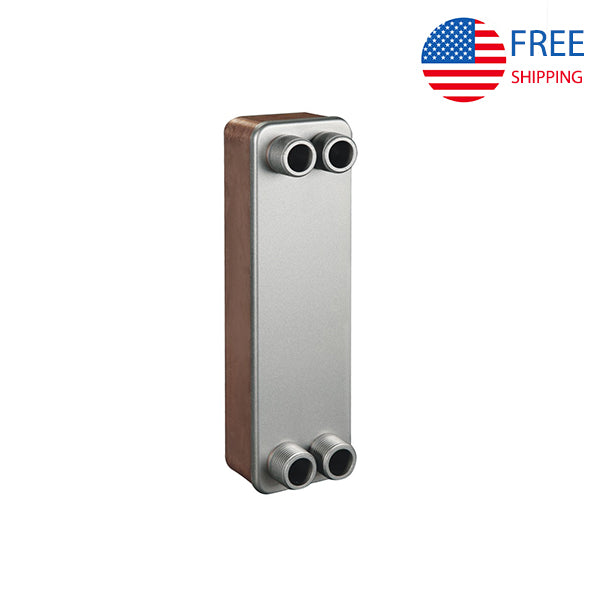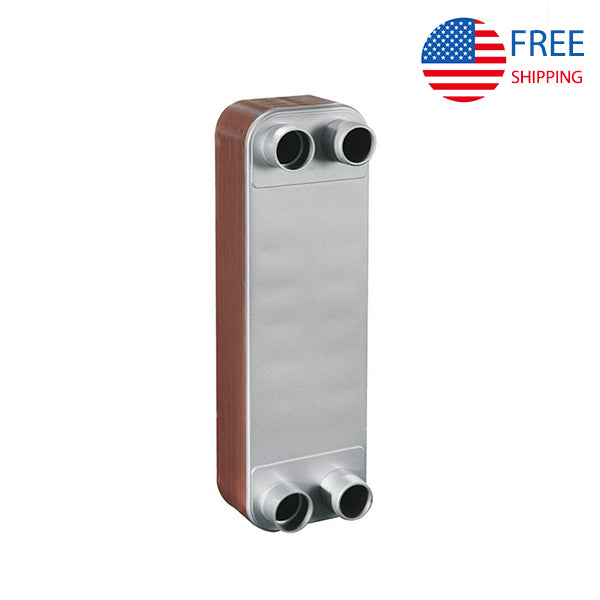
Choosing a heat exchanger for marine and offshore service starts with the operating envelope, not with catalog size alone. Heat exchangers for marine applications are selected by checking process fluid on each side, seawater exposure, chloride level, temperature range, pressure, flow rate, required heat duty, footprint, and weight allowance. A shipboard cooling loop, a tug engine circuit, and an offshore utility module face different loads and access limits, so the same design rarely fits all three. Marine standards, class rules, and project specifications also shape the final choice because they affect testing, traceability, and approval. The right unit is the one that matches service conditions, corrosion severity, maintenance strategy, and regulatory demands.
Material choice has a direct effect on durability, inspection intervals, and lifecycle cost in seawater duty. In this setting, corrosion-resistant heat exchangers are not defined by corrosion resistance alone, because pitting, crevice attack, erosion, thermal fatigue, and premature leakage can all shorten service life. Titanium offers very strong seawater resistance and long service intervals, while 316 and 316L stainless steel fit milder duties with controlled chloride exposure. Duplex and super duplex stainless steels add higher chloride resistance and strength, which makes them common in more demanding offshore work. Copper-nickel alloys remain practical for marine cooling circuits, and nickel-based grades such as Alloy 625, 825, 28, and C-276 serve aggressive or sour environments where premium materials justify their cost. Carbon steel remains a low-cost option only in less corrosive duties and usually needs protection to perform well.
The final material decision also depends on corrosion mechanism and fabrication detail. Pitting corrosion can perforate surfaces quickly, crevice corrosion develops in shielded zones, and stress corrosion cracking becomes a concern when chloride exposure combines with stress and heat. Differential thermal expansion, biofouling, and erosion-corrosion add further risk in high-flow or dirty service. Coatings, corrosion allowances, inhibitors, sacrificial anodes, and careful flow-path design help, but they do not replace the correct base alloy. Tube material, shell material, tubesheet material, gasket selection, and weld procedures all need to suit the full service environment. Compact equipment can help where space is tight, but cleaning access and mechanical robustness still matter more than size alone.
|
Material |
Best marine/offshore use |
Key advantages |
Main limitations |
Relative cost
|
|---|---|---|---|---|
|
316/316L stainless steel |
Mild marine duties, closed loops, lower chloride exposure |
Common, economical, easy to source |
Limited in hot seawater and severe chloride service |
Low to Moderate |
|
Duplex stainless steel |
Offshore topsides and seawater-influenced systems |
Good chloride resistance, high strength |
Higher fabrication demands than standard stainless |
Moderate to High |
|
Super duplex stainless steel |
Severe chloride service and demanding offshore duty |
Very strong resistance and high mechanical strength |
More complex welding and higher cost |
High |
|
Titanium |
Direct seawater service, long-life seawater coolers |
Excellent seawater resistance and long service life |
Premium cost and specialized fabrication |
Premium |
|
Cupro-nickel |
Marine cooling circuits and condensers |
Good seawater performance and proven marine use |
Less suitable for the harshest offshore chemistry |
Moderate to High |
|
Alloy 625 |
Highly aggressive offshore and sour service |
Excellent corrosion resistance in mixed environments |
High material and fabrication cost |
Premium |
|
Alloy 825 |
Acidic or mixed-corrosion duties |
Balanced resistance in challenging fluid chemistry |
Not a universal answer for severe seawater exposure |
Premium |
|
Alloy 28 |
High-chloride and mixed-corrosion offshore service |
Strong chloride resistance and useful mechanical strength |
Higher cost and limited availability |
Premium |
|
C-276 / Hastelloy |
Very aggressive chemical and sour environments |
Excellent performance in harsh mixed-corrosion service |
Very high cost and fabrication complexity |
Premium |
|
13Cr stainless steel |
CO2-rich sweet service with limited chlorides |
Useful in selected oil and gas duties |
Limited resistance in harsher chloride or sour service |
Moderate |
|
Carbon steel |
Non-corrosive or lightly controlled duties |
Low initial cost and easy fabrication |
Poor direct seawater resistance without protection |
Low |
Offshore performance depends on how well the exchanger holds stable output under motion, load change, and long service intervals. In offshore heating systems, stable heat transfer matters because a small drop in efficiency can raise energy demand, affect process temperature, and increase wear on connected equipment. Vibration resistance and fouling control are equally important, since wave-induced movement, machinery stress, and deposit buildup can all reduce reliability and increase pressure drop. Remote monitoring helps detect drift early, which supports planned cleaning instead of unplanned shutdowns.
Integration with pumps, valves, controls, and inspection routines also affects uptime. In thermal systems for offshore environments, poor integration can create uneven flow, delayed response to load change, and maintenance bottlenecks that extend outage time. The best designs support removable bundles or covers, straightforward inspection, and cleaning access that fits limited offshore service windows. They also account for insulation and heat-loss control in wind, rain, and low ambient temperatures. Before specifying a unit, confirm fluid chemistry on both sides, chloride severity, pressure and temperature limits, footprint and weight allowance, vibration exposure, hazardous-area requirements, and the total cost of ownership over the full service life.
In practice, the best marine and offshore heat exchanger is the one that balances corrosion resistance, maintainability, and lifecycle value rather than simply offering the lowest purchase price. Matching the alloy, design, and service access to the operating environment is what protects uptime and reduces long-term risk.