Choosing between a pool heat exchanger and an electric pool heater affects cost, performance, and daily use. This guide compares both options in clear terms.
Pool heat exchangers vs electric pool heaters efficiency compared
In a direct comparison, a pool heat exchanger vs electric pool heater decision starts with the energy source behind the system. A heat exchanger often performs better when it uses heat already produced by a gas boiler, heat pump, or solar-assisted circuit, because it transfers that energy into pool water with low loss at the point of exchange. An electric pool heater works through resistance heating and turns electricity into heat directly, which is simple, but the running cost is often higher when the pool is heated often or for long periods.
The phrase “more efficient” covers more than one factor. It includes energy efficiency, cost efficiency, and user efficiency. Energy efficiency shows how much usable heat comes from each unit of input, while cost efficiency shows how much it costs to keep the water warm or raise it by 1 degree. User efficiency shows how fast the system responds and how predictable it is in daily use.
For frequent heating, a heat exchanger often has the advantage when the source energy is cheaper than electricity. A boiler or a stable home heating loop can support long heating cycles without the same cost pressure seen in resistance heating. An electric heater remains useful for quick top-ups, smaller volumes, and places where a separate heating source is not available.
| Factor | Pool heat exchanger | Electric pool heater
|
| Method of action | Transfers heat from a primary circuit | Generates heat directly from electricity |
| Heating speed | Fast when the source is strong and flow is balanced | Fast on demand, limited by electrical capacity |
| System efficiency | Depends on the source feeding the unit | High at the unit level, lower cost efficiency in regular use |
| Climate dependence | Depends on the source, especially if it is a heat pump | Not affected by outdoor air temperature |
| Purchase cost | Often moderate, varies with source and fittings | Often low to moderate |
| Running cost | Often lower with efficient fuel or source energy | Often higher during regular heating |
| Best use | Regular heating with existing hydronic infrastructure | Small pools, spas, and occasional use |
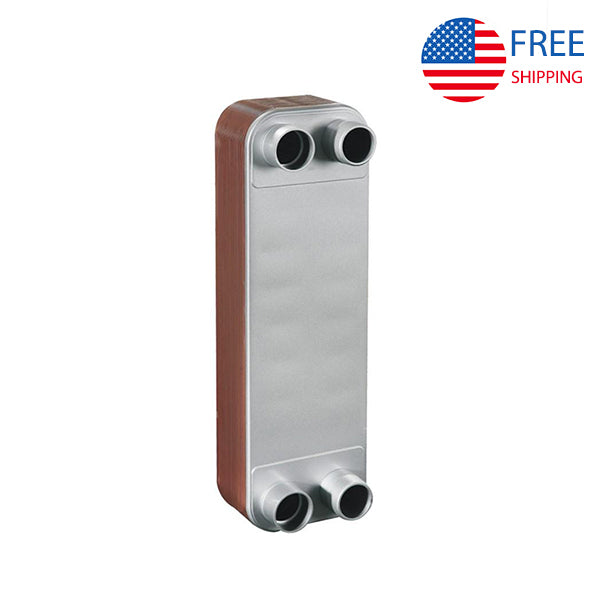
A swimming pool heat exchanger works through separate water circuits that never mix. One circuit carries heat from the source, while the other carries pool water through the unit. Heat passes across a metal surface, usually titanium or stainless steel, and the pool water absorbs that energy before returning to the basin. The process is indirect, but it is effective when the connected source is stable and sized correctly.
That setup fits daily pool heating well when the goal is to keep water temperature steady over time. Larger in-ground pools benefit from the steady transfer of heat because they lose energy slowly and need consistent input. A swimming pool heat exchanger also suits hotels, therapy pools, and residential systems with a central heating plant already in place. The unit itself is only one part of the system, but it is the part that makes heat transfer practical.
A pool heating heat exchanger is a strong choice when the property already has a source of low-cost thermal energy. It connects well to boilers, district heating, and some heat pump systems, so the final performance depends on the source as much as on the exchanger itself. A boiler usually gives predictable output in cooler weather. A heat pump can also work well, but its output changes with outdoor conditions and source temperature.
That climate factor matters. The exchanger does not care about air temperature on its own, but the source feeding it may care a great deal. A gas boiler stays more consistent in cold conditions, while an air-to-water heat pump can lose performance as the weather drops. Electric resistance heating does not face that kind of dependency, so it stays predictable regardless of the season.
When an electric heater or pool heating heat exchanger is the better fit
The better choice depends on pool size, usage pattern, available utilities, and the heating infrastructure already on site. An electric heater fits small residential pools, compact plunge pools, and spas where the heating need is short and direct. It is also practical where the user wants simple operation and does not have a boiler or hydronic loop to connect to. That makes it useful for on-demand heating and seasonal use.
A pool heating heat exchanger fits larger pools, regular weekly use, and properties with an existing central heating source. It becomes more attractive when the pool stays warm for long periods or when the goal is to extend the season with lower seasonal operating cost. In that setting, the system can use the energy source already available in the building, which often improves cost control over time.
Installation and maintenance also influence the decision. Electric units need a dedicated electrical circuit, enough amperage, and safe wet-area compliance. Heat exchangers need good hydraulics, correct flow, and compatible materials for the water chemistry. Neither option is complex in theory, but each has a different set of limits in practice.
- Small spa or hot tub use - electric heater
- Occasional seasonal heating - electric heater
- Large in-ground pool with frequent use - heat exchanger
- Property with boiler, heat pump, or district heating - heat exchanger
- Short-term temperature boost - electric heater
- Stable long-term temperature maintenance - heat exchanger
The best pool heating system is the one that matches real usage, not just the label on the equipment. A small pool used on weekends has different needs than a family pool heated across a long season. A heat exchanger often wins on seasonal economy when the source energy is favorable, while an electric heater often wins on simplicity and quick response.



![Brass Barbed Tees 1/2"x1/2"x1/2" Lead Free PEX Crimp"T" Fitting [5pk, 10pk, 25pk]](http://alfaheating.com/cdn/shop/products/brass-barded-tee.jpg?v=1603079042&width=600)