Heat is one of the fastest ways to reduce uptime and hardware stability. This article explains how cooling strategy protects performance, efficiency, and continuity.
From the article you will learn:
- How thermal control affects uptime, including the way heat influences CPUs, storage arrays, power supplies, and network devices.
- Why airflow imbalance and localized hotspots increase the chance of performance loss and unplanned interruption.
- How precision cooling systems differ from office HVAC and why that difference matters in dense IT spaces.
- What rack density, aisle containment, and localized heat removal change in the behavior of a server room.
- How energy-efficient data center cooling reduces power use while supporting stable operations over time.
- Which operational indicators reveal cooling performance, including energy use, PUE, inlet temperature consistency, and maintenance frequency.
- How variable-speed fans, economization, airflow management, and real-time monitoring improve cooling control.
- Why better thermal management supports scalability as compute demand and heat output grow.
- How cooling strategy affects hardware reliability, environmental stability, and service continuity in practical terms.
Why thermal control defines uptime in data centers
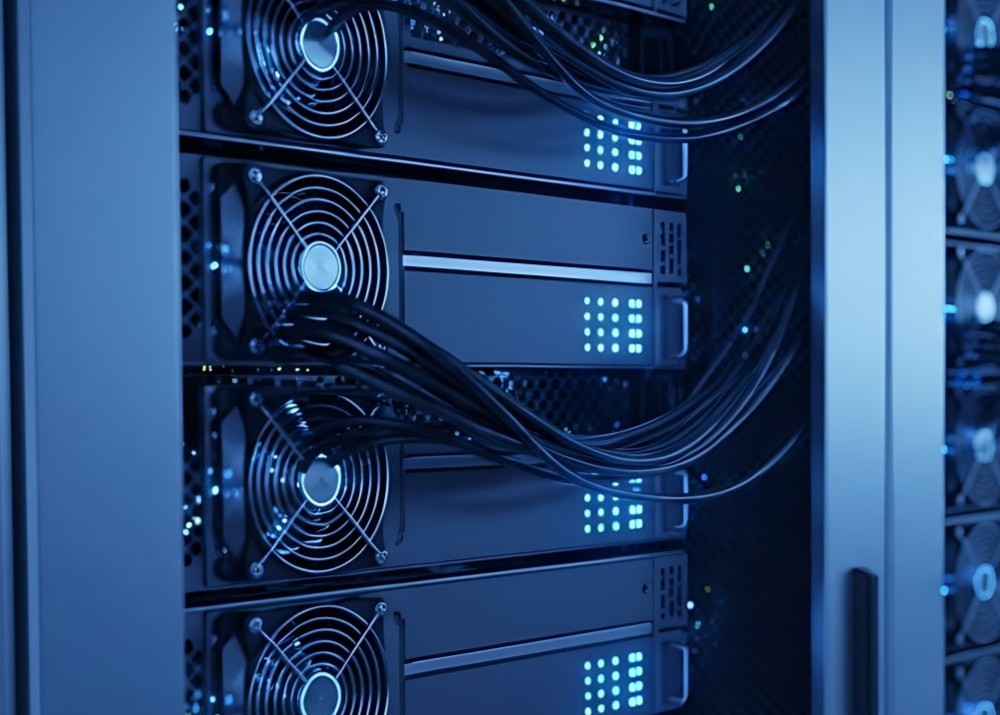
Stable heat control around active IT equipment is a direct factor in uptime. When temperature drifts outside the intended range, operating margins shrink and the chance of interruption rises across the environment. This is why data center cooling systems sit at the center of service continuity, not at the edge of facilities planning. Servers convert electrical power into heat, and higher rack density pushes that heat into smaller spaces. CPUs can throttle, storage can log more errors, power supplies can lose efficiency, and network devices can become less stable. One thermal issue can spread quickly.
The rack level shows the risk most clearly. Hotspots appear when dense hardware releases more heat than local airflow removes. Airflow imbalance makes the problem worse when cold air bypasses equipment intakes or hot exhaust recirculates into the front of the rack. As inlet temperatures rise, components operate closer to their limits and failure risk increases. Even modest temperature drift can reduce stability during peak load or during partial cooling disruption. In practice, thermal control is a reliability control.
Uncontrolled heat affects uptime in several direct ways:
- CPU throttling and slower application response
- storage errors and shorter hardware life
- power supply stress and reduced efficiency
- network instability and higher outage risk
Cooling also affects cost and efficiency. It is often one of the largest non-IT energy loads in a facility, so overcooling increases operating expense without improving performance. Temperature guidance often aligns with ASHRAE ranges near 64.4°F to 80.6°F, or 18°C to 27°C, but the right setpoint depends on hardware tolerance, layout, and resilience goals. Some sites run warmer when the design supports it. The right answer is contextual.
How precision cooling improves server room performance
Targeted cooling improves server room performance because IT loads need tighter environmental control than people do. Office HVAC is built for comfort, broad room coverage, and changing occupancy, while precision cooling systems are built for continuous operation around heat-sensitive hardware. That difference affects temperature control, humidity control, and airflow placement. Precision units keep conditions narrower and more stable, which supports consistent compute behavior and reduces environmental swings. The room becomes easier to manage.
The contrast is even clearer in dense IT spaces. Cooling systems for server rooms must handle racks with uneven heat output, from light network cabinets to high-density compute rows. A single room-wide approach often wastes capacity because it cools empty space instead of targeting intake air. A better design uses hot aisle and cold aisle separation, in-row delivery, overhead routing, and localized heat removal near the source. Cold aisle containment reduces mixing. Localized extraction keeps exhaust from returning to the front of the rack.
|
comfort cooling |
precision cooling |
|---|---|
|
built for occupant comfort |
built for continuous IT operation |
|
broader temperature tolerance |
tighter control of temperature and humidity |
|
limited airflow targeting |
airflow directed to racks and hot zones |
|
less effective in uneven heat loads |
better for dense rows and localized exhaust |
Rack density changes the equation further. As heat output grows, control becomes more dependent on airflow design and less dependent on room-wide comfort settings. Precision cooling supports stable inlet conditions, fewer recirculation issues, and better use of available floor space. It also helps expansion planning because the cooling model can follow the rack layout instead of forcing the layout to match the cooling. That improves day-to-day performance and keeps temperature conditions more predictable over time.
How efficient cooling lowers costs and supports resilience
Efficiency has a direct impact on resilience. Energy-efficient data center cooling reduces wasted power, improves Power Usage Effectiveness, and preserves capacity for IT workloads as demand grows. When cooling output tracks real load instead of running at a fixed high level, the facility uses less energy and keeps more operating headroom. That matters in sites with rising rack density, new applications, or changing compute patterns. Lower energy use supports both cost control and long-term continuity.
Several methods support that result. Variable-speed fans match airflow to demand, so they avoid unnecessary power draw during partial loads. Economization uses favorable outdoor or water-side conditions to reduce mechanical cooling demand when the site allows it. Airflow management limits bypass air and recirculation, which helps conditioned air reach the right equipment. Real-time monitoring adds control by tracking inlet temperature, return temperature, pressure difference, and rack utilization. Small changes can produce measurable gains.
Useful indicators make the impact visible. Common measures include total cooling energy use, PUE, temperature consistency at rack inlets, maintenance frequency, and hardware lifespan. When those values improve, the facility gains more than lower utility bills. It gains stability. Reduced strain on electrical infrastructure, steadier thermal conditions, and fewer maintenance events all support a stronger operating model. Efficient cooling therefore connects economics, reliability, and scalability in one system.