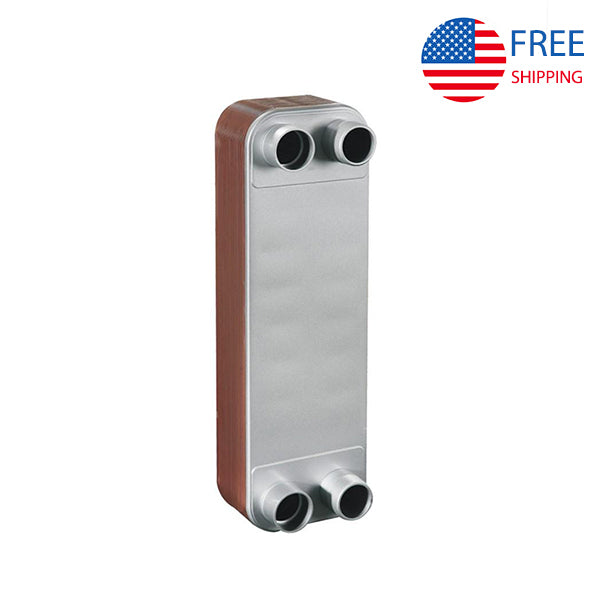
Brazed-plate and shell-and-tube heat exchangers solve the same problem, but they do so in different ways. The better choice depends on fluid quality, pressure, footprint, service access, and lifecycle cost.
From the article, you will learn:
- What separates brazed plate and shell and tube heat exchangers in real heating applications
- Where each design works best in residential, commercial, and process systems
- How fluid cleanliness affects long-term performance
- Why pressure drop matters when selecting a heat exchanger
- What maintenance access means for operating cost
- How space limitations influence equipment choice
- Which option suits closed-loop and open-loop systems
- What to check before making a final specification
What the two heat exchanger designs actually do
A heat exchanger transfers heat from one fluid to another without mixing the two media. In heating systems, this transfer can be used to isolate circuits, connect heat pumps, support domestic hot water production, or separate treated water from source water. The comparison between a plate unit and a shell unit matters because both can perform the same thermal duty, yet their structures change how they behave in daily operation.
A brazed plate heat exchanger uses a stack of thin corrugated metal plates joined together, usually with copper or nickel brazing. The corrugated channels create turbulence, which increases heat transfer and reduces the amount of material needed for a given output. A shell-and-tube heat exchanger places multiple tubes inside a cylindrical shell, with one fluid flowing through the tubes and the other flowing around them. That design is older, larger, and often more tolerant of dirt, solids, or unstable operating conditions.
When people compare a brazed-plate heat exchanger vs. a shell-and-tube heat exchanger, they are usually deciding between compactness, efficiency and service tolerance. That is the core difference. In clean, closed heating systems, a brazed-plate unit often delivers greater heat transfer in less space. In systems with a higher fouling risk, a shell-and-tube model may offer greater operating stability and easier access for cleaning.
Heat transfer efficiency, size, and pressure behavior
Heat transfer efficiency is one of the main reasons brazed plate models are widely used in modern HVAC layouts. Their plate geometry generates strong turbulence even at modest flow rates, allowing them to extract more heat from a smaller surface area. That is why a plate exchanger can often be much smaller than a shell-and-tube model rated for the same duty. In plant rooms where installation space is limited, that difference may decide the project.
The comparison between the plate heat exchanger and the shell-and-tube heat exchanger also includes pressure drop. A brazed-plate heat exchanger may achieve high thermal transfer, but narrow passages can lead to a higher pressure drop if the unit is not sized correctly. That matters for pump selection, operating cost, and hydraulic balance. A shell-and-tube exchanger usually has wider flow paths, which may reduce sensitivity to debris and help keep hydraulic resistance more stable over time.
Another factor is response speed. Brazed-plate models have less internal fluid volume, so they respond faster to load changes. This can help in tightly controlled heating applications. Shell-and-tube models respond more slowly, but their larger internal volume may help under operating conditions where thermal swings are less important than durability. For installers and specifiers, the right choice is not about which design is better in general. It is about which design matches the load profile, pump capacity, and water quality of the actual system.
Water quality, fouling risk, and maintenance requirements
Water quality often decides the selection more than nominal capacity. A brazed-plate heat exchanger works best when the fluid is clean, filtered, and chemically compatible with the plates and brazing material. In a sealed, well-managed loop, fouling stays limited, and performance remains stable. In an open-loop system, or in a circuit that carries hardness, sediment, biological growth, or suspended solids, small channels may clog more quickly and be harder to recover.
A shell-and-tube exchanger is usually more forgiving under these conditions. Wider passages handle contaminated fluids better, and many designs can be mechanically cleaned. That matters in older buildings, district interfaces, industrial washdown systems, groundwater applications, or retrofits where fluid quality cannot be fully controlled. When comparing a shell-and-tube heat exchanger vs. a plate heat exchanger, maintenance is not a side topic. It is one of the central technical criteria.
The choice also affects downtime planning. A brazed plate exchanger is compact and simple to install, but once blocked or internally damaged, it is often replaced rather than repaired. A shell-and-tube exchanger may require more space and involve more labor during service, yet it can often be opened, inspected, and cleaned. For operators focused on maintainability, that can outweigh the benefits of compact size.
Closed-loop heating circuits
Closed-loop heating circuits usually contain treated water or glycol and are protected from continuous contamination. In these systems, a brazed-plate heat exchanger is often the stronger option because the fluid remains stable, the risk of scaling is lower, and heat transfer remains predictable. This is common in hydronic heating, heat pump separation, buffer tank connections, and domestic hot water interfaces, provided proper filtration is in place.
Open-loop or variable-quality fluids
Open-loop systems bring more uncertainty. Groundwater, industrial fluids, untreated source water, or older networks can carry particles and deposits that increase fouling. In such cases, a shell-and-tube exchanger often provides the operator with greater tolerance and more realistic service access. The lower risk of sudden blockage may justify the larger footprint.
Service strategy and replacement planning
Service strategy should be defined before purchase, not after installation. If the site prefers replaceable compact units and has clean fluid control, a brazed-plate heat exchanger can be a good fit. If the site requires internal inspection, mechanical cleaning, or long-cycle field service, a shell-and-tube design often fits better. The exchanger should match the facility’s maintenance model.
Best-fit applications in heating systems
Different projects call for different designs. Among the main types of heat exchangers for heating systems, brazed-plate and shell-and-tube are two of the most common because they address very different operating conditions. In residential and light commercial heating, brazed plate heat exchangers are often selected for boiler separation, heat pump circuits, radiant floor loops, and domestic hot water transfer. The compact body helps when plant room space is limited or when installers need a simple connection point between primary and secondary loops.
Shell-and-tube units are more common in systems that experience rougher operating conditions. That includes industrial heating processes, contaminated water loops, larger commercial installations, and retrofit sites with uncertain water treatment history. They are also considered in applications where serviceability is part of the operating plan and where technicians need direct access to internal surfaces.
Selection should also reflect safety margins. A building with clean, controlled, closed water can prioritize thermal density and compact installation. A building with debris risk, inconsistent treatment, or variable source conditions should prioritize accessibility and fouling tolerance. Since 2008, Alfa Heating has focused on HVAC and heat exchange systems that match operating conditions rather than relying on generic component selection. That approach matters because a technically correct heat exchanger choice reduces unnecessary service issues down the line.
Cost, lifespan, and installation trade-offs
Purchase cost alone rarely gives the full answer. A brazed-plate exchanger may look attractive because it is small, lightweight, and quick to install. Pipework can be shorter, support requirements may be lighter, and transport is easier. These points contribute to the well-known benefits of brazed-plate heat exchangers in projects where clean fluids and controlled operating conditions are already part of the design.
Lifecycle cost, however, depends on more than installation. A shell-and-tube exchanger may require more floor space and greater structural allowances, yet it can make sense where maintenance access reduces replacement frequency or where fouling would shorten the life of a plate unit. The financial question is not simply which model costs less today. It is which model keeps thermal performance within the target over the full service period.
Lifespan also depends on material compatibility. Aggressive fluid chemistry, chlorides, unstable pH, or wrong filtration can damage either design. Correct sizing is equally important. An undersized brazed-plate unit may experience a high pressure drop and thermal strain. An oversized shell-and-tube model may waste space and capital without delivering real operating value. The best specification balances duty, flow rates, temperature approach, maintenance access, and expected water quality from the start.
How to choose the right heat exchanger for your project
The selection process becomes clearer when each criterion is checked in order. First, define the fluids on both sides and whether those fluids are clean, treated, or likely to foul. Second, confirm temperatures, required capacity, and acceptable pressure drop. Third, review site limits such as plant room size, access for replacement, and service intervals. Fourth, decide whether the operator prefers a compact replaceable unit or a larger serviceable unit.
That framework usually addresses the practical side of shell-and-tube heat exchangers vs. plate heat exchangers without guesswork. It also helps clarify when types of heat exchangers for heating systems should be compared by application rather than by catalog size. For example, a clean, closed-loop heat pump system often indicates a brazed-plate exchanger. A contaminated water loop with scheduled maintenance access may indicate a shell-and-tube. Neither answer is universal, which is why selection should begin with operating conditions rather than preference.
The same applies when reviewing the benefits of brazed-plate heat exchangers. Their main value comes from compact construction, strong thermal transfer, and fast response in clean systems. Those benefits are real, but only when matched to the right duty. If your project involves uncertain water quality, internal solids, or a need for mechanical cleaning, a shell-and-tube option may yield a more stable long-term result, even if it occupies more space.
FAQ
A brazed-plate exchanger uses thin, stacked plates with narrow channels to achieve high heat transfer in a compact body. A shell-and-tube exchanger uses tubes inside a shell, providing wider flow paths and greater tolerance for dirt or fouling.
A brazed-plate exchanger is often the better fit for a clean, closed-loop system because it transfers heat efficiently, responds quickly to load changes, and occupies less space in compact plant rooms or utility areas.
A shell-and-tube exchanger is usually easier to clean because many designs can be opened and serviced internally. A brazed plate exchanger is compact, but it is commonly replaced rather than mechanically cleaned after a serious blockage.
Not always. A brazed-plate exchanger can improve heat transfer, but energy use also depends on sizing, pressure drop, pump power, and actual operating conditions. A wrong selection can reduce expected savings.
Water quality affects fouling, corrosion, and long-term heat transfer. Clean, treated water helps a brazed-plate unit perform well. Water with solids, scale, or unstable chemistry often favors a shell-and-tube design.
No. Shell-and-tube heat exchangers remain relevant in systems that require higher fouling tolerance, internal access, and stable performance under variable fluid quality. They are still widely used in demanding installations.
Choose a compact size when space is limited and fluid quality is controlled. Choose easier service access when the system may foul, when shutdown costs are high, or when technicians need to inspect and clean the exchanger.
Yes. Both designs can be used in domestic hot water and hydronic heating systems. The correct choice depends on flow rates, water treatment, service plan, and whether the system is sealed or exposed to contamination.



![Brass Barbed Tees 1/2"x1/2"x1/2" Lead Free PEX Crimp"T" Fitting [5pk, 10pk, 25pk]](http://alfaheating.com/cdn/shop/products/brass-barded-tee.jpg?v=1603079042&width=600)