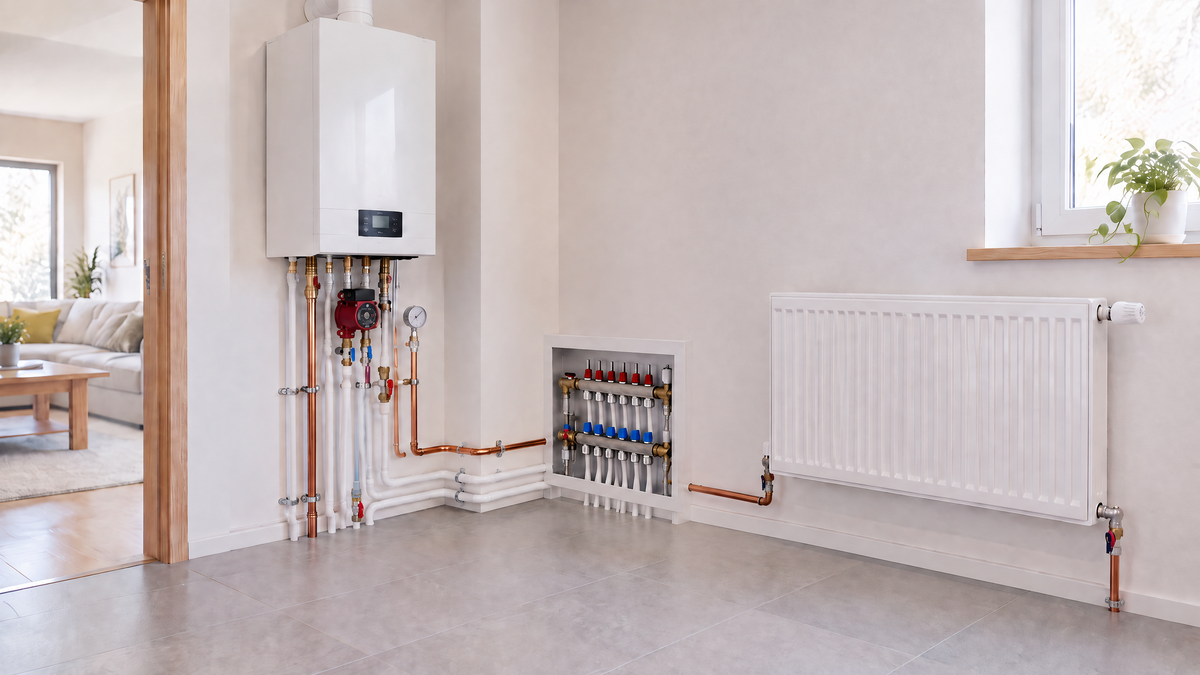
A radiant floor heating manifold is a key distribution component used in hydronic heating systems to control and regulate the flow of heated water to multiple in-floor heating circuits.
It connects the heat source to individual radiant heating loops, ensuring balanced water distribution, stable system pressure, and consistent heat output across the entire floor heating system.
Radiant heating manifolds are widely used in residential, commercial, and industrial hydronic heating applications where precise temperature control and energy efficiency are required.
What Is a Radiant Heat Manifold?
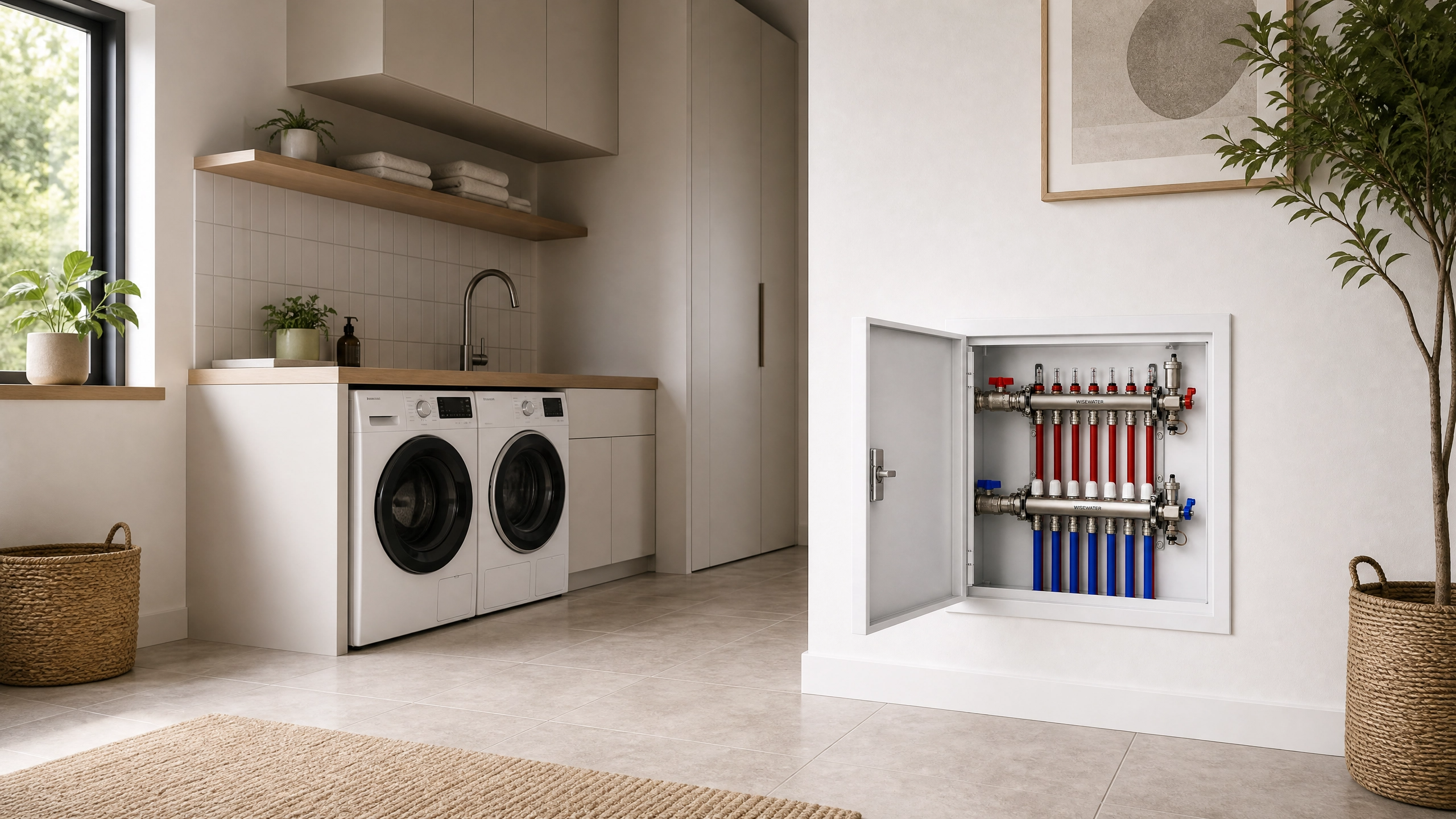
A radiant heat manifold (also known as a radiant floor manifold or in-floor heating manifold) is a device that distributes hot water from a boiler or heat pump into multiple heating circuits embedded in the floor.
It typically consists of:
- A supply manifold (hot water distribution)
- A return manifold (water collection)
Each loop can be individually controlled to regulate flow rate and temperature, allowing precise zoning control in hydronic heating systems.
How Does a Radiant Floor Heating Manifold Work?
In a radiant floor heating system, heated water flows from the heat source into the supply manifold. The manifold distributes water into multiple in-floor heating loops installed beneath the floor surface.
After releasing heat into the building, the cooled water returns through the return manifold and is recirculated back to the system.
Flow meters and balancing valves allow technicians to:
- Adjust flow rates per loop
- Balance hydraulic pressure
- Ensure even heat distribution
This process ensures stable and efficient operation of radiant floor heating systems.
Why Heating Manifolds Are Important in Radiant Heating Systems
Radiant manifolds play a critical role in hydronic heating systems by:
- Balancing water flow across multiple loops
- Preventing uneven heating zones
- Improving energy efficiency
- Supporting zoning temperature control
- Reducing system pressure imbalance
Without a properly designed floor heating manifold, radiant systems may experience uneven heating or reduced efficiency.
Common Applications of Radiant Floor Manifolds
Radiant heating manifolds are used in a wide range of applications, including:
- Radiant floor heating systems
- In-floor hydronic heating systems
- Residential heating systems
- Commercial HVAC radiant heating systems
- Snow melting and slab heating systems
- Low-temperature boiler heating systems
Radiator Manifold vs Radiant Floor Heating Manifold
Although both systems distribute heated water, they are designed for different applications:
- A radiator manifold is used for wall-mounted radiator systems
- A radiant floor heating manifold is used for in-floor heating circuits
Radiant floor systems require more precise flow balancing due to longer loop lengths and lower operating temperatures.
How to Choose the Right Radiant Heating Manifold
When selecting a radiant floor manifold, consider the following factors:
- Number of heating loops required
- Flow rate and system capacity
- Pipe diameter and loop length
- System operating temperature
- Material (brass or stainless steel)
- Zoning and balancing requirements
Proper selection ensures long-term system efficiency and reliability.
Floor Heating Manifold Air Vent Purpose
Air vents are an important component of radiant heating manifolds. Their main function is to remove trapped air from the system.
Air in the system can cause:
- Reduced heating efficiency
- Flow blockage
- Noise in pipes
- Uneven heat distribution
Automatic air vents help maintain stable hydronic performance.
Maintenance Tips for Radiant Floor Heating Manifolds
To ensure long-term performance:
- Regularly check flow meters and valves
- Flush the system periodically
- Inspect for leaks
- Balance flow rates seasonally
- Remove trapped air using air vents
A radiant floor heating manifold is essential for efficient and balanced hydronic heating performance. It ensures proper distribution of heated water, stable system pressure, and precise temperature control across multiple heating zones.
Proper selection and installation of a floor heating manifold significantly improve system efficiency, comfort, and long-term reliability.
FAQ
Hydronic heating is often more energy efficient because water carries heat more effectively than air and reduces distribution losses. This advantage becomes more noticeable in systems with long duct runs or poor insulation.
A radiant floor heating manifold distributes hot water from a boiler or heat pump into multiple floor heating loops. After releasing heat into the floor, the water returns through the return manifold for recirculation. Flow meters and balancing valves help control each circuit for even heat distribution.
A radiant manifold is designed for in-floor heating systems with multiple low-temperature loops, while a radiator manifold is used for wall-mounted radiator systems. Radiant systems require more precise flow balancing due to longer loop lengths and lower operating temperatures.
Choosing the right radiant floor heating manifold depends on the number of heating loops, flow rate requirements, pipe size, system type, and material selection. Brass and stainless steel manifolds are commonly used depending on durability and corrosion resistance needs.
Air vents remove trapped air inside the system, which can reduce efficiency and cause uneven heating or noise. By releasing air automatically or manually, the system maintains stable water flow and reliable hydronic performance.