Hot water radiators are commonly used in commercial buildings to provide space heating through a hydronic system. In office buildings, hotels, schools, and other facilities, they help maintain indoor comfort during colder months.
However, consistent heating depends on more than the radiator itself. Dust buildup, blocked airflow, valve problems, trapped air, water leaks, and changes in system operation can all affect heating performance.
For facility managers and building maintenance teams, regular radiator inspections can help identify developing problems before they lead to occupant complaints or service interruptions.
This guide explains how to maintain hot water radiators during winter, what to check during routine inspections, and when professional HVAC service is necessary.
Why Is Regular Hot Water Radiator Maintenance Important?
A hot water radiator transfers heat from circulating water into the surrounding room. Its performance depends on several factors, including water temperature, circulation, radiator condition, valve operation, and the amount of heat the room requires.
In commercial buildings, radiator maintenance is especially important because multiple rooms and heating zones may operate under different conditions.
Without routine inspections, small issues can become more noticeable during periods of high heating demand.
Common maintenance concerns include:
-
Dust and debris collecting on radiator surfaces
-
Furniture or curtains blocking heat circulation
-
Radiators heating unevenly
-
Thermostatic radiator valves not responding correctly
-
Water leaks around valves, connections, or piping
-
Unusual noises that may indicate air or circulation issues
-
Corrosion or visible deterioration on radiator surfaces
A consistent maintenance routine helps building teams identify these conditions and determine whether further inspection is needed.
1. Keep Radiator Surfaces Clean and Unobstructed
One of the simplest radiator maintenance tasks is keeping the external surfaces clean and allowing heat to circulate freely.
Dust can collect between radiator sections, around fins, and behind wall-mounted units. Furniture, storage items, and heavy curtains can also restrict the movement of warm air.
What to Check
During routine inspections:
-
Remove dust from accessible radiator surfaces.
-
Check between radiator sections where dust may accumulate.
-
Make sure furniture is not placed directly against the radiator.
-
Keep curtains and other materials from covering the heating surface.
-
Remove boxes, equipment, and stored items from the surrounding area.
-
Check that cleaning materials or other objects are not blocking access to radiator valves.
For finned radiators or convectors, accumulated dust between fins may restrict airflow and reduce heat transfer. Clean these areas according to the manufacturer's instructions.
Recommended Practice
Use a soft cloth, suitable vacuum attachment, or other non-abrasive cleaning method. Always follow the radiator manufacturer's cleaning instructions.
Before cleaning, allow the radiator to cool sufficiently to avoid burns. Do not use harsh chemicals or abrasive tools that may damage the finish.
Avoid removing radiator covers or protective components unless the manufacturer permits it and the maintenance team is qualified to do so.
2. Inspect Radiator Valves and Temperature Controls
Radiator valves regulate the flow of hot water through the heating unit. In buildings with multiple rooms or heating zones, proper valve operation helps control heat delivery according to individual room requirements.
A thermostatic radiator valve (TRV) uses a temperature-sensitive element to regulate water flow through the radiator based on the surrounding room temperature.
If a valve does not operate correctly, a room may receive too much or too little heat.
What to Check
During a visual inspection:
-
Check whether the valve body and surrounding connections show signs of leakage.
-
Look for visible damage, corrosion, or loose components.
-
Confirm that the valve control is accessible.
-
Check whether the thermostat or valve setting has been changed.
-
Note whether a room remains too warm or too cold despite normal control settings.
Also check the location of thermostatic radiator valve sensing elements.
If a sensing element is covered by curtains, enclosed behind furniture, or exposed to an unrepresentative temperature, it may not accurately reflect the room's actual conditions.
When Professional Service Is Needed
If a radiator valve appears stuck, leaks, or does not respond to temperature adjustments, arrange an inspection by a qualified HVAC technician.
Do not force a valve, remove pressurized components, or attempt to replace a valve while the system is operating.
For more information about how thermostatic radiator valves regulate room temperature, refer to the manufacturer's technical guidance.
3. Check for Water Leaks and Visible Corrosion
Water leaks are among the most important conditions to identify during radiator inspections.
Even a small leak can cause damage to floors, walls, ceilings, and nearby equipment. In a commercial building, an unnoticed leak may also affect areas below the radiator or damage interior finishes.
Common Areas to Inspect
Check the following locations:
-
Radiator connections
-
Supply and return pipe connections
-
Valve bodies and valve connections
-
Visible joints and fittings
-
Accessible sections of heating pipework
-
Areas around radiator supports and floor penetrations
Look for:
-
Water droplets or damp surfaces
-
Mineral deposits around connections
-
Rust-colored marks
-
Discoloration on floors or walls
-
Peeling paint or damaged finishes
-
Corrosion on the radiator surface
A recurring need to add water to a closed hydronic system may also indicate a leak or another system problem. This should be investigated by a qualified technician rather than treated as a normal maintenance task.
What Should Facility Managers Do?
If a leak is found:
-
Record the location and approximate severity.
-
Take photos when it is safe to do so.
-
Protect nearby electrical equipment and sensitive materials.
-
Follow the building's water-leak response procedures.
-
Contact the appropriate maintenance team or HVAC service provider.
Do not tighten pressurized connections or attempt repairs without the proper training and authorization.
4. Watch for Uneven Heating and Unusual Noises
A radiator that does not heat consistently may indicate a problem with the radiator, valve, or wider hydronic heating system.
For commercial buildings, it is useful to compare similar radiators in rooms served by the same heating zone.
Signs of Uneven Heating
Watch for:
-
A radiator that remains mostly cold while similar units are warm.
-
A radiator that heats more slowly than usual.
-
Significant temperature differences between rooms on the same zone.
-
A room that remains cold even when the radiator appears to be operating.
-
Repeated occupant complaints about insufficient heating.
Unusual noises may also provide useful clues.
For example, gurgling sounds can be associated with air in a hydronic heating system. Flow noise or other unusual sounds may require an inspection of valves, water flow, or system operation.
However, these symptoms do not identify a specific fault on their own.
Possible Causes
Several conditions may contribute to uneven radiator heating:
Trapped Air: Air inside a hot water heating circuit can interfere with water circulation and reduce the effective heating surface.
Valve Problems: A valve that is stuck, incorrectly adjusted, or not responding to the room temperature may restrict heat delivery.
Circulation Problems: Insufficient or uneven water flow may affect heating performance across one or more radiators.
Hydraulic Imbalance: If water is not distributed appropriately across the heating circuits, some radiators may receive different flow rates than intended.
These conditions require different corrective actions. A qualified technician should determine the actual cause before making system adjustments.
5. Understand When Radiators Need Air Removal
Air can enter a hydronic heating system during installation, maintenance, water replenishment, or through certain system conditions.
When air collects inside a radiator, it may reduce the area available for hot water circulation.
Common signs can include:
-
Gurgling or bubbling sounds
-
A radiator that heats unevenly
-
A radiator that remains cooler than comparable units
-
Repeated heating complaints in the same area
Should You Bleed Commercial Building Radiators?
Air removal may be part of seasonal maintenance for hot water radiator systems. However, commercial heating systems can have different designs, operating pressures, automatic air vents, and maintenance procedures.
Before bleeding a radiator, confirm:
-
Whether the radiator has a manual air vent.
-
Whether the building has an established air-removal procedure.
-
Whether the system requires pressure monitoring or adjustment afterward.
-
Whether the maintenance team is trained and authorized to perform the task.
For multi-zone or multi-floor commercial systems, air removal should be coordinated with the building's HVAC maintenance plan.
Do not open an air vent on a hot or pressurized radiator without the correct procedure and protective equipment. Hot water can cause serious burns, and incorrect air removal may affect system pressure.
If air repeatedly returns after maintenance, the underlying cause should be investigated instead of repeatedly bleeding the same radiator.
6. Check Radiator Performance Across Heating Zones
In commercial buildings, individual radiators are often connected to larger hydronic distribution systems.
A radiator may be functioning correctly while the actual problem is related to the heating zone, circulation pump, manifold, or system controls.
For this reason, facility managers should review radiator performance across the building rather than inspecting each unit in isolation.
Compare Similar Areas
Choose representative rooms on different floors or within different heating zones.
Record:
-
Room temperature
-
Thermostat setpoint
-
Radiator surface condition
-
Whether the radiator heats normally
-
Whether the room has a history of temperature complaints
-
Whether similar rooms show the same issue
If several radiators within one zone show similar problems, the issue may be related to the shared heating circuit rather than individual radiator units.
Why System-Level Inspection Matters
In hydronic heating systems:
-
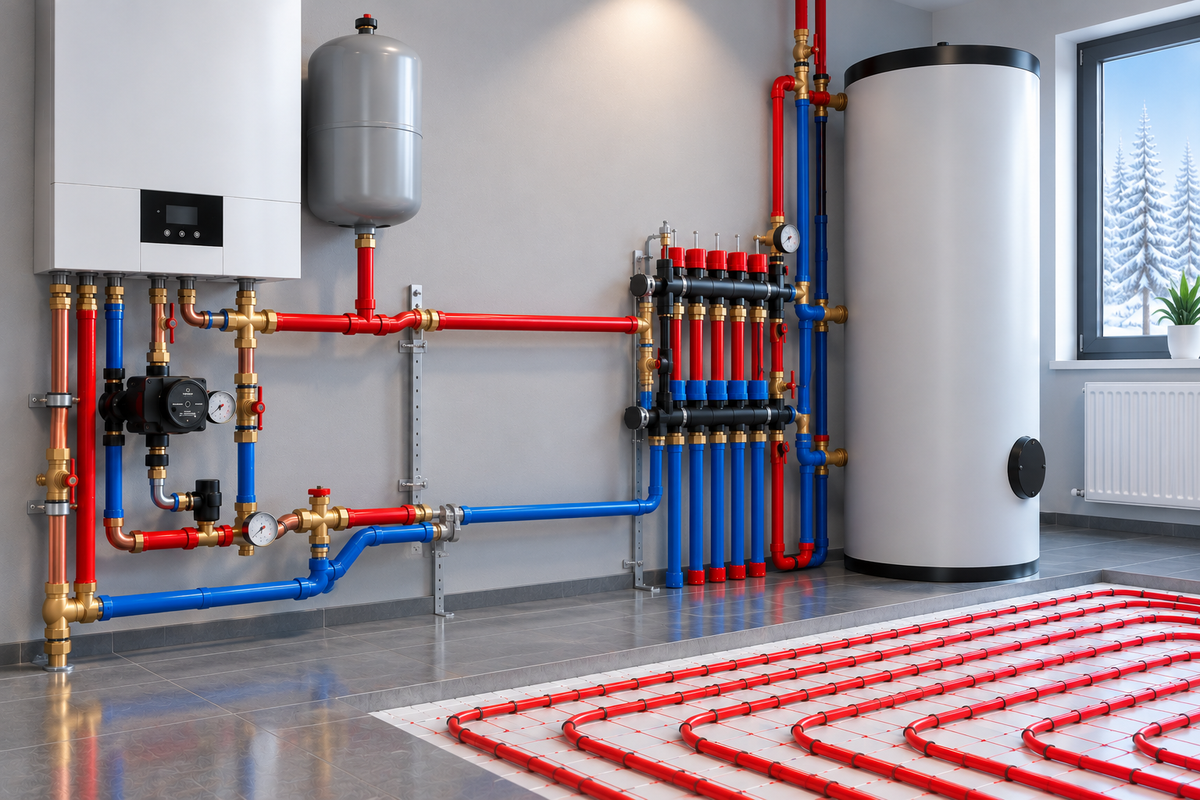
Circulation pumps move heated water through the distribution network.
-
Heating manifolds distribute water to individual circuits in applicable system designs.
-
Control valves regulate water flow according to heating demand.
-
Radiators transfer heat into occupied spaces.
A problem with one part of the system can affect several heating units.
If the same issue appears across multiple radiators, a technician may need to evaluate water flow, pump operation, system pressure, air removal, and hydraulic balancing.
7. Create a Winter Radiator Maintenance Schedule
A consistent maintenance schedule makes it easier to identify changes in radiator performance and keep records across the building.
The frequency of inspections should reflect the building's size, radiator type, operating hours, manufacturer recommendations, and maintenance requirements.
The following checklist can be adapted for routine facility maintenance.
Daily or Routine Visual Checks
-
Check for visible water leaks around radiators and connections.
-
Confirm that radiators are not blocked by furniture or stored items.
-
Note unusual noises or occupant complaints.
-
Check whether affected rooms are maintaining their expected temperatures.
-
Report visible damage or abnormal conditions.
Weekly Inspection
-
Clean accessible radiator surfaces where needed.
-
Check for dust accumulation around fins and radiator sections.
-
Review recurring temperature complaints.
-
Inspect accessible valves and connections for visible deterioration.
-
Compare heating performance across representative rooms.
-
Record any changes in radiator operation.
Seasonal Maintenance
Before the heating season or during scheduled maintenance:
-
Inspect radiator surfaces, connections, and supports.
-
Review the condition of valves and temperature controls.
-
Arrange professional inspection of recurring air or circulation problems.
-
Confirm that the heating system's air-removal procedures are appropriate.
-
Review system pressure and safety controls through qualified personnel.
-
Check maintenance records for recurring leaks or corrosion.
-
Confirm that the heating schedule reflects current building use.
Boilers, circulation pumps, expansion tanks, pressure-relief devices, and other central heating components should be maintained according to manufacturer instructions and applicable commercial HVAC maintenance requirements.
8. When Should You Call an HVAC Technician?
Routine cleaning and visual inspections can be handled by trained facility maintenance personnel. Mechanical repairs and adjustments to pressurized heating systems require appropriate qualifications.
Contact a qualified HVAC technician if you notice:
-
Persistent uneven heating across several radiators.
-
Repeated air accumulation after air removal.
-
Water leaks from radiator valves or pipe connections.
-
Visible corrosion or deterioration.
-
Valves that do not regulate heat correctly.
-
Unusual pump operation or recurring circulation problems.
-
Significant or repeated changes in system pressure.
-
Heating performance that continues to decline despite routine cleaning.
Professional inspection may include checking radiator valves, system pressure, circulation pump operation, expansion tank condition, air removal, water quality, and hydraulic balance.
Do not attempt to repair boilers, modify pump settings, adjust balancing valves, or open pressurized components unless qualified and authorized to perform the work.
Maintaining hot water radiators in commercial buildings requires more than occasional cleaning. Regular visual inspections, clear maintenance records, and attention to valve operation and heating performance can help facility teams identify problems before they become larger service issues.
During winter, focus on keeping radiator surfaces unobstructed, checking for leaks and visible deterioration, monitoring unusual noises, and comparing heating performance across different rooms and zones.
When problems involve water circulation, system pressure, repeated air accumulation, or mechanical components, involve a qualified HVAC technician.
A consistent radiator maintenance routine helps building managers maintain more reliable heating operation and provides a clearer maintenance history for the entire hydronic heating system.