When winter temperatures drop, heating problems can quickly become an operational issue for commercial buildings. One floor may remain cold while another feels comfortable. A meeting room may take hours to warm up in the morning, while an office area continues receiving heat long after employees have left.
For facility managers, these problems are not always easy to identify. The symptoms may appear in different rooms, at different times of day, or only under certain outdoor conditions.
A practical winter heating troubleshooting checklist can help building managers identify where a problem occurs, document recurring patterns, and determine when professional HVAC service is needed.
This guide focuses on common heating issues in office buildings, hotels, schools, and other commercial facilities. It is intended to help facility teams perform initial observations and organize useful information before contacting an HVAC technician.
Why Commercial Buildings Need a Winter Heating Checklist
Commercial buildings often have multiple floors, occupied zones, operating schedules, and heating requirements. A single temperature complaint does not necessarily indicate a building-wide equipment failure.
For example:
-
An entire floor may be colder than the rest of the building.
-
One office or classroom may remain uncomfortable while nearby rooms are warm.
-
Employees may arrive in the morning before the building reaches its scheduled temperature.
-
Heating may continue after business hours, causing unnecessary energy use and uncomfortable indoor conditions.
Without consistent records, facility managers may repeatedly respond to individual complaints without identifying a recurring pattern.
A winter heating checklist provides a consistent way to track:
-
Where the heating problem occurs
-
When the problem starts and how long it lasts
-
Actual indoor temperatures compared with scheduled settings
-
Whether the issue affects one room, one zone, or an entire floor
-
Whether the problem repeats under similar operating conditions
These records help maintenance teams and HVAC technicians narrow down possible causes more efficiently.
1. Identify the Heating Problem by Area
The first step is to determine the extent of the problem. Before changing equipment settings, identify whether the issue affects the entire building, a specific floor, or an individual room.
Problem A: An Entire Floor Is Not Heating Properly
If multiple rooms on the same floor remain cold while other floors are comfortable, the issue may be related to that floor's heating zone or distribution system.
Initial checks:
-
Confirm whether the affected floor is included in the building's heating schedule.
-
Check whether the zone thermostat is set to the correct operating mode and temperature.
-
Compare temperatures in several rooms on the affected floor.
-
Check whether the issue began suddenly or developed gradually.
-
Review any recent maintenance or control-setting changes.
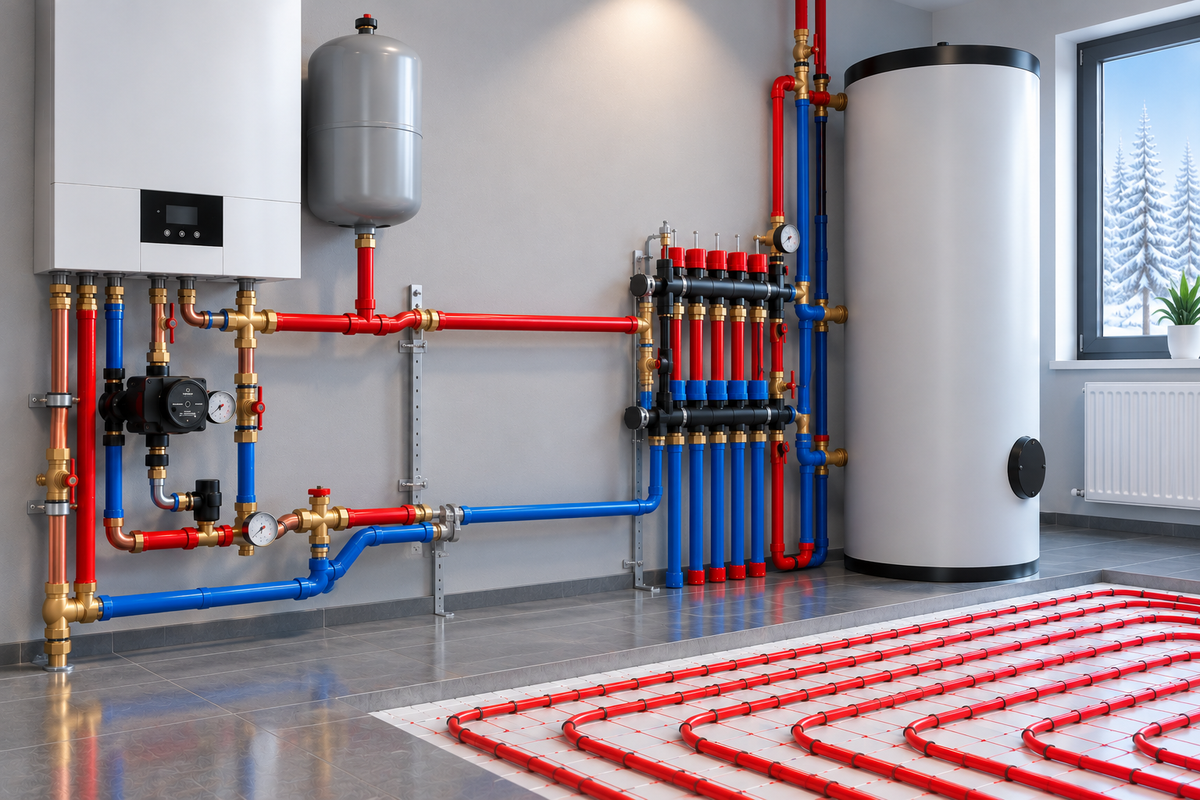
In buildings with hydronic heating systems, an entire floor may be served by a dedicated heating zone or manifold. A problem with zone control, circulation, or water distribution may affect multiple rooms at once.
However, a cold floor alone does not confirm a circulation pump or manifold failure. Further system inspection may be required.
Problem B: One Room or Area Is Not Heating
If nearby rooms are comfortable but one room remains cold, the problem may be more localized.
Initial checks:
-
Confirm the room thermostat's setpoint and operating mode.
-
Check whether the thermostat is responding to temperature changes.
-
Look for blocked radiators, heating outlets, or other heat-emitting equipment.
-
Check whether furniture, curtains, or stored materials are restricting airflow around heating equipment.
-
Record whether the room has always been colder or whether the problem is new.
For hydronic systems, individual hot water radiators may have their own control valves. A thermostatic radiator valve, for example, regulates water flow through a radiator according to the surrounding room temperature.
If a room remains cold despite normal thermostat settings, a technician may need to inspect the valve, radiator, control circuit, or local piping.
Do not remove valves or open pressurized heating components as part of routine facility checks.
Problem C: The Building Takes Too Long to Warm Up in the Morning
A slow morning warm-up is common in buildings that reduce heating output overnight or operate according to scheduled occupancy.
The issue may be more noticeable in:
-
Buildings with large interior spaces
-
Rooms with high ceilings
-
Areas with substantial exterior wall or window exposure
-
Buildings with different occupancy schedules across floors
Initial checks:
-
Record the scheduled heating start time.
-
Note the indoor temperature before heating begins.
-
Record the time when occupied areas reach their target temperature.
-
Compare warm-up times across different floors and zones.
-
Review whether the heating schedule was recently changed.
If the heating system starts at the correct time but rooms still warm up too slowly, an HVAC technician may need to evaluate system capacity, control sequences, heat distribution, and building heat loss.
Simply moving the start time earlier may improve comfort, but it does not necessarily address the underlying issue.
Problem D: The Building Remains Too Warm After Business Hours
If heating continues after employees have left, the building may be operating outside its intended occupancy schedule.
Possible areas to review include:
-
Thermostat schedules and occupied/unoccupied settings
-
Zone-specific operating schedules
-
Manual overrides that were not reset
-
Heating controls that do not respond as expected
-
Areas with different operating hours, such as server rooms or other continuously occupied spaces
In hydronic heating systems, thermostatic radiator valves and zone controls can help regulate heat delivery in individual areas. However, they should be selected and configured according to the system design.
The goal is not to turn off heating everywhere after business hours. Some areas may require continuous temperature control to protect equipment, maintain required indoor conditions, or prevent freeze-related damage.
2. What to Check Before Calling an HVAC Technician
Once the affected area has been identified, facility managers can perform a basic operational review.
The following checks focus on information that can usually be observed without opening equipment or making technical adjustments.
Check the Thermostat and Operating Schedule
Confirm that the thermostat is set to the correct mode and that the scheduled temperature matches the building's occupancy requirements.
Look for:
-
Incorrect heating or cooling mode
-
Unexpected temperature setpoints
-
Manual overrides
-
Incorrect weekday or weekend schedules
-
Different schedules between floors or zones
A thermostat setting that appears correct in one room may not represent the actual operating schedule of the entire building.
Check Whether Heating Equipment Is Operating
Observe whether the heating equipment appears to be operating normally.
Depending on the building system, this may include:
-
Boiler operating status
-
Circulation pump indicators
-
Heating zone control status
-
Radiator or other heating terminal conditions
-
Unusual noises or visible warning indicators
Do not open electrical panels, bypass safety controls, or attempt to repair boilers and pumps unless qualified and authorized to do so.
Check for Signs of Localized Heating Problems
For buildings using hot water radiators, compare the heating conditions of similar rooms.
Record whether:
-
One radiator feels noticeably cooler than comparable units.
-
A radiator is not heating despite a normal room setpoint.
-
Different rooms on the same zone have significantly different temperatures.
-
Unusual noises occur near radiators or piping.
Air trapped in a hydronic heating system can interfere with heat distribution. Circulation problems or poor hydraulic balancing may also contribute to uneven heating.
These are possible causes, not conclusions. A qualified technician should determine whether air removal, pump inspection, valve service, or system balancing is appropriate.
For more detailed information, refer to the relevant guides on hydronic heating system operation and circulation pump selection.
Check for Changes in Building Conditions
Heating performance can change even when the heating equipment has not been modified.
Consider whether there have been recent changes such as:
-
New office partitions or room layouts
-
Changes in occupancy
-
Extended operating hours
-
Blocked heating equipment
-
New doors or windows
-
Changes to ventilation or outdoor air settings
-
Recent renovations or maintenance work
These details can help explain why a previously comfortable area has become difficult to heat.
3. Record Heating Issues Consistently
One of the most useful things a facility manager can do is maintain a simple winter heating log.
A temperature complaint without a location, time, or measurement is difficult to investigate. Consistent records make it easier to identify patterns and provide useful information to an HVAC service provider.
For each reported issue, record the following:
| Information | What to Record |
|---|---|
| Date and time | When the problem was first noticed |
| Building area | Floor, room number, or heating zone |
| Indoor temperature | Actual temperature measured in the affected area |
| Temperature setting | Thermostat setpoint at the time |
| Outdoor conditions | Approximate outdoor temperature and weather |
| Operating status | Whether the heating system was scheduled to operate |
| Duration | How long the issue continued |
| Affected areas | One room, several rooms, one floor, or the whole building |
| Previous occurrence | Whether the same issue happened before |
| Observations | Unusual noises, equipment indicators, or recent changes |
Example: A Morning Heating Complaint
Instead of recording:
"Second floor is too cold in the morning."
Use a more detailed record:
-
Date: January 12
-
Location: Second-floor offices
-
Scheduled heating start: 6:00 AM
-
Indoor temperature at 6:00 AM: 62°F
-
Indoor temperature at 8:00 AM: 66°F
-
Target temperature: 70°F
-
Other floors: Reached target temperature before 8:00 AM
-
Previous occurrence: Similar issue reported on January 9 and January 10
This record shows that the problem is recurring and concentrated on one floor.
It gives the HVAC technician a clearer starting point than a general complaint.
4. Prioritize Heating Problems by Urgency
Not every heating complaint requires the same response. Facility managers should consider the affected area, the number of occupants, the duration of the problem, and any potential safety or property risks.
A simple three-level priority system can help organize maintenance requests.
Priority 1: Immediate Attention
Examples include:
-
No heating during freezing conditions where pipes or critical equipment may be at risk.
-
A complete heating system shutdown.
-
A suspected gas leak, burning smell, smoke, or electrical hazard.
-
Indoor conditions that may create an immediate health or safety concern.
-
A heating failure affecting vulnerable occupants or essential building operations.
Follow the building's emergency procedures and contact the appropriate qualified service provider. For suspected gas leaks or other immediate hazards, follow emergency safety procedures rather than attempting equipment troubleshooting.
Priority 2: Prompt HVAC Inspection
Examples include:
-
An entire floor repeatedly failing to reach its scheduled temperature.
-
Multiple occupied rooms remaining significantly colder than comparable areas.
-
A recurring loss of heating in a particular zone.
-
Unusual pump or boiler operating conditions.
-
A heating system that takes considerably longer than normal to warm the building.
These issues may not require emergency service in every situation, but they should be investigated promptly, particularly during periods of low outdoor temperatures.
Priority 3: Routine Maintenance or Scheduling Review
Examples include:
-
Minor temperature differences between rooms.
-
Heating that starts slightly earlier or later than expected.
-
Areas that become too warm after normal occupancy hours.
-
Thermostat schedules that need review.
-
Recurring comfort complaints without an obvious equipment failure.
These issues can usually be documented and reviewed as part of routine building maintenance, provided there are no safety concerns or risks to the building.
The priority should always be adjusted according to local building requirements, occupant needs, and the actual severity of the conditions.
5. When Should You Contact an HVAC Technician?
Facility managers can identify symptoms and collect operating information, but diagnosing mechanical or control-system faults often requires specialized knowledge and equipment.
Contact a qualified HVAC technician when:
-
The same heating problem continues after basic schedule and thermostat checks.
-
Several rooms or an entire floor are affected.
-
Heating equipment displays an alarm or fault code.
-
A circulation pump appears to be operating abnormally.
-
Radiators or heating zones remain cold despite normal control settings.
-
There are signs of possible trapped air, restricted water flow, or uneven system distribution.
-
The heating system cannot maintain the required indoor temperature.
Information to Prepare Before the Service Visit
Providing clear information can make the inspection more efficient.
Prepare:
-
A list of affected floors, rooms, and heating zones.
-
Indoor temperature readings and thermostat setpoints.
-
The time when the problem starts and how long it continues.
-
Heating equipment status and any visible fault codes.
-
Recent maintenance records or control-setting changes.
-
Photos of relevant equipment or displayed alarms, when safe to obtain.
Avoid independently adjusting pump speeds, balancing valves, boiler settings, or pressurized system components. Incorrect adjustments may create additional problems or affect other areas of the building.
6. Keep a Winter Heating Log for Your Building
A consistent maintenance record helps facility managers move from responding to individual complaints toward identifying recurring building-wide issues.
The following checklist can be used during routine winter inspections.
Daily Heating Operation Checklist
-
Confirm that scheduled heating periods match building occupancy.
-
Check reported cold or overheated areas.
-
Record indoor temperatures in representative occupied zones.
-
Review thermostat settings and visible control indicators.
-
Note unusual equipment noises or warning messages.
-
Check whether previously reported problems have returned.
Weekly Heating Review
-
Compare heating performance across floors and zones.
-
Review morning warm-up times.
-
Identify rooms with repeated temperature complaints.
-
Check whether heating continues beyond scheduled occupancy hours.
-
Review open maintenance requests.
-
Arrange professional inspection for unresolved or recurring problems.
Monthly Maintenance Review
-
Review recurring heating complaints and their locations.
-
Check maintenance records for boilers, pumps, valves, and controls.
-
Confirm that heating schedules reflect current building use.
-
Review whether any zones consistently require more time to reach their target temperature.
-
Plan any necessary professional maintenance before colder weather or periods of high occupancy.
Understanding the Role of Hydronic Heating Components
Some commercial buildings use hydronic heating systems, which circulate heated water through radiators, heating coils, or other terminal units.
When uneven heating occurs, several system components may be relevant to the investigation.
Hot Water Radiators: Radiators transfer heat from circulating hot water into occupied spaces. Their heating performance depends on the available water temperature, flow conditions, radiator sizing, and room heat loss.
Circulation Pumps: A heating circulation pump moves water through the system. If circulation is inadequate or the pump is not operating as intended, some areas may receive insufficient heat. Pump selection and operation should be evaluated against the system's required flow and pressure conditions.
Heating Manifolds: In systems with multiple heating circuits, manifolds distribute water to individual loops or zones. Proper circuit configuration and flow adjustment are important for consistent heat distribution.
Thermostatic Radiator Valves and Controls: These components regulate heat delivery according to room temperature and system control requirements. They can help manage different heating needs across occupied areas.
Air trapped in the system and poor hydraulic balancing can also affect heat distribution. However, these conditions require proper system inspection before corrective work is performed.
The presence of one symptom does not automatically identify which component is responsible. The complete heating system, including its controls, piping, heat source, and terminal equipment, should be considered during professional diagnosis.
Winter heating problems in commercial buildings are not always caused by a single equipment failure. Uneven temperatures, slow morning warm-ups, and after-hours overheating can result from operating schedules, zone controls, building conditions, or problems within the heating distribution system.
For facility managers, the most practical first step is to identify the affected area, record the conditions, compare the results with normal operation, and prioritize the issue according to its impact.
A consistent winter heating log also gives HVAC technicians more useful information when professional inspection is needed.
By combining routine observations with timely maintenance, building teams can manage heating complaints more systematically and maintain more consistent indoor conditions throughout the winter season.
FAQ
When one floor is consistently colder, the issue may be related to its heating zone, thermostat settings, control sequence, or heat distribution. In hydronic heating systems, circulation and water flow to that floor may also need to be checked.
Start by comparing indoor temperatures across several rooms on the affected floor and reviewing its heating schedule. If the problem continues, an HVAC technician should inspect the zone controls and heating distribution system.
Slow morning warm-up can result from an early-morning heating schedule that does not allow enough time for the building to reach its occupied temperature. Building size, insulation, outdoor temperature, occupancy patterns, and heating system capacity can also affect warm-up time.
Record the heating start time, indoor temperature before startup, and the time each occupied zone reaches its target temperature. If the warm-up period is consistently longer than expected, have an HVAC professional review the operating schedule and system performance.
Review occupied and unoccupied schedules, thermostat settings, and manual overrides for each heating zone. Make sure the schedules reflect actual building use rather than applying one setting to every area.
Some spaces may need heating outside normal business hours to protect equipment, maintain required conditions, or prevent freezing. Adjustments should account for these requirements and follow the building's HVAC operating procedures.
Record the date and time, affected floor or room, measured indoor temperature, thermostat setpoint, heating schedule, outdoor conditions, and how long the problem lasts.
Also note whether nearby rooms are affected, whether the issue has happened before, and any visible equipment alarms or unusual operating conditions. Consistent records help HVAC technicians identify patterns and narrow down possible causes.
Contact an HVAC technician when heating problems persist after basic thermostat and schedule checks, affect multiple rooms or an entire floor, or involve equipment alarms, abnormal pump operation, or suspected water circulation problems.
Seek immediate professional assistance when a heating failure creates a safety concern or puts occupants, pipes, or critical equipment at risk. Building managers should focus on documenting symptoms rather than opening equipment or attempting repairs beyond their qualifications.