When selecting a brazed plate heat exchanger for a boiler heating system, comparing product specifications is only the first step. Two models may have similar advertised heat transfer capacities but perform differently under actual operating conditions.
Choosing the right model requires more than checking BTU ratings, plate counts, or connection sizes. You also need to consider operating temperatures, flow rates, pressure drop, system pressure limits, installation requirements, and the manufacturer's performance data.
This guide explains how to compare brazed plate heat exchanger models for boiler heating applications, what to verify before purchasing, and when to request a technical review to help avoid costly mismatches.
Why Comparing Heat Exchanger Models Can Be Difficult
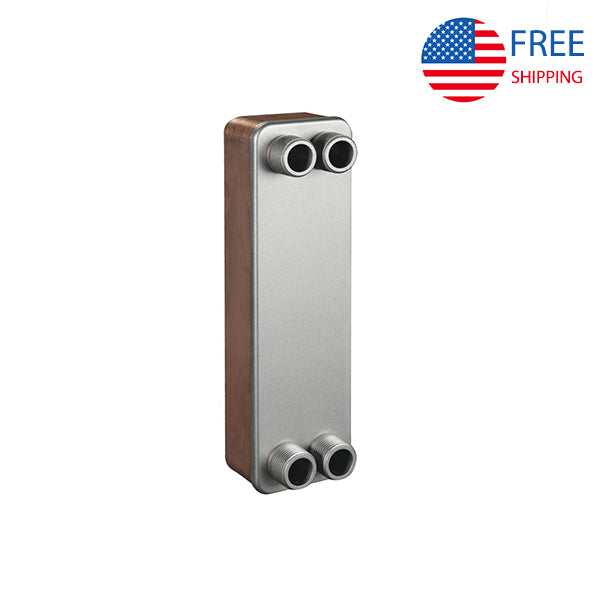
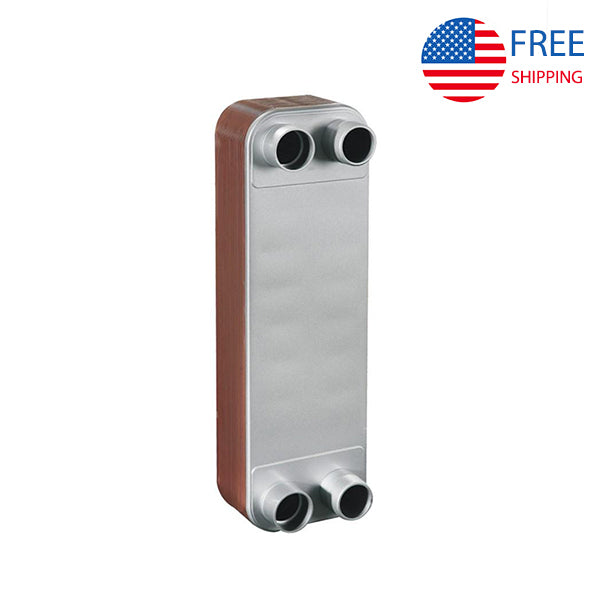
A brazed plate heat exchanger transfers heat between two fluid circuits through a stack of thin metal plates brazed together. In a boiler heating system, it can transfer heat from the boiler circuit to a separate heating circuit, such as a hydronic distribution loop.
However, choosing between models is not always straightforward.
Similar specifications do not guarantee equivalent performance
When comparing product listings, buyers often start with three specifications:
-
Rated heat transfer capacity: The amount of heat a unit can transfer under specified test or operating conditions.
-
Plate count: The number of heat transfer plates in the exchanger.
-
Connection size: The nominal size and type of the fluid connections.
These specifications are useful for narrowing down options, but they do not independently establish whether a model can meet your heating requirements.
Actual performance depends on the operating conditions, including the inlet and outlet temperatures on both sides, the flow rates, fluid properties, and allowable pressure drop.
A model that fits physically may not fit the application
A heat exchanger may have the correct connection size and fit within the available installation space but still fail to deliver the required heat transfer performance under the intended operating conditions.
Conversely, a model with a higher advertised capacity may be unnecessarily large for the application or may introduce other design considerations.
The solution: Compare candidate models against the same system requirements and operating conditions rather than choosing by a single specification.
Compare Models Under the Same Operating Conditions
The most useful comparison begins with a consistent set of operating data. Without this information, differences between product ratings may reflect different test conditions rather than meaningful differences between the models.
Before comparing candidates, document the intended boiler and heating circuit conditions.
Information to collect before comparing models
| Parameter | What to confirm |
|---|---|
| Heating demand | Required heat transfer capacity, in BTU/h or kW |
| Boiler-side temperatures | Inlet and outlet temperatures |
| Heating-side temperatures | Inlet and outlet temperatures |
| Flow rates | Required flow rate on each side |
| Working fluids | Water, water-glycol mixture, or another compatible fluid |
| Allowable pressure drop | Maximum acceptable pressure loss on each circuit |
| Operating pressure | Normal working pressure and relevant system limits |
| Connections | Connection type, nominal size, and piping compatibility |
| Installation space | Available dimensions and connection orientation |
The information above helps establish a common basis for comparing models. Some applications may require additional data, depending on the system design and the manufacturer's selection process.
Why consistent conditions matter
A model's advertised capacity should always be interpreted alongside the conditions under which it was determined.
For example, a rating obtained with a larger temperature difference may not represent the capacity available in a system operating with a smaller temperature difference. Similarly, changing the flow rate or using a glycol mixture can affect heat transfer performance and pressure drop.
When reviewing specifications, check whether the published rating applies to your actual operating conditions. If it does not, request a performance calculation from the manufacturer or supplier.
Build a Side-by-Side Model Comparison Table
Once the system requirements are documented, compare the candidate models using a structured table. This makes missing information easier to identify and helps prevent purchasing decisions based on incomplete specifications.
Example comparison framework
The following is an illustrative comparison template, not a ranking of actual Alfa Heating products. Model specifications and performance values must be obtained from the relevant product documentation or manufacturer calculations.
| Comparison item | Candidate A | Candidate B | Candidate C |
|---|---|---|---|
| Model number | To confirm | To confirm | To confirm |
| Published heat transfer capacity | Verify | Verify | Verify |
| Capacity under required conditions | Request calculation | Request calculation | Request calculation |
| Plate count | Verify | Verify | Verify |
| Connection type and size | Verify | Verify | Verify |
| Pressure drop on each side | Request calculation | Request calculation | Request calculation |
| Maximum working pressure | Verify | Verify | Verify |
| Temperature limits | Verify | Verify | Verify |
| Fluid compatibility | Confirm | Confirm | Confirm |
| Dimensions and installation clearance | Verify | Verify | Verify |
| Technical confirmation | Pending | Pending | Pending |
How to use the comparison table
First, eliminate incompatible models. A candidate that does not meet the application's pressure, temperature, fluid compatibility, or connection requirements should not advance simply because its advertised capacity looks attractive.
Next, compare calculated performance. Review the predicted heat transfer capacity and pressure drop at the same operating conditions for every remaining candidate.
Finally, identify unresolved questions. If a manufacturer has not provided the information needed to verify a critical requirement, mark it as pending rather than assuming the model will work.
This approach turns a product comparison into a documented purchasing decision instead of a guess based on a few headline specifications.
Check Pressure Drop, System Compatibility, and Installation Requirements
Heat transfer capacity is important, but it is not the only factor that determines whether a heat exchanger is suitable for a boiler heating system.
Pressure drop and circulation requirements
Fluid loses pressure as it flows through the heat exchanger. The pressure drop depends on factors such as flow rate, internal flow passages, fluid properties, and the exchanger's design.
A pressure drop that exceeds the system's available allowance may affect the required circulation pump performance or the achievable flow rate.
When comparing models, ask for the calculated pressure drop on both the boiler side and the heating side at the intended flow rates.
Do not assume that every model with a higher plate count will have a higher pressure drop, or that a lower plate count will necessarily result in a lower pressure drop. The relationship depends on the specific exchanger design and operating conditions.
Pressure and temperature limits
Confirm the maximum working pressure and allowable temperature range for the exact model. Check these limits against the intended operating conditions and the applicable system design requirements.
The heat exchanger's pressure rating should not be confused with the maximum allowable pressure of the entire heating system. Other components, including valves, piping, and pumps, must also be suitable for the application.
Connections and installation space
Before ordering, verify:
-
Connection type and nominal size on all four ports.
-
Piping compatibility and any required adapters.
-
Overall dimensions and port orientation.
-
Available clearance for piping, insulation, and servicing.
-
Mounting arrangements and any installation accessories required.
A model that meets the thermal requirements can still create unnecessary installation work if the connections or physical dimensions are incompatible with the existing system.
Work Through a Boiler Heating Comparison Example
Consider a hypothetical project in which a contractor needs a brazed plate heat exchanger to transfer heat from a boiler circuit to a separate hydronic heating circuit.
The contractor has shortlisted three candidate models based on their general product specifications.
At this stage, the contractor should not automatically select the model with the highest published BTU rating or the largest plate count.
Instead, the comparison should follow a consistent process.
Step 1: Define the actual operating conditions
The contractor records the required heat transfer capacity, both circuits' inlet and outlet temperatures, flow rates, fluid types, and allowable pressure drop.
If any of these details are unknown, they should be confirmed before a final selection is made.
Step 2: Request comparable performance data
The contractor asks the supplier to evaluate all three candidates using the same operating conditions.
The requested information includes calculated heat transfer capacity, pressure drop on both sides, and confirmation of the applicable pressure and temperature limits.
Step 3: Eliminate candidates that fail critical requirements
A candidate may be removed if its calculated performance is insufficient, its pressure drop exceeds the available allowance, or its connection and operating limits are incompatible with the project.
A model should not be considered suitable merely because its published specifications appear close to the target.
Step 4: Review the remaining options
If more than one candidate meets the requirements, the contractor can compare dimensions, connection compatibility, installation needs, product documentation, availability, and total project cost.
The key takeaway: The best candidate is the model that satisfies the application's verified requirements, not necessarily the one with the highest headline rating.
This example illustrates a decision-making process only. It does not represent tested performance or a confirmed recommendation for any specific product.
Find a suitable brazed plate heat exchanger for your heating project
Alfa Heating offers brazed plate heat exchangers for a range of heat transfer applications. When reviewing available models, compare the published specifications against your actual system requirements rather than relying on plate count or advertised capacity alone.
Explore the Alfa Heating brazed plate heat exchanger collection to review available models and product specifications.
Not sure which model fits your boiler heating system? Prepare your operating temperatures, flow rates, required heat transfer capacity, fluid information, and allowable pressure drop, then contact our team for assistance reviewing the available options.
FAQ
No. A published BTU rating is meaningful only when its operating conditions are understood. Compare the expected performance under your actual temperatures, flow rates, and fluid conditions.
No. Plate count is one factor in exchanger design, but it does not independently establish heat transfer capacity or pressure drop. Review the manufacturer's performance data for the intended application.
Possibly, but verify the required heat transfer performance, pressure drop, operating limits, fluid compatibility, connections, and installation dimensions before replacing the existing unit.
Provide the required heat transfer capacity, inlet and outlet temperatures on both sides, flow rates, fluid types, allowable pressure drop, operating pressure, connection requirements, and available installation space. If some values are unknown, identify them so the supplier can advise what additional information is needed.
Not without checking its suitability under the actual operating conditions. A meaningful comparison should consider verified performance, compatibility, installation requirements, documentation, availability, and total project cost.