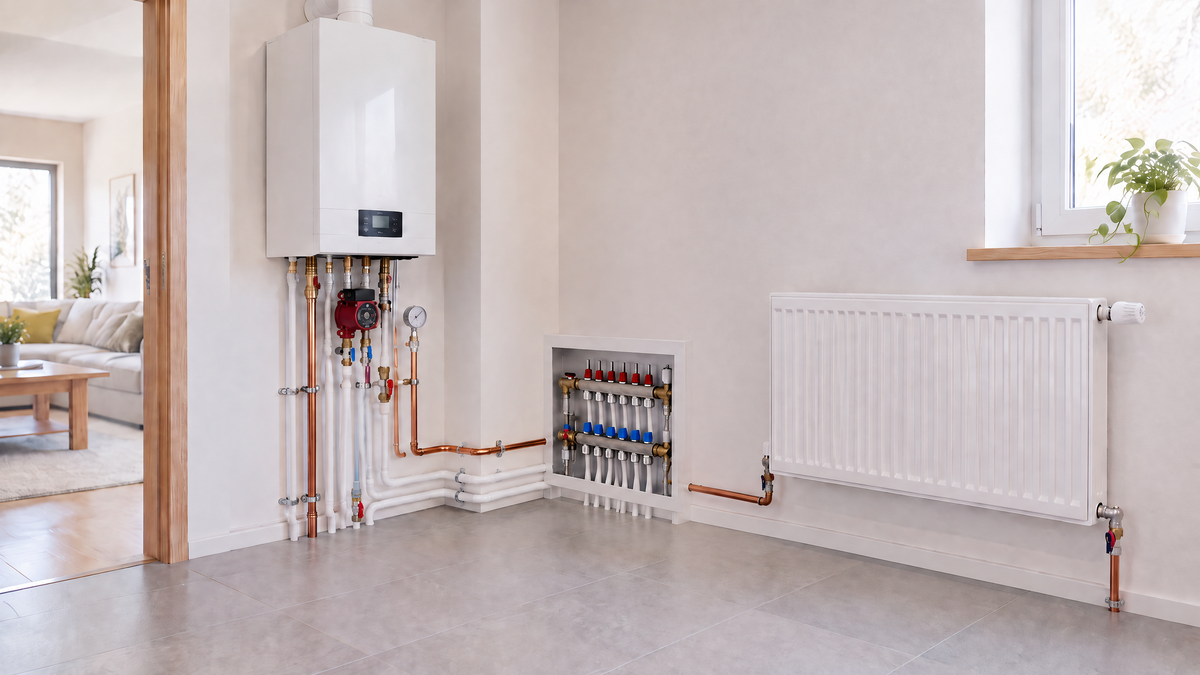
A boiler radiator heating system uses heated water to distribute thermal energy throughout a building. The boiler heats water, a circulation pump moves the water through the heating circuit, and radiators transfer heat from the water into the rooms.
This type of hydronic heating system is commonly used in residential and commercial buildings because the water circuit can serve multiple radiators from a central heat source. Wall-mounted hot water radiators can also provide a compact heating solution where floor space is limited.
Understanding how the boiler, piping, pump, and radiator work together is important when selecting a radiator for a hydronic heating system.
How Does a Boiler Radiator Heating System Work?
A typical boiler radiator heating system consists of several main components:
- Boiler or other hot water heat source
- Circulation pump
- Supply and return piping
- Control valves
- Wall-mounted or other hydronic radiators
- Expansion and system control components
The basic heating process is straightforward.
The boiler heats the water to the required supply temperature. The circulation pump moves the heated water through the supply piping and into the radiators. Inside each radiator, heat moves from the circulating water through the radiator material and into the surrounding room.
As the water releases heat, its temperature decreases. The cooler return water flows back toward the boiler, where it is heated again and circulated through the system.
This creates a continuous hydronic heating loop.
How Hot Water Radiators Transfer Heat
A hot water radiator does not generate heat independently. Instead, it transfers heat from the water flowing through its internal passages to the surrounding room.
The amount of heat a radiator can deliver depends on several factors, including:
- Water supply temperature
- Water return temperature
- Room temperature
- Radiator size
- Radiator construction
- Number of radiator sections
- Water flow rate
A larger radiator generally provides more heat transfer surface, but physical size alone does not determine the actual heat output.
For this reason, radiator selection should be based on the heating requirements of the room and the operating conditions of the hydronic system.
Wall-Mounted Radiators for Hydronic Heating
Wall-mounted radiators are commonly used in hot water heating systems because they can provide substantial heat output without occupying floor space.
A wall-mounted aluminum radiator uses multiple radiator sections to create a large heat transfer surface within a relatively compact footprint. The radiator is connected to the hydronic piping, allowing heated water from the boiler or other heat source to circulate through the sections.
This configuration can be useful in:
- Residential room heating
- Bedrooms and living areas
- Offices
- Apartments
- Renovation projects
- Hydronic heating systems with limited floor space
For installations where wall space is available but floor space is limited, a wall-mounted radiator can be integrated into the room without requiring a floor-standing heating unit.
Boiler Water Temperature and Radiator Heat Output
The temperature of the water entering the radiator has a direct effect on heat output.
For example, a radiator operating with relatively high-temperature boiler water can transfer more heat than the same radiator operating with lower-temperature water, assuming other conditions remain similar.
However, supply temperature is only one part of the system.
The difference between the average water temperature in the radiator and the room temperature also affects heat output. Water flow rate, radiator size, and radiator construction must also be considered.
This is why a radiator should not be selected simply by matching its physical dimensions to the available wall space.
The actual operating conditions of the boiler radiator heating system should be considered when determining the required radiator capacity.
How Many Radiator Sections Do You Need?
Sectional radiators allow the heating capacity to be adjusted by changing the number of sections.
The required number of sections depends on the heating load of the room and the heat output of each radiator section under the system's operating conditions.
A simplified selection process is:
- Determine the approximate heating load of the room.
- Determine the supply and return water temperatures.
- Identify the expected radiator operating temperature.
- Check the heat output of one radiator section under the relevant rating condition.
- Calculate the approximate number of sections required.
- Verify the final radiator size against the available wall space and system connections.
For example, if a radiator section provides a specified BTU output under a particular temperature condition, that rating can be used as part of the section-count calculation. The rating condition must match the actual system conditions as closely as possible.
A radiator rated at one temperature difference should not be assumed to provide the same output at a substantially different operating temperature.
Hot Water Radiator vs. Other Heating Methods
Hot water radiators are one type of hydronic heat emitter. Other systems can include radiant floor heating, baseboard heating, fan coils, and water-to-air heat exchangers.
The appropriate heat emitter depends on the building layout and heating system design.
A wall-mounted radiator can be particularly useful when:
- A boiler or other hot water source is already available
- The building uses a hydronic heating loop
- Wall space is available
- Floor space should remain open
- Individual rooms require separate heat emitters
Water-to-air heat exchangers serve a different purpose because they transfer heat from a water circuit to an air stream. They are commonly installed in air handlers or duct systems rather than directly exposed to the room.
Understanding this distinction helps avoid selecting a radiator when the system actually requires a water-to-air heat exchanger, or vice versa.
Boiler Radiator Heating System Piping
A typical radiator system includes supply and return piping connecting the heat source to each radiator.
Depending on the system design, radiators may be connected using different piping arrangements. The piping configuration affects water flow, temperature distribution, balancing, and control.
Each radiator may also use valves to control or isolate water flow.
When replacing or adding a radiator, check:
- Supply connection location
- Return connection location
- Connection size
- Valve compatibility
- Available wall space
- Radiator height and width
- Required heat output
The new radiator should be compatible with both the physical piping arrangement and the thermal requirements of the system.
How to Select a Hot Water Radiator
Selecting a radiator involves more than choosing the largest model that fits the wall.
Start with the heating requirement of the room and then compare that requirement with the radiator's rated heat output.
Important selection factors include:
1. Room Heating Load
Estimate the amount of heat required to maintain the desired room temperature. Building size, insulation, windows, outdoor temperature, and room use can all affect the heating requirement.
2. Water Temperature
Identify the boiler supply and return temperatures. Radiator heat output varies with operating temperature.
3. Radiator Heat Output
Check the rated BTU output per section or per radiator under the applicable rating condition.
4. Radiator Size
Confirm that the radiator dimensions fit the available wall space while providing the required heating capacity.
5. Number of Sections
For sectional radiators, determine the number of sections required based on the required heat output and the rated output of each section.
6. Connection Configuration
Verify the connection size and arrangement before ordering a replacement or adding a new radiator to an existing system.
7. Material
Aluminum radiators can provide a relatively high heat transfer surface in a compact sectional design. Material selection should also consider the water chemistry and operating conditions of the hydronic system.
When Is a Wall-Mounted Aluminum Radiator a Good Fit?
A wall-mounted aluminum radiator can be considered when a hydronic heating system requires a compact room-side heat emitter.
Its sectional construction allows different radiator lengths to be configured according to the required heat output and available wall space.
For example, Alfa Heating wall-mounted aluminum radiators are available in configurations with different numbers of sections and rated heat outputs. The appropriate configuration depends on the room heating requirement and the operating temperature of the system.
Always compare the rated heat output with the actual boiler and hydronic system conditions before selecting the number of sections.
Boiler Radiator Heating System: Key Points
A boiler radiator heating system works by circulating heated water from a central heat source through radiators installed throughout the building.
The main factors that determine radiator selection include:
- Room heating load
- Boiler supply and return temperatures
- Water flow rate
- Radiator heat output
- Number of sections
- Available installation space
- Connection size and configuration
A properly selected radiator should match both the thermal requirements of the room and the operating conditions of the hydronic heating system.
For more information, see Alfa Heating's Wall Mounted Aluminum Radiators and review the available radiator sizes, section configurations, and heat output specifications.
FAQ
A boiler radiator heating system uses a boiler to heat water and circulate it through hot water radiators installed throughout a building. The heated water transfers heat to the radiator, which then warms the surrounding room. This type of radiator heating system is commonly used in hydronic residential heating applications.
A hot water radiator heats a room as hot water flows through its internal passages. Heat is transferred from the water to the radiator surface and then released into the surrounding air. Radiator heat output depends on factors such as water temperature, radiator size, number of sections, and room heating requirements.
Yes. A wall-mounted radiator can be connected to a boiler-based hydronic heating system through supply and return piping. Wall-mounted radiators are useful when floor space is limited and can be selected based on required heat output, dimensions, connection configuration, and operating water temperature.
An aluminum radiator can provide a lightweight option for hydronic heating applications while offering a large surface area for heat transfer. Aluminum wall-mounted radiators are available in different sizes and section configurations, allowing the radiator to be selected according to the heating load and available installation space.
When selecting a radiator for a boiler heating system, consider the room heating load, boiler water temperature, required radiator heat output, radiator dimensions, number of sections, connection size, and available wall space. Choosing the radiator based on the actual operating conditions helps ensure that the hydronic radiator can provide the required heat output for the application.