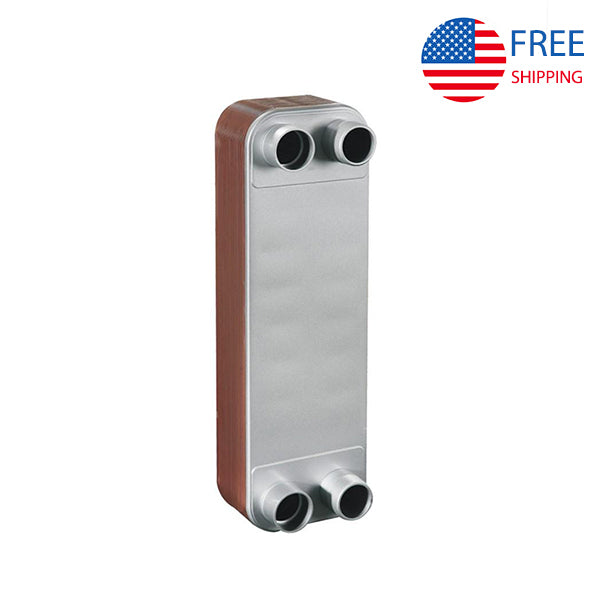
Yes. A brazed plate heat exchanger (BPHE) can be used to transfer heat between two separate water circuits without mixing the fluids. This makes it a practical water-to-water heat exchanger for applications such as boiler systems, hydronic heating, radiant floor heating, and other closed-loop water systems.
Instead of circulating the same water through both systems, a brazed plate heat exchanger allows each circuit to remain independent while transferring heat through thin stainless steel plates.
How Does a Brazed Plate Heat Exchanger Connect Two Water Circuits?
A brazed plate heat exchanger has multiple stainless steel plates stacked together and brazed at the contact points. The plate pattern creates alternating channels for the hot and cold fluids.
A typical water-to-water heat transfer arrangement works like this:
Hot Water Circuit → BPHE → Cold Water Circuit
The hot water enters one side of the heat exchanger, while cooler water enters the other side. Heat passes through the stainless steel plates from the hotter fluid to the cooler fluid.
The two water streams remain physically separated throughout the process.
This allows a BPHE to transfer heat between two independent circuits while helping maintain separate flow paths, pressures, and water conditions.
Why Use a Brazed Plate Heat Exchanger Between Two Water Circuits?
Using a BPHE between two water circuits can be useful when the circuits have different operating requirements or need to remain hydraulically separated.
1. Keep Two Water Loops Separate
A brazed plate heat exchanger transfers heat without directly mixing the water from the two circuits.
For example, a boiler loop can transfer heat to a secondary hydronic heating loop while keeping the two water circuits separate.
2. Transfer Heat Efficiently in a Compact Design
The large heat transfer surface created by the corrugated plates allows a BPHE to transfer significant amounts of heat in a relatively compact package.
This can be useful where installation space is limited.
3. Separate Different System Conditions
Two water circuits may operate at different flow rates, pressures, or system configurations.
A heat exchanger can provide thermal transfer while allowing each loop to operate as an independent circuit.
4. Simplify System Integration
A BPHE can be incorporated into a variety of water-to-water heating systems without requiring a large shell-and-tube heat exchanger.
Its compact size and multiple connection configurations also make it suitable for many retrofit and new-installation projects.
Common Applications for Water-to-Water Heat Transfer
A brazed plate heat exchanger can be used in many systems where heat needs to move from one water circuit to another.
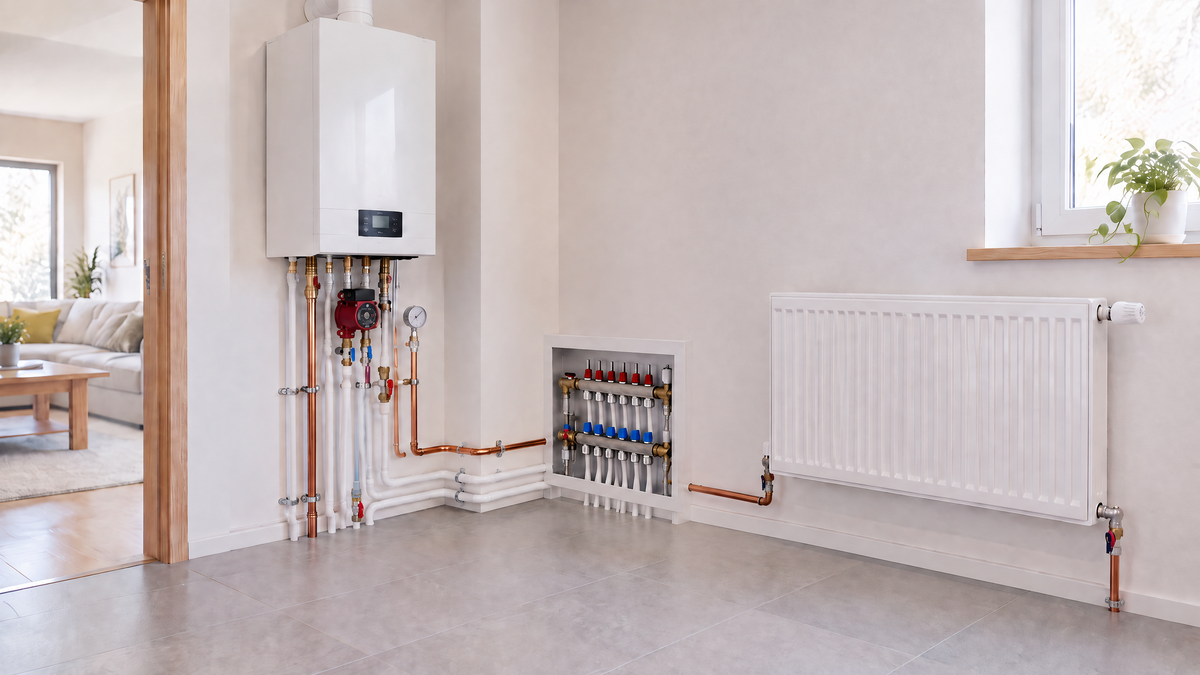
Boiler-to-Hydronic Heating
One common application is transferring heat from a boiler circuit to a separate hydronic heating loop.
The boiler provides hot water to the primary side of the BPHE. Heat is transferred through the plates to water circulating through the secondary heating loop.
This arrangement can be used in hydronic heating systems where the boiler and heating loop need to operate as separate circuits.
Radiant Floor Heating
BPHEs can also be used to transfer heat between a boiler loop and a radiant floor heating circuit.
The heat exchanger separates the primary boiler circuit from the secondary radiant heating loop while transferring heat between them.
This can be useful when the two circuits have different temperature or flow requirements.
Snow Melting Systems
Snow melting systems often use a dedicated secondary water loop circulating through tubing installed beneath driveways, sidewalks, ramps, or other surfaces.
A brazed plate heat exchanger can transfer heat from a boiler or other hot-water source into the snow-melting loop.
Water-to-Water Heating Systems
More generally, a BPHE can be used whenever heat needs to be transferred between two water circuits without directly combining the two flows.
The specific heat exchanger size depends on the system's required heat transfer rate, temperatures, flow rates, and allowable pressure drop.
What Information Is Needed to Select a BPHE for Two Water Circuits?
Choosing a brazed plate heat exchanger is not based on pipe size alone. The operating conditions of both water circuits should be considered.
Heat Transfer Capacity
First, determine how much heat needs to be transferred.
Heating capacity may be expressed in:
-
BTU/hr
-
kW
-
kcal/hr
For example, a 100,000 BTU/hr heating requirement will require a different heat exchanger selection than a 300,000 BTU/hr application.
Inlet and Outlet Temperatures
The temperature of both water circuits is important.
At minimum, you should know:
-
Hot-side inlet temperature
-
Hot-side outlet temperature
-
Cold-side inlet temperature
-
Cold-side outlet temperature
The temperature difference between the two circuits affects the required heat transfer area.
Flow Rate
The flow rate on both sides of the heat exchanger affects heat transfer performance and pressure drop.
Typical flow rates may be provided in:
-
GPM
-
L/min
-
m³/h
If the actual flow rate is unknown, it may need to be calculated or estimated from the system design.
Pressure and Pressure Drop
The operating pressure of each water circuit should also be considered.
The selected heat exchanger should have an appropriate pressure rating, while the pressure drop through the exchanger should remain compatible with the system pumps and flow requirements.
Connection Size and Type
The heat exchanger connections need to match the piping system.
Common configurations include threaded and sweat/copper connections, depending on the model.
Connection size should be selected based on the required flow rate and system piping rather than simply choosing the largest available connection.
Counterflow vs. Parallel Flow
Flow arrangement also affects heat exchanger performance.
In a typical counterflow arrangement, the hot fluid and cold fluid move in opposite directions through the heat exchanger.
This arrangement generally provides a more effective temperature difference across the heat exchanger than parallel flow.
For many water-to-water heating applications, counterflow operation is therefore preferred.
When installing a brazed plate heat exchanger, the inlet and outlet connections should follow the manufacturer's recommended flow direction.
Can a BPHE Be Used With a Boiler?
Yes. A brazed plate heat exchanger can be used as a boiler heat exchanger when heat needs to be transferred from the boiler circuit to another water circuit.
A common configuration is:
Boiler → Primary Water Loop → BPHE → Secondary Heating Loop
The boiler-side water transfers heat through the BPHE to the secondary water circuit.
This type of arrangement can be useful for hydronic heating, radiant heating, snow melting, and other closed-loop heating applications.
The actual heat exchanger size should be selected based on the boiler output and the operating conditions of both circuits rather than boiler capacity alone.
What About Domestic Hot Water Applications?
Brazed plate heat exchangers are also used in some domestic hot water systems to transfer heat between a heating loop and a water supply.
However, domestic hot water can involve potable-water requirements. A heat exchanger intended for potable-water service may need specific materials, certifications, and compliance with applicable plumbing codes and local requirements.
Therefore, a BPHE should not automatically be considered suitable for potable-water applications simply because it can transfer heat between two water circuits.
For applications involving potable water, verify the required certification and regulatory requirements before selecting a heat exchanger.
Common Mistakes When Connecting Two Water Circuits
Several factors can affect the performance of a water-to-water heat exchanger.
Selecting Only by Pipe Size
A 1-inch connection does not automatically mean that a heat exchanger with that connection can handle every 1-inch water application.
Heat load, flow rate, temperature difference, and pressure drop all need to be considered.
Ignoring Flow Rate
Insufficient flow can reduce heat transfer performance, while excessive flow can create unnecessary pressure drop.
The expected flow rate on both sides should be included when selecting a BPHE.
Using Only Boiler Output for Selection
Boiler output provides useful information, but it is not enough by itself.
For example, a boiler may have a certain rated output while the actual heat exchanger requirement depends on the desired secondary-side temperature and flow conditions.
Overlooking Pressure Drop
A heat exchanger that transfers the required amount of heat but creates excessive pressure drop may not work properly with the existing pump.
Pressure drop should therefore be checked during the selection process.
Assuming All Water Applications Are the Same
A closed-loop hydronic heating application is different from a potable-water application.
The fluid, water quality, temperature, pressure, materials, certifications, and applicable codes should all be considered based on the specific system.
When Is a Brazed Plate Heat Exchanger a Good Choice?
A BPHE can be a practical option when you need to transfer heat between two separate water circuits and want a compact heat exchanger.
It is particularly relevant when the system requires:
-
Water-to-water heat transfer
-
Separation of two water loops
-
Compact installation
-
Efficient heat transfer
-
Integration with boilers or hydronic systems
-
Heat transfer between primary and secondary circuits
For larger systems, unusual operating conditions, or applications requiring specific materials or certifications, a different heat exchanger design may be more appropriate.
Need Help Selecting a Brazed Plate Heat Exchanger?
Selecting the right brazed plate heat exchanger requires more than matching the pipe connection size.
For a preliminary selection, provide the following information:
-
Required heat transfer capacity
-
Hot-side inlet and outlet temperatures
-
Cold-side inlet and outlet temperatures
-
Flow rate on both sides
-
Operating pressure
-
Connection type and size
-
Fluid type and application
With these parameters, a suitable water-to-water heat exchanger can be evaluated based on heat transfer performance, pressure drop, connection requirements, and operating conditions.



![Brass Barbed Tees 1/2"x1/2"x1/2" Lead Free PEX Crimp"T" Fitting [5pk, 10pk, 25pk]](http://alfaheating.com/cdn/shop/products/brass-barded-tee.jpg?v=1603079042&width=600)