
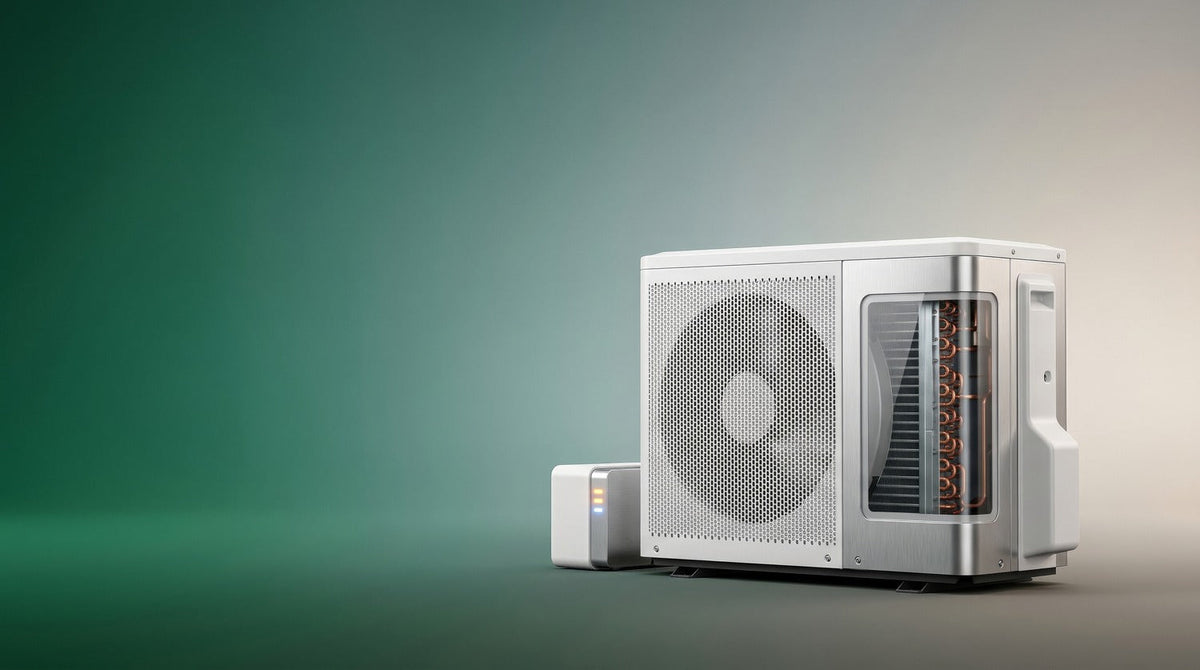
When comparing a fan coil unit vs forced air, the main difference is whether heat moves through local water coils or central air ducts. A fan coil heating system provides room-by-room control and can support heat pumps, while a forced air heating system centralizes ventilation and filtration. The choice also depends on noise, infrastructure, cooling needs, maintenance access, and installation requirements. Below, we compare both systems and explain what to assess before selecting hydronic components, controls, piping, or ductwork.
In this article you will learn:
- how heat reaches rooms through fan coils or ducts;
- how zoning, filtration, noise, and airflow affect comfort;
- what to assess before retrofitting or planning either system;
- how to choose between FCU heating and forced air in practice.
Fan coil unit vs forced air - how heat is delivered
Fan coil units deliver heat locally from water coils, while a forced air heating system sends centrally heated air through ducts. In a fan coil heating system, hot water flows to a coil in each room terminal, and a fan moves room air across it for fast local heat transfer.
A furnace-based system uses a central heat source, blower, supply ducts, registers, and return-air paths. The fan coil unit vs forced air distinction is simple: FCUs distribute water through piping, whereas ducted systems distribute air.
Fan coil unit heating can also provide cooling when chilled water reaches the coil. A two-pipe layout switches the whole system between modes.
Comfort, efficiency and air quality in daily use
FCUs usually provide finer room-by-room control, while forced air is stronger for centralized air treatment. Heating only occupied zones may reduce energy use, but results depend on controls, building heat loss, and the heat source.
Fan coils can operate with lower-temperature water, making them suitable for heat pumps and condensing boilers when the coil is correctly sized. Water temperature and airflow must match the required output. Their local fans create nearby sound, whereas ducted systems can generate noise from the blower, airflow, and ducts.
Forced air can centralize filtration and outdoor-air integration. FCUs mostly recirculate room air, so they need a separate ventilation plan and effective room-air filtration. They offer compact zoning and heating/cooling flexibility, but require distributed servicing, reliable condensate drainage, and careful planning in open spaces.
Choosing the right system for retrofit or new build
Reuse sound ductwork when whole-building air distribution is the priority; consider fan coil unit heating where zoning and hydronic flexibility matter most. FCUs suit projects without practical space for major ducts and buildings using water-based heat sources.
An existing ducted home cannot switch by replacing terminals alone. The change needs hydronic piping, suitable heating or cooling generation, electrical supply, controls, and condensate drainage for cooling.
Installation costs are driven by ducts and central equipment on one side, or piping, multiple terminals, controls, and drainage on the other. Before deciding, assess infrastructure, occupancy, ventilation, service access, and seasonal requirements. At Alfa Heating, we offer heat exchangers, circulation pumps, PEX piping, and HVAC components for hydronic system planning.
Related categories:
Related posts:
Choosing between fan coil and forced air heating
Matching the fan coil unit vs forced air approach to the building's infrastructure determines the better option. Assess zoning needs and existing ductwork first before selecting pumps, piping or controls from Alfa Heating’s range.
Frequently Asked Questions
Forced air systems better centralize ventilation and filtration.
Modern forced air gas furnaces can achieve high seasonal efficiency, depending on the model and controls. Confirm the rated efficiency before selecting equipment.
Fan coil units need coil cleaning, filter checks, fan inspection, and condensate drain servicing. Forced air systems also require furnace and duct maintenance.
Cooling-mode fan coil units produce condensate that needs properly sloped drains, safe discharge points, and service access. Poor drainage can cause leaks and damage.



Expert tip:
Before choosing an FCU, record each room’s heat load, ventilation need, design water temperature, airflow, and condensate route. In the equipment selection sheet, confirm that coil output meets the room load at the planned water temperature and that cooling drainage is shown. Avoid sizing from nominal kW alone.