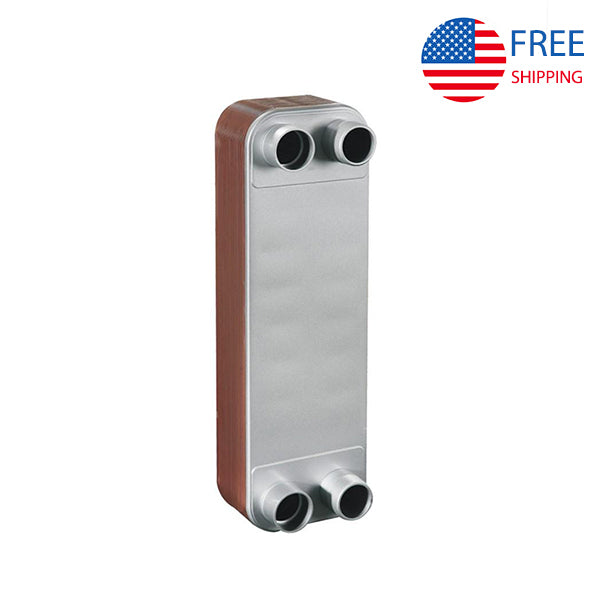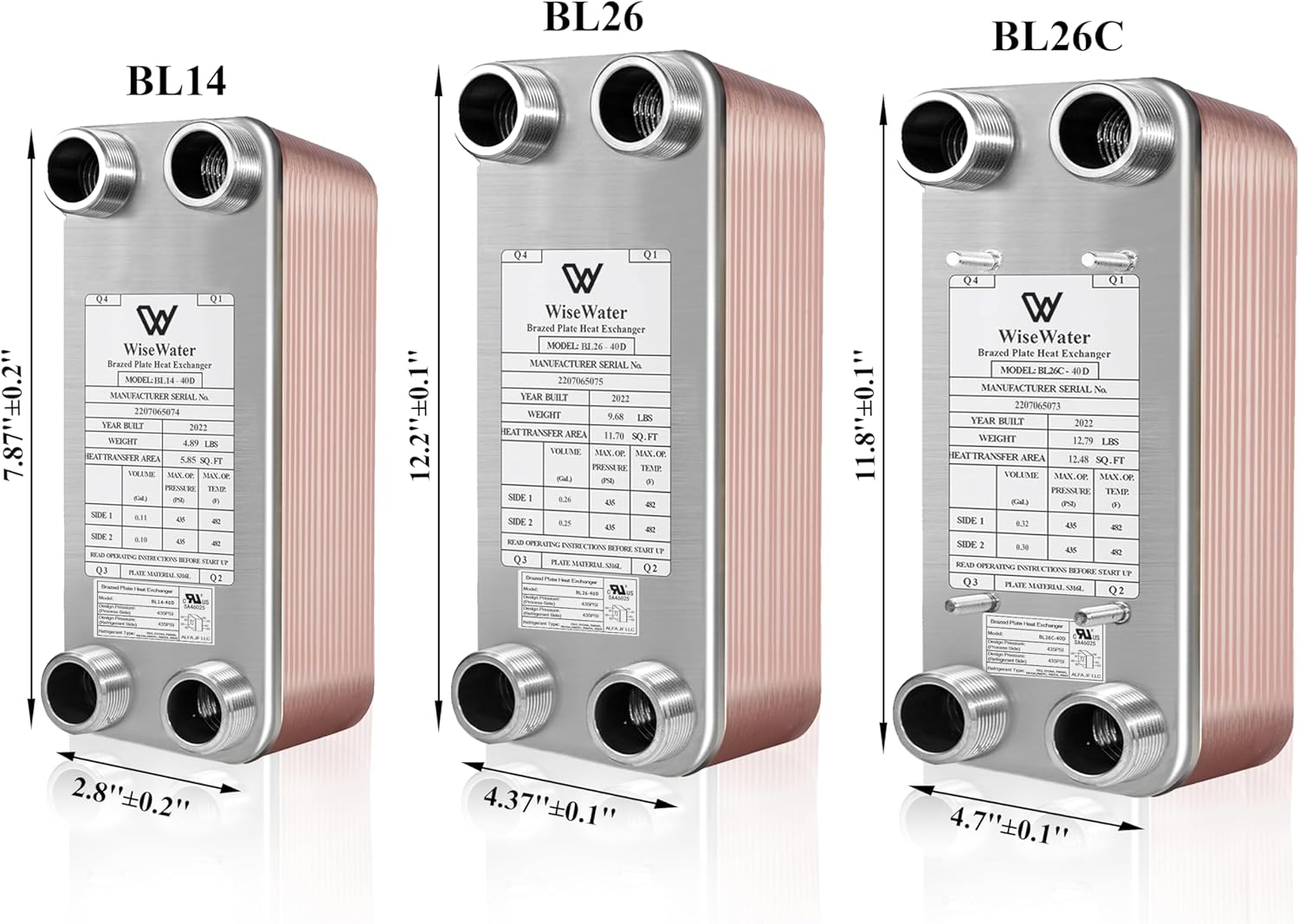
Plate heat exchangers are widely used in HVAC, industrial, and renewable energy systems due to their high thermal efficiency, compact structure, and flexible applications. Whether used in heat pumps, boilers, swimming pools, or refrigeration systems, a properly selected plate heat exchanger can significantly improve system performance and energy efficiency.
This guide explains how plate heat exchangers work, where they are used, how to select and size them correctly, and how to solve common field problems based on real installation experience.
What Is a Plate Heat Exchanger and How Does It Work?
A plate heat exchanger is a thermal device that transfers heat between two fluids through a series of thin metal plates. The fluids do not mix; instead, heat is transferred through the plate surface.
Compared with traditional shell-and-tube designs, plate heat exchangers offer higher efficiency, smaller footprint, and better responsiveness due to their large heat transfer surface area and turbulent flow design.
How Heat Transfer Works
In a plate type heat exchanger, hot and cold fluids flow through alternating channels formed by corrugated plates. The counterflow arrangement allows maximum temperature difference, which improves thermal efficiency.
Heat is transferred from one fluid to another through stainless steel plates without direct contact between the two media.
Main Types of Plate Heat Exchangers
Common configurations include:
- Brazed Plate Heat Exchanger – Compact, sealed design with high efficiency, widely used in HVAC, heat pumps, and domestic hot water systems
- Plate and Frame Heat Exchanger – Gasketed, serviceable design suitable for cleaning and maintenance
- Welded Plate Heat Exchanger – Designed for high-pressure or aggressive fluid applications
Among these, the brazed plate heat exchanger is the most widely used due to its compact size and reliability.
Common Applications of Plate Heat Exchangers
Plate heat exchangers are used in a wide range of residential, commercial, and industrial systems.
Residential Heating and Hot Water Systems
Typical applications include:
- Heat pump systems
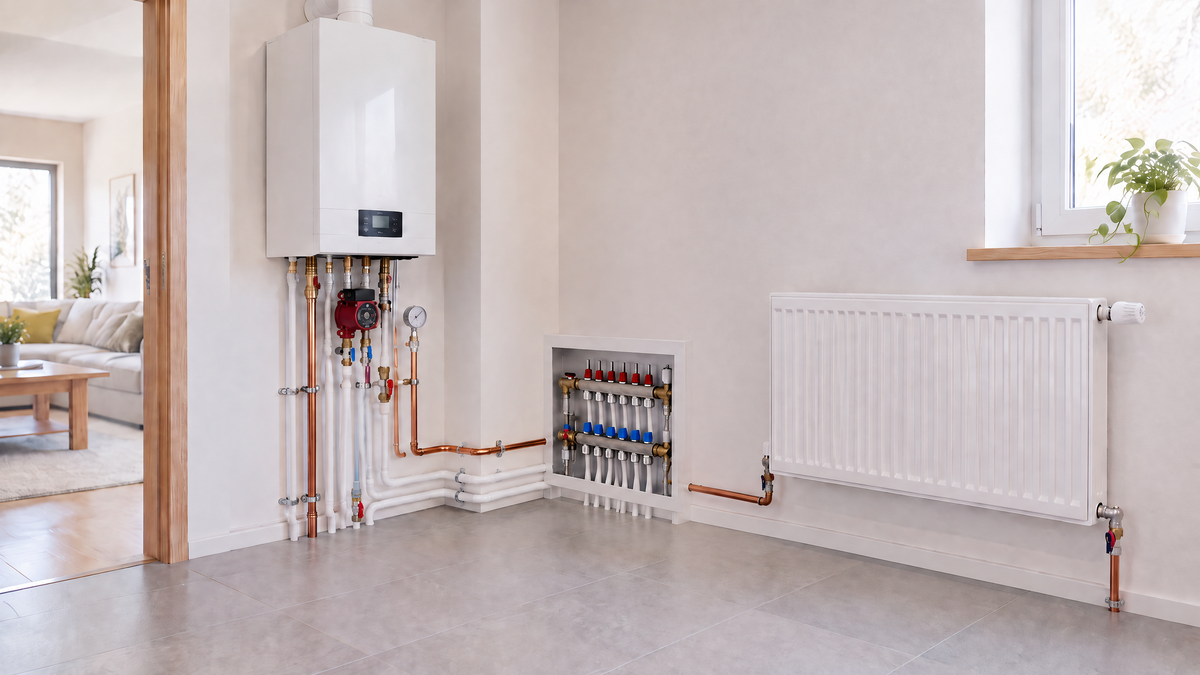
- Boiler heating systems
- Domestic hot water production
- Radiant floor heating systems
A copper brazed plate heat exchanger is commonly used in these systems due to its strong thermal conductivity and compact structure.
Swimming Pools and Industrial Applications
In swimming pool heating systems, plate heat exchangers transfer heat from boilers or heat pumps to pool water while keeping circuits isolated.
Industrial applications include:
- Process cooling systems
- Hydraulic oil cooling
- Refrigeration systems
- Food and beverage processing
In refrigeration systems, specialized units such as brazed plate condensers and brazed plate evaporators play a key role in heat exchange within the refrigeration cycle. A condenser removes heat from refrigerant vapor, while an evaporator absorbs heat to enable cooling.
How to Choose the Right Plate Heat Exchanger
Selecting the correct plate heat exchanger requires evaluating system conditions rather than choosing based on size alone.
Key Factors to Consider
Important design parameters include:
- Heating or cooling capacity (BTU/hr or kW)
- Flow rate on both primary and secondary sides
- Temperature difference (inlet and outlet conditions)
- Operating pressure and system constraints
Incorrect selection may lead to insufficient heating performance or excessive pressure drop.
Material Selection
Common materials include:
- Stainless Steel 304
- Stainless Steel 316
Brazing materials include:
- Copper brazed construction (standard HVAC applications)
A copper brazed plate heat exchanger is typically suitable for clean water and HVAC systems, while more demanding applications may require specialized materials.
How to Size a Plate Heat Exchanger
Proper sizing ensures stable operation and long-term efficiency.
Information Required for Sizing
Before selecting a model, the following data is required:
- Required heating or cooling load
- Flow rates on both sides
- Inlet and outlet temperatures
- Fluid type (water, glycol, etc.)
- Allowable pressure drop
Without accurate data, a plate heat exchanger may be undersized or oversized, leading to performance issues.
Example Sizing Concept
For a system requiring 100,000 BTU/hr, the heat exchanger must be designed to handle the thermal load while maintaining efficient temperature approach.
In general:
- More plates = higher heat transfer capacity
- Larger surface area = better efficiency
- Flow rate must match system pump capacity
Correct sizing ensures stable performance in both heating and cooling applications.
Common Plate Heat Exchanger Problems
Even high-quality plate heat exchangers may experience performance issues if installation or operating conditions are incorrect.
Signs of Reduced Performance
Common symptoms include:
- Lower heating or cooling output
- Increased energy consumption
- Slow system response
- High pressure drop
- Unstable outlet temperature
Improper Installation and Flow Direction Issues (Common Field Problem)
One of the most common reasons a plate heat exchanger does not perform properly is incorrect installation or flow direction.
Before troubleshooting performance issues, always verify basic installation conditions.
Correct Flow Direction (Counterflow Requirement)
For liquid-to-liquid applications, plate heat exchangers must operate under counterflow conditions to achieve designed thermal efficiency.
Typical connection arrangement:
- Hot fluid IN → Top Left (Q1)
- Hot fluid OUT → Bottom Left (Q2)
- Cold fluid OUT → Top Right (Q4)
- Cold fluid IN → Bottom Right (Q3)
Counterflow operation ensures maximum heat transfer efficiency. Incorrect flow direction can significantly reduce performance even if the system is fully operational.
Mounting Position and Mechanical Installation
To ensure stable operation of a brazed plate heat exchanger or plate and frame heat exchanger, installation must follow proper mechanical guidelines:
- Install vertically whenever possible
- Ensure all piping is properly supported
- Avoid excessive vibration or pipe stress on connections
- Do not allow pipe weight to be supported by the heat exchanger
Improper installation may lead to leakage or long-term mechanical damage.
Air Removal from the System
Trapped air is another frequent cause of poor performance in plate heat exchangers.
Recommended steps:
- Open all system valves
- Fully purge trapped air from both circuits
- Ensure pumps are operating correctly
- Confirm stable flow rate on both sides
Air pockets reduce effective heat transfer area and cause unstable system performance.
Flow Restrictions and Blockage Check
If performance remains poor, check for system-side restrictions:
- Clean strainers and filters
- Verify valves are fully open
- Inspect piping for clogging or fouling
- Confirm flow rate meets design requirements
In many cases, poor performance is caused by external system restrictions rather than heat exchanger failure.
Maintenance Tips for Longer Service Life
Regular maintenance helps extend the life and efficiency of plate heat exchangers.
Cleaning and Inspection Best Practices
Recommended maintenance practices include:
- Monitor pressure drop changes
- Check temperature performance regularly
- Inspect for leaks or corrosion
- Clean filters and strainers
- Maintain proper water quality
When to Replace a Plate Heat Exchanger
Replacement may be required when:
- Internal fouling cannot be removed
- Significant efficiency loss occurs
- Leakage develops in brazed joints or gasket areas
- Corrosion affects structural integrity
A properly selected and maintained plate heat exchanger can operate reliably for many years.
Plate heat exchangers are essential components in modern HVAC, heat pump, and industrial systems. Understanding the differences between a plate and frame heat exchanger, brazed plate heat exchanger, copper brazed plate heat exchanger, brazed plate condensers, and brazed plate evaporators helps ensure correct selection for each application.
By properly sizing, installing, and maintaining the system, users can achieve high efficiency, stable operation, and long service life.
For optimal performance, always ensure correct flow direction, proper installation, and accurate system design when using a plate heat exchanger in any application.
FAQ
The required size of a plate heat exchanger depends on system capacity, flow rate, and temperature difference between inlet and outlet. Key parameters include BTU/hr or kW load, fluid flow rate, and application type such as heat pump, swimming pool, or domestic hot water systems. Proper sizing ensures stable performance and prevents efficiency loss or oversizing costs.
Yes. Plate heat exchangers are widely used in air source and ground source heat pump systems. They are commonly applied in domestic hot water production, radiant floor heating, buffer tanks, and swimming pool heating systems. When properly sized, they improve system efficiency and ensure stable heat transfer performance.
A brazed plate heat exchanger is a compact, sealed unit with no gaskets, designed for maintenance-free operation in HVAC and heat pump systems. A plate and frame heat exchanger uses gasketed plates that can be disassembled for cleaning and maintenance, making it suitable for applications with higher fouling or industrial processes.
Poor performance is often caused by installation or system issues rather than the heat exchanger itself. Common reasons include incorrect flow direction, trapped air, clogged strainers, insufficient flow rate, or fouling inside channels. Checking system piping and flow conditions is the first step before assuming equipment failure.
A well-selected plate heat exchanger typically lasts 10 to 20 years depending on water quality, operating conditions, and maintenance practices. Brazed plate heat exchangers generally provide long service life in HVAC applications when operated within design limits and properly maintained.




![Brass Barbed Tees 1/2"x1/2"x1/2" Lead Free PEX Crimp"T" Fitting [5pk, 10pk, 25pk]](http://alfaheating.com/cdn/shop/products/brass-barded-tee.jpg?v=1603079042&width=600)