Cold rooms, hot spots, and weak radiator output often point to hidden system faults. This guide explains how to identify the cause and narrow the problem fast.
From the article you will learn:
- how to spot the earliest signs of uneven heating in a hydronic system, including cold zones, slow warm-up, and uneven room temperatures
- how to compare supply and return temperatures to find where heat transfer begins to break down
- how circulation issues such as air, sludge, low pump output, and restricted valves affect overall heat delivery
- how to identify whether one zone, one branch, or one emitter is causing the temperature difference
- how to read flow-related symptoms such as noise, partial radiator heating, and weak loop performance
- how to check thermostatic valves, zone valves, circulators, balancing valves, actuators, thermostats, and sensors for faults
- how component behavior reveals whether the imbalance comes from control, flow, or emitter performance
- how to build a logical troubleshooting path that narrows the source of poor heat distribution without unnecessary testing
How to identify the source of uneven heating in a hydronic system
Uneven heating in a hydronic system starts to show through room-to-room differences, not through one single fault. One room may stay cold, another may overheat, and a radiator may warm only at one end. In many cases, poor heat distribution in hydronic heating appears as a clear pattern across the house. That pattern points to where the imbalance begins.
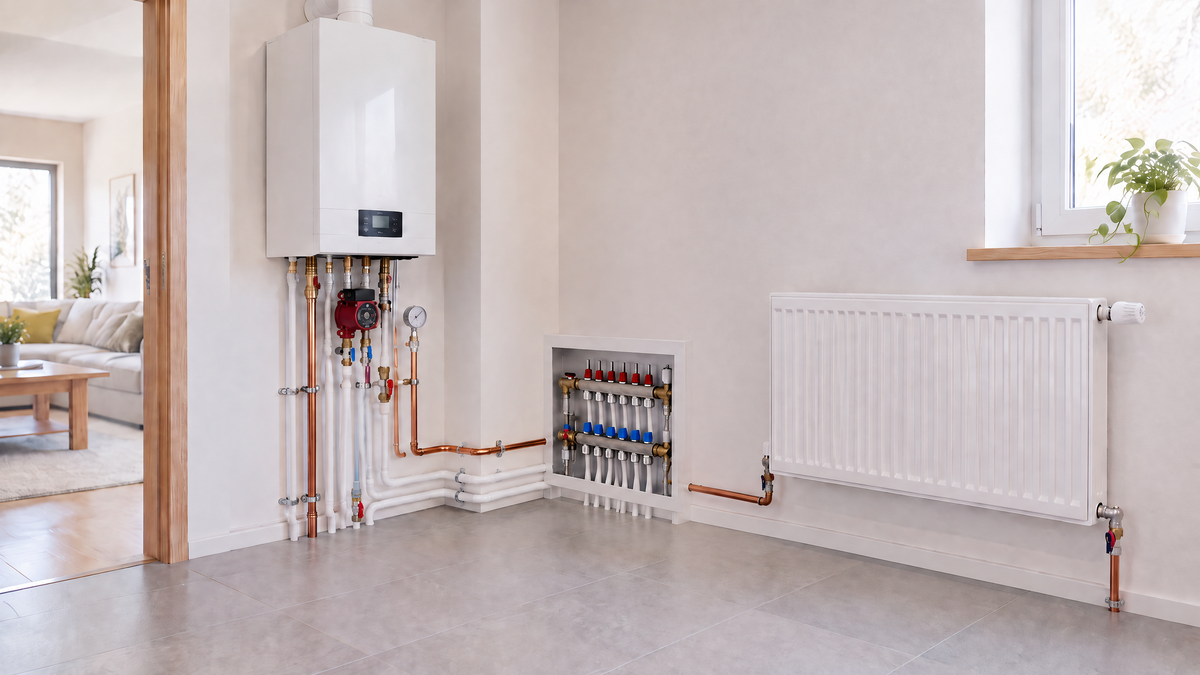
Compare room temperatures first, then compare how each emitter performs after a call for heat. A slow floor zone suggests a system-wide delivery issue, while one weak radiator often points to a local restriction. The question why hydronic heating is not heating evenly is answered by looking at where heat transfer drops off. Supply and return temperatures help confirm whether the problem starts in one branch or across several zones.
The first signs to check include cold zones below setpoint, slow warm-up, temperature gaps between floors, and emitters that heat at different rates. Also note hot piping with a cool room, or a branch returning much cooler than the others. These signs narrow the problem before deeper testing begins. They also help separate whole-system issues from a single-room imbalance.
How circulation and flow issues affect heat delivery
Once the weak area is found, the next step is to examine water movement through the system. Hydronic heating uneven heat often comes from reduced circulation rather than from the boiler itself. When flow drops, emitters receive less hot water and release less heat. The system still runs, but heat delivery becomes uneven.
Several faults can slow circulation. Low pump speed can fail to overcome resistance in larger or multi-zone systems. Air trapped in lines interrupts flow and often creates gurgling or rushing sounds. Sludge buildup narrows passages and reduces output over time, while a blocked or partially closed valve limits one branch without affecting the rest. These are classic hydronic heating circulation problems, and they usually produce measurable symptoms.
Watch for a large temperature drop across one branch, weak manifold flow, noisy high points, and emitters that heat only partway across their surface. A radiator that is hot near the inlet but cool elsewhere often signals poor movement. A radiant loop that stays lukewarm across its length points to low flow. Common flow-related faults include pump speed set too low, air pockets, sludge, blocked valves, and uneven flow between loops.
The key question at this stage is simple: does each part of the system receive enough heated water at a steady rate. If the answer is no, circulation becomes the most likely source of the heat imbalance. That check links visible symptoms to the next round of troubleshooting. It also prevents unnecessary part replacement.
How to troubleshoot components that create room-to-room imbalances
After flow behavior is known, component checks become more precise. This is where hydronic heating system troubleshooting confirms whether a control part is causing one room to lag behind another. Thermostatic radiator valves can stick in a limited position and reduce output at one emitter. Zone valves may stay partially closed and starve a branch. Circulators can also underperform because of wear, air binding, or a bad control signal.
Check whether thermostatic valves move freely and whether the valve pin returns after being pressed. Verify that zone valves open fully during a heat call and that actuators complete their travel. Compare thermostat readings with the actual room temperature to catch sensor drift or poor placement near drafts or sunlight. Review balancing valves as well, since incorrect settings can push too much flow to one loop and too little to another.
| component | symptom |
| thermostatic valve | one radiator stays cooler than the others |
| zone valve | one zone heats weakly or not at all |
| circulator | slow delivery across a branch |
| balancing valve | one loop overheats while another lags |
| actuator | valve does not respond fully to demand |
| thermostat or sensor | room temperature does not match the control reading |
Use the table to link the symptom to the part that controls it. The goal is not to retest the whole system, but to find the local cause of the imbalance. Once the faulty valve, actuator, circulator, thermostat, or sensor is found, the heating pattern becomes much easier to explain. That leads to faster correction and fewer repeat checks.