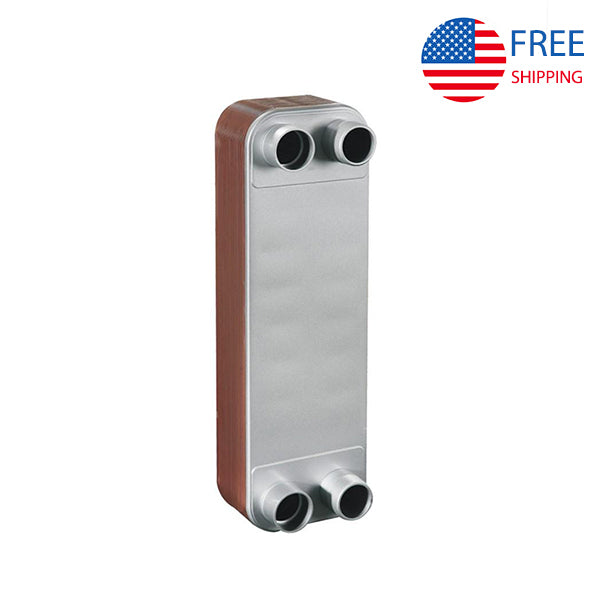
Plate heat exchangers play a key role in modern heating systems. This guide explains their function, benefits, sizing factors, and common applications.
From the article you will learn:
- what a plate heat exchanger does in a heating system and why it is used in modern installations
- how heat moves between two separate fluid circuits without mixing
- where this equipment appears in residential, commercial, and district heating setups
- which factors affect heat transfer performance inside the unit
- how flow direction and plate design influence thermal exchange
- what input data is needed to size the exchanger correctly for a heating application
- how pressure drop changes circulation and system operation
- which material and construction details affect compatibility with different fluids
- how fouling risk influences maintenance needs over time
- what to compare when choosing between brazed and gasketed models
- how service access affects inspection, cleaning, and long-term reliability
- which practical checks support stable performance in everyday heating use
What plate heat exchangers do in heating systems
In heating installations, a plate heat exchanger transfers thermal energy from one liquid circuit to another while keeping both fluids fully separated. This direct role explains why it appears so often in modern system design. It connects heat sources and heat users in a controlled way. At the same time, it helps protect water quality, supports hydraulic separation, and allows different parts of a system to operate under different pressures, temperatures, or fluid conditions without direct contact between loops.
A plate heat exchanger for heating system is commonly installed where safe and efficient heat transfer matters more than direct fluid mixing. In hydronic heating, it separates the boiler loop from the building loop. In district heating interfaces, it passes heat from the utility network to the internal installation. In boiler rooms, it links primary and secondary circuits. In domestic hot water integration, it transfers heat to service water while isolating it from the closed heating side.
Common applications include:
- hydronic space heating systems in residential and commercial buildings
- district heating substations and interface units
- boiler circuit separation in multi-zone installations
- domestic hot water heating and storage tank integration
- underfloor heating systems connected to a main heat source
The value of this equipment in heating systems comes from function, not size. It creates a practical boundary between two sides of the installation and supports cleaner, safer, and more flexible heat distribution. That is why it remains a standard component in homes, apartment buildings, public facilities, and industrial heating applications.
How heat transfer happens inside the unit
To understand how plate heat exchangers work, it helps to follow the fluid path inside the unit. One hot fluid and one cooler fluid enter through separate connections and move through alternating channels formed between thin metal plates. These channels stay sealed from each other, so the fluids do not mix at any point. Heat passes through the metal surface of each plate from the warmer side to the cooler side.
Inside a plate heat exchanger heating system, the plates are usually corrugated, which means their surfaces have a pressed pattern rather than a flat shape. This pattern creates narrow passages and guides the fluid across the plate area in a more active path. It also increases the contact surface between fluid and metal. In many units, the two fluids move in opposite directions, a layout known as counterflow. That arrangement keeps the temperature difference more even across the exchanger length.
The heat transfer sequence usually follows these steps:
- the hot and cold fluids enter separate ports and are distributed into alternating channels
- the fluids move along opposite sides of each plate without direct contact
- heat travels through the thin metal plates from the hotter fluid to the cooler fluid
- both fluids leave through separate outlets at changed temperatures
Performance changes with operating conditions, especially with temperature difference, flow pattern, and flow rate. A larger temperature gap between the two fluids increases the driving force for heat transfer. A smaller gap reduces it. Flow that stays evenly distributed across the plates helps use more of the available surface area, while uneven flow can leave part of the exchanger less active. The operating principle remains the same throughout: two separate streams move through alternating channels, and heat crosses the metal barrier from one side to the other.
How to choose the right unit for performance and maintenance
A practical plate heat exchanger guide starts with correct selection data, because long-term performance in a heating application depends on matching the unit to real operating conditions rather than to nominal assumptions alone. The key inputs are heat load, flow rate on both sides, and required inlet and outlet temperatures. These values define how much thermal energy the exchanger needs to move and under what conditions it will operate. Pressure drop also matters, because a unit with high thermal capacity can still create system limits if it adds too much resistance to circulation.
Material choice affects compatibility with water quality, glycol mixtures, and corrosion exposure. Fouling risk influences service intervals, thermal stability, and cleaning strategy over time. Service access is another practical factor. It shapes how easily the unit can be inspected, cleaned, or replaced within the available plant space. For day-to-day selection, the evaluation can be reduced to a short checklist.
- required heat load in kW or BTU/h
- primary and secondary flow rates
- inlet and outlet temperatures on both circuits
- allowable pressure drop across the unit
- plate and connection material compatibility
- expected fouling level from water quality or debris
- access for cleaning, inspection, and future service
Maintenance planning also depends on exchanger type, especially in heating systems that run for long periods under stable but demanding conditions. Brazed and gasketed models differ in service approach and installation flexibility. A brazed unit has a closed construction, so internal cleaning is limited and replacement is common when performance declines. A gasketed unit opens for inspection, mechanical cleaning, and capacity changes by adding or removing plates. The comparison below shows the practical differences.
| Type | Maintenance | Flexibility | Typical use |
| Brazed | Limited internal cleaning, usually replaced rather than opened | Compact design, fixed capacity, low adjustment potential | Residential heating, compact boiler systems, domestic hot water modules |
| Gasketed | Openable frame, easy inspection, cleaning, and seal replacement | Capacity can often be adjusted by changing plate count | Commercial buildings, district heating interfaces, larger plant rooms |
The right unit is the one that fits thermal demand, hydraulic limits, fluid quality, and maintenance conditions at the same time. A model sized only for heat duty can underperform in real service if fouling builds up quickly or if access around the frame is too tight for routine work. In the same way, a service-friendly unit can still be a poor match if its pressure drop exceeds pump capacity. Reliable operation comes from balanced selection. That balance includes performance data, material compatibility, and realistic upkeep conditions over the full service life.



![Brass Barbed Tees 1/2"x1/2"x1/2" Lead Free PEX Crimp"T" Fitting [5pk, 10pk, 25pk]](http://alfaheating.com/cdn/shop/products/brass-barded-tee.jpg?v=1603079042&width=600)