
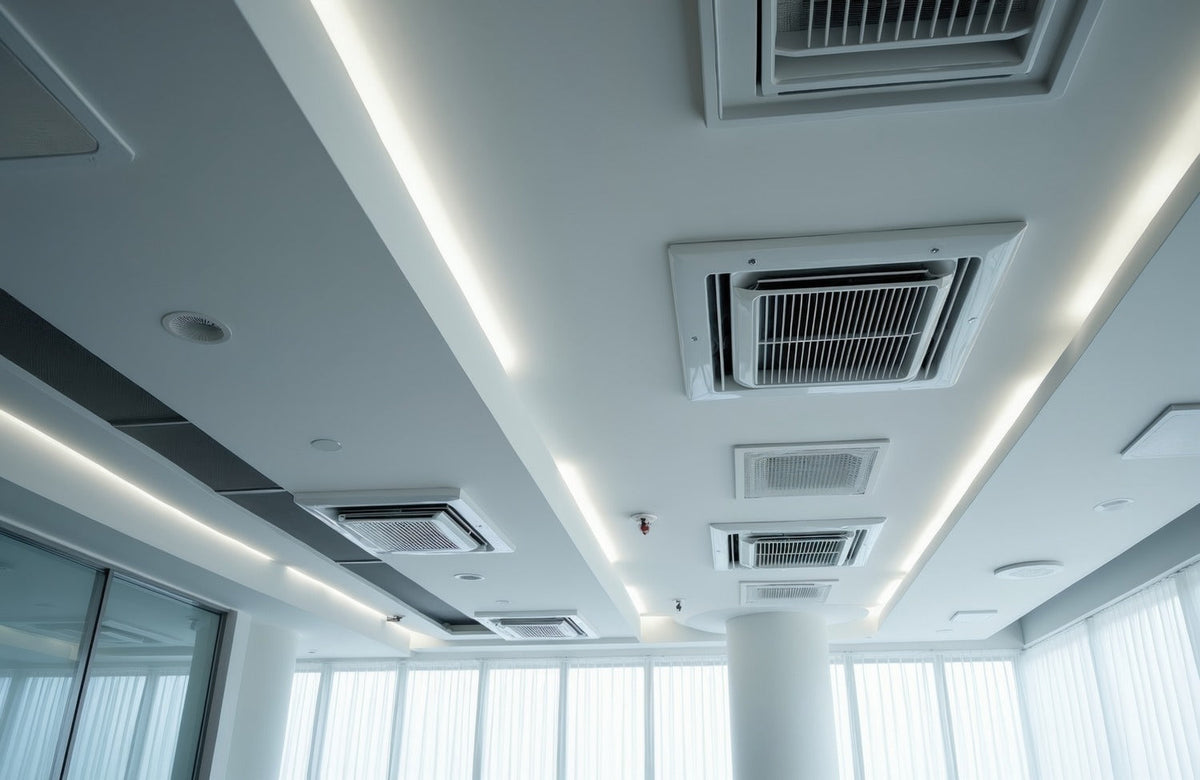
Heating efficiency in public buildings improves when heat generation, ventilation, controls, and maintenance match actual demand. Heat pumps, VAV, demand-controlled ventilation, heat recovery, and variable-speed drives can reduce waste, while zoning and occupancy-based schedules help schools avoid heating empty rooms. Hospitals require a careful balance between efficiency, ventilation, and protected clinical conditions. Monitoring, maintenance, heat exchangers, and circulation components also help preserve savings over time.
In this article you will learn:
- how to combine heat pumps, VAV and DCV for major savings;
- how to tailor school heating systems to teaching schedules;
- how hospital heating systems protect critical comfort conditions;
- how maintenance prevents declining HVAC efficiency over time;
- how monitoring reveals faulty setpoints and excessive runtimes.
Which upgrades improve heating efficiency in public buildings?
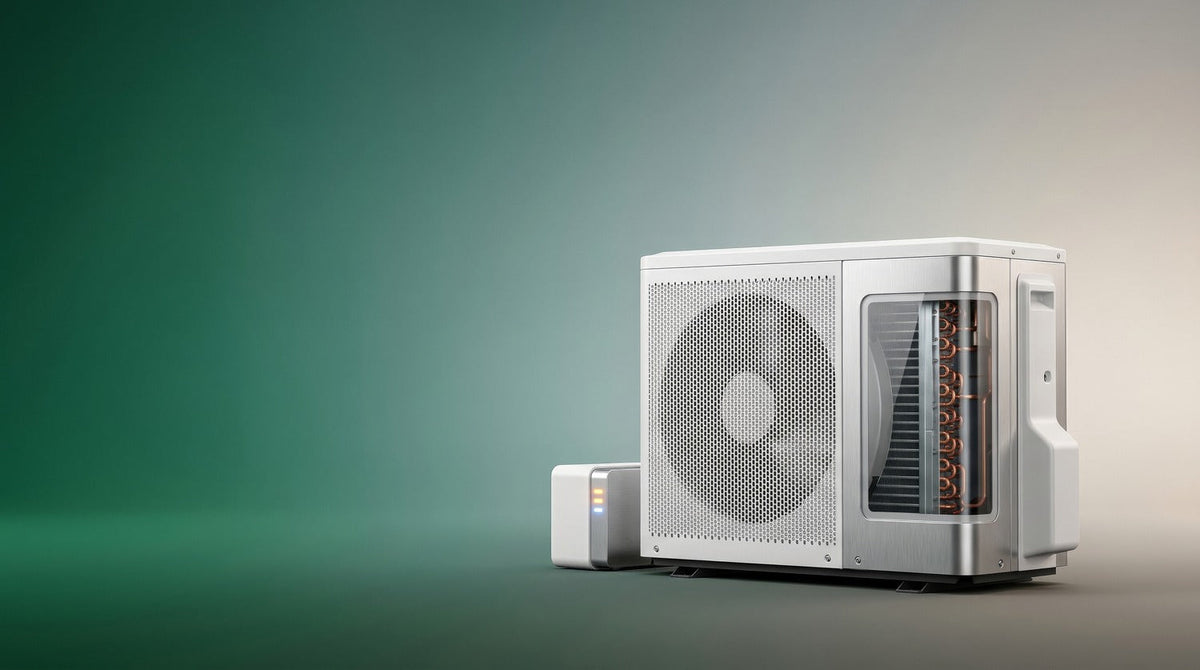
Heat pumps combined with VAV and demand-controlled ventilation can deliver the largest reductions by replacing fossil-fuel heat and constant-air-volume operation with output matched to demand. In public-building retrofits, reported savings have reached up to 70%, although results depend on the existing baseline and commissioning quality.
- Heat pumps - efficient heat generation where distribution temperatures allow it
- VAV systems - reduce unnecessary airflow at part load
- DCV - adjusts outdoor air to occupancy or air-quality demand
- Heat recovery ventilators - reclaim heat from exhaust air
- VFDs - match pump and fan speed to actual load
- BAS - coordinates schedules, setpoints, alarms, and zones
VAV reduces fan energy because it avoids supplying full airflow to lightly used spaces. DCV further improves commercial HVAC efficiency by limiting ventilation output when rooms are empty or lightly occupied. Selection should reflect building condition, occupancy patterns, ventilation needs, and heating-water temperatures rather than follow one universal specification.
School and hospital heating systems: tailored controls
Schools benefit most from controls that follow predictable teaching hours, while hospitals need stable conditions wherever care depends on them. Effective school heating systems use zoning, occupancy setbacks, smart thermostats, low-temperature loops, and schedules that reduce output outside active periods.
Existing education buildings can often improve performance through:
- control upgrades - align operation with actual use
- better zoning - prevent empty areas from receiving full heat
- heat recovery - reduce ventilation-related losses
- heat-pump assessment - confirm compatibility with emitters and loops
Hospital heating systems require a different balance. Non-critical zones can use detailed zoning and responsive controls, but clinical and essential spaces must retain required comfort and ventilation conditions. The most energy efficient heating systems for hospitals are therefore complete strategies combining efficient generation, controls, ventilation planning, and protected clinical requirements.
Maintenance and monitoring for lasting HVAC savings
Efficiency gains fade when restricted airflow inaccurate controls, and excessive run hours remain uncorrected. Routine work should include filter and coil cleaning, thermostat calibration, pressure-drop checks, pump and fan verification, plus correction of simultaneous heating and cooling.
BAS trends and occupancy sensors reveal faulty setpoints, extended runtimes, and zones that no longer perform as intended. Review heat-exchanger temperatures, circulation components, and flow resistance where they are installed.
Hospital HVAC maintenance should follow a condition-led programme coordinated with operational and indoor-air-quality needs, not a generic fixed interval. Alfa Heating offers compatible heat exchangers, circulation pumps, and HVAC components for professionally assessed projects.
Related pages:
- HVAC Energy Management in Commercial Buildings
- Efficient Hydronic Heating System Design
- Hydronic and Forced-Air Efficiency Comparison
Improving heating efficiency in public buildings
Heating efficiency in public buildings depends on matching heat generation, ventilation, controls, and maintenance to actual demand. Heat pumps, VAV, demand-controlled ventilation, heat recovery, and variable-speed drives can work together, but school heating systems need schedule-based zoning while hospital heating systems must protect critical conditions.
A practical retrofit starts with an assessment of occupancy, emitters, water temperatures, airflow, and control performance. Regular monitoring then keeps commercial HVAC efficiency from declining; professionally selected components from Alfa Heating can support well-planned upgrades.
Frequently Asked Questions
Variable air volume systems are usually more efficient at part load because airflow matches demand. Constant air volume systems may offer simpler control but use more fan energy.
Radiators can work with heat pumps when their output matches lower water temperatures. Larger emitters or improved insulation may be needed for efficient operation.
Public buildings can reduce heating losses with insulation, sealed ducts, balanced airflow, heat recovery, and controls that limit heating in unused areas.
Zoning directs heat where occupancy requires it. Separate schedules and temperature control reduce energy waste while preserving comfort in classrooms, offices, and clinical spaces.



Expert tip:
Export seven days of BAS trends for zone temperature, occupancy, fan speed, and runtime. Apply schedules and setbacks to empty zones first, then check the BAS runtime report: unoccupied hours should show shorter runtimes without comfort alarms. Avoid changing setpoints before checking ventilation requirements.